18 Proven Productivity Tips to Maximize Your Output in 2026
BlogIntroduction: Working Smarter in the Modern Age
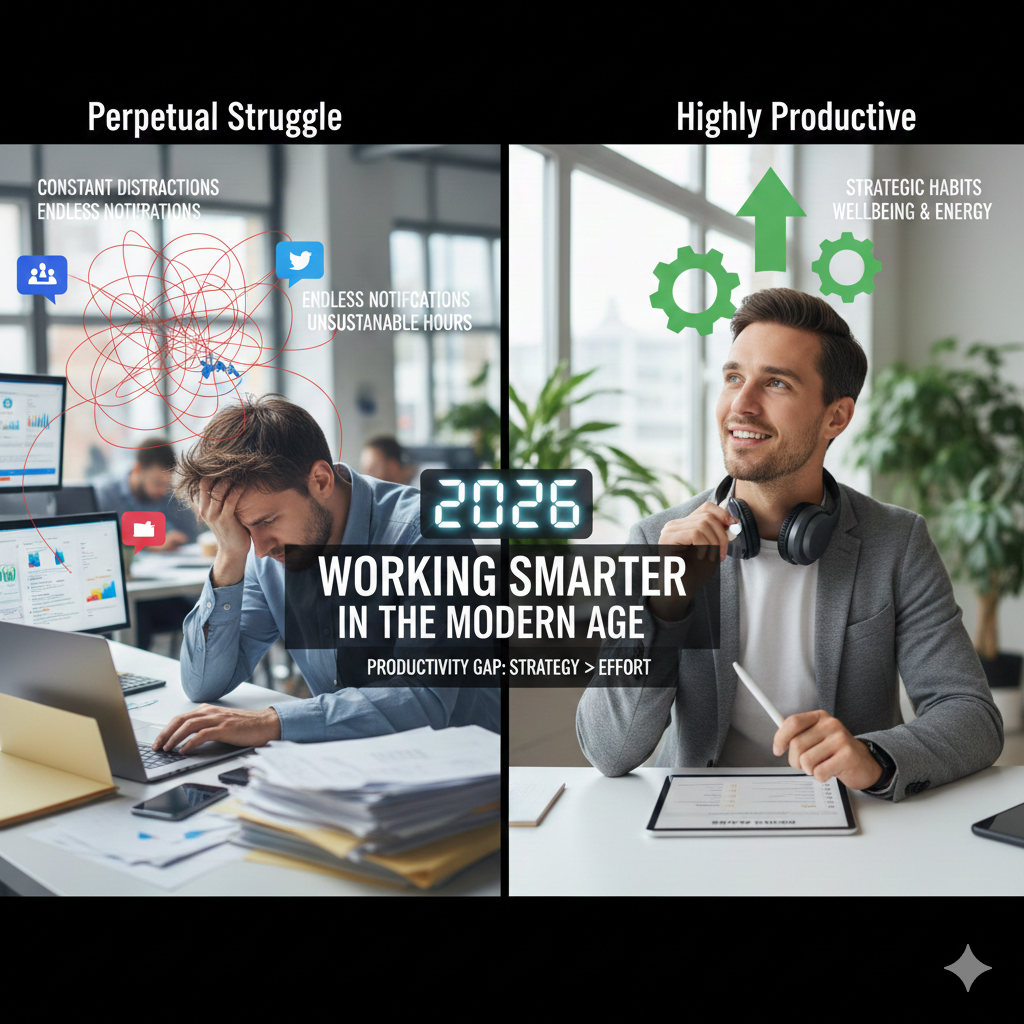
In an era of constant distractions, endless digital notifications, and ever-increasing work demands, mastering effective productivity tips has become essential for professionals seeking to accomplish meaningful work without sacrificing wellbeing or working unsustainable hours. The challenge isn’t just doing more—it’s doing what truly matters efficiently while maintaining energy, focus, and satisfaction. In 2026, the gap between highly productive professionals and those perpetually struggling to keep up often comes down to strategic work habits rather than raw effort or talent.
visit our website – EasyNaukri4U – India’s Leading Government Job Portal
visit our resume builder – Government Jobs - EasyNaukri4U
“According to LinkedIn’s Global Talent Trends Report, recruiters spend an average of six to seven seconds reviewing each resume.”
The most productive professionals don’t work longer hours or possess superhuman focus—they leverage proven productivity tips that optimize how they work, eliminate time-wasting activities, automate repetitive tasks, protect their energy and attention, and align their efforts with highest-impact activities. These strategies enable accomplishing more meaningful work in less time, creating space for strategic thinking, professional development, and life outside work rather than perpetually playing catch-up. productivity tips
This comprehensive guide presents eighteen evidence-based productivity tips that work across industries, roles, and work environments. Whether you’re struggling with procrastination, drowning in tasks, constantly interrupted, or simply feeling like you’re busy without being productive, these strategies will help you reclaim control over your time and attention while dramatically improving your output and effectiveness. These aren’t theoretical concepts but practical, implementable techniques used by consistently high-performing professionals.
The key to sustainable productivity isn’t working yourself to exhaustion but rather working strategically—focusing on what matters, eliminating waste, leveraging tools and systems, protecting your peak performance hours, and building habits that compound into significant results over time. By implementing these productivity tips systematically, you’ll accomplish more while feeling less stressed and overwhelmed.
For productivity resources and tools, visit: 👉 https://easynaukri4u.com/
Understanding Productivity in 2026

The Productivity Paradox
Despite unprecedented access to productivity tools, apps, and information, many professionals feel less productive than ever. This productivity paradox stems from information overload, constant digital interruptions, always-on work culture, poorly designed workflows, and confusion between busyness and actual productivity. Effective productivity tips must address these modern challenges rather than simply encouraging working harder or longer.
True productivity measures meaningful output relative to time and energy invested, not hours worked or tasks checked off. You can appear busy while accomplishing little of substance, or you can work focused hours producing exceptional results. The goal is maximizing valuable output while minimizing wasted effort and preserving your energy and wellbeing for sustained performance.
The Science of Productivity
Research in neuroscience, psychology, and organizational behavior has revealed important insights informing effective productivity tips. Our brains can’t truly multitask—they context-switch, which reduces efficiency and increases errors. Willpower and focus are finite resources that deplete throughout the day. Deep work requiring sustained concentration produces disproportionate value compared to shallow work. Regular breaks actually improve overall productivity rather than reducing it. And habits, not motivation, drive consistent productivity.
Understanding these principles helps you implement productivity tips that work with your brain’s natural functioning rather than fighting it. Productivity isn’t about forcing yourself through sheer willpower but rather designing environments, systems, and habits that make productive work the path of least resistance.
Productivity Versus Busyness
A critical distinction for effective productivity tips is understanding that productivity differs from busyness. Busyness involves staying constantly occupied with activities, meetings, emails, and tasks that may or may not advance meaningful goals. Productivity focuses on accomplishing high-impact work aligned with your objectives, even if that means having unscheduled time, saying no to requests, or appearing less busy than constantly-occupied colleagues.
Many professionals mistake busyness for productivity, filling every moment with activity while achieving little that truly matters. Effective productivity often requires creating space for thinking, planning, and focused work rather than filling every minute with reactive tasks and meetings.
18 Proven Productivity Tips

1. Implement Time Blocking for Focused Work
Among the most powerful productivity tips is time blocking—scheduling specific time blocks for different types of work rather than maintaining open calendars filled reactively. Allocate dedicated blocks for deep work requiring focus, meetings and collaboration, administrative tasks, email and communication, and strategic thinking. This structure prevents your day from becoming fragmented by constant context-switching while protecting time for your most important work.
Time blocking makes visible the trade-offs when requests arise—accepting a meeting during your deep work block means consciously choosing to sacrifice focused time. This visibility helps you make intentional decisions rather than defaulting to constant availability that destroys productivity.
Time Blocking Strategy:
- Identify your most productive hours for deep work
- Block these hours for your highest-priority tasks
- Schedule meetings and collaborative work during less productive hours
- Create consistent blocks for routine activities (email, admin)
- Protect these blocks as you would important meetings
- Batch similar tasks in dedicated time blocks
- Leave some unscheduled buffer time for the unexpected
Implementation:
Physically block time on your calendar, marking it as busy so colleagues can’t schedule over it. Use different colors or labels for different activity types. Start with blocking just your most important deep work sessions, expanding the system as you refine what works.
Common Pitfalls:
Avoid over-scheduling yourself with no flexibility. Build in buffer time between blocks for transitions and unexpected issues. Be realistic about how long tasks actually take rather than optimistically cramming too much into limited time.
2. Master the Two-Minute Rule

One of the simplest yet most effective productivity tips is the two-minute rule: if a task takes less than two minutes, do it immediately rather than adding it to your to-do list. This prevents small tasks from accumulating into overwhelming lists while eliminating mental overhead of tracking numerous tiny items. Quick responses to emails, filing documents, making brief calls, or other rapid tasks get handled immediately rather than creating administrative burden. productivity tips
However, apply this rule strategically during designated times rather than allowing two-minute tasks to constantly interrupt focused work. Batch these quick tasks during administrative time blocks rather than letting them fragment your day.
Two-Minute Rule Application:
- Handle quick tasks immediately during email/admin time
- Don’t let two-minute tasks interrupt deep work blocks
- Use the rule to prevent task list bloat
- Batch multiple two-minute tasks together
- Apply judgment—some two-minute tasks aren’t worth doing at all
- Use quick wins for momentum during low-energy periods
Strategic Exceptions:
Sometimes tasks under two minutes should still be delegated, eliminated, or batched despite meeting the time criteria. Not everything that can be done quickly should be done by you or done at all.
3. Practice Single-Tasking and Deep Work
Contrary to popular belief about multitasking, among the most important productivity tips is single-tasking—giving complete attention to one task at a time rather than attempting to juggle multiple activities. Research consistently shows multitasking reduces productivity, increases errors, and degrades work quality. Your brain performs better with sustained focus on single tasks than constant context-switching between multiple activities.
Deep work—focused periods of 60-90 minutes working on cognitively demanding tasks without interruption—produces disproportionate value. Protect time for deep work by eliminating distractions, closing communication tools, silencing notifications, and fully immersing in challenging work requiring sustained concentration.
Deep Work Practices:
- Schedule 60-90 minute deep work blocks
- Eliminate all distractions before starting
- Close email, messaging, and social media
- Silence phone and notifications
- Work on single task without switching
- Take breaks between deep work sessions
- Build up to longer sessions gradually
- Track and protect your deep work hours
Environment Optimization:
Create physical and digital environments supporting deep work: organized workspace, noise-canceling headphones, website blockers for distracting sites, out-of-office messages during focus time, and clear communication to colleagues about your availability. productivity tips
Energy Management:
Schedule deep work during your peak energy hours when you have maximum mental capacity. Save shallow work—email, meetings, administrative tasks—for lower-energy periods.
For deep work resources and focus tools, explore: 👉 https://easynaukri4u.com/
4. Use the Eisenhower Matrix for Prioritization
Effective prioritization represents crucial productivity tips for ensuring effort focuses on what truly matters. The Eisenhower Matrix categorizes tasks by urgency and importance, helping you distinguish between truly important work and merely urgent distractions. Tasks fall into four quadrants: important and urgent (do immediately), important but not urgent (schedule for focused work), urgent but not important (delegate or minimize), neither urgent nor important (eliminate).
Most people spend excessive time on urgent-but-unimportant tasks while neglecting important-but-not-urgent work that would prevent future urgencies. Strategic productivity requires investing time in important work before it becomes urgent crises.
Four Quadrants:
Important & Urgent:
Handle immediately—genuine crises, deadlines, critical problems. Minimize time here by preventing issues through quadrant two work.
Important & Not Urgent:
Schedule dedicated time—strategic planning, relationship building, professional development, prevention, and preparation. Most impactful productivity happens here.
Urgent & Not Important:
Delegate when possible, minimize time spent, batch handle, or eliminate. These interrupt without advancing meaningful goals.
Not Urgent & Not Important:
Eliminate completely—time-wasters, busy work, distractions. These provide no value and steal time from important work.
Application:
Categorize all tasks and commitments using this matrix. Protect time for quadrant two work preventing quadrant one crises. Ruthlessly minimize or eliminate quadrants three and four. This productivity tips framework transforms how you allocate time and attention.
5. Leverage the Pomodoro Technique
The Pomodoro Technique provides structured productivity tips for maintaining focus while preventing burnout. Work in focused 25-minute sessions (pomodoros) followed by 5-minute breaks. After four pomodoros, take longer 15-30 minute breaks. This rhythm maintains concentration during work periods while providing regular recovery preventing mental fatigue.
The technique works because 25 minutes feels manageable even for challenging tasks, scheduled breaks provide motivation to maintain focus, and forced interruptions prevent over-working and burnout. Regular breaks actually improve overall productivity compared to pushing through exhaustion.
Pomodoro Implementation:
- Set timer for 25 minutes of focused work
- Work without any interruptions until timer completes
- Take 5-minute break when timer sounds
- Complete four pomodoros then take 15-30 minute break
- Track completed pomodoros measuring daily productivity
- Adjust session length based on task and preference
Modifications:
Some people prefer longer sessions (50-90 minutes) with longer breaks. Experiment finding rhythms that work for your tasks and energy. The principle—focused work alternating with rest—matters more than exact timing.
Break Activities:
Use breaks for genuine recovery: walk, stretch, hydrate, step outside, chat with colleagues, or rest eyes. Avoid screen time during breaks—checking email or social media prevents actual recovery.
6. Automate and Systematize Repetitive Tasks
Among the highest-leverage productivity tips is automating or creating systems for repetitive tasks consuming time without requiring your unique expertise. Identify recurring activities in your workflow—email responses, data entry, report generation, scheduling, file organization—and build systems, templates, or automation handling them efficiently.
Automation tools, keyboard shortcuts, email filters, scheduling software, and template libraries eliminate manual effort for routine tasks, freeing time and mental energy for high-value work requiring human judgment and creativity. Initial investment in automation pays continuous dividends.
Automation Opportunities:
Email Management:
Templates for common responses, filters automatically organizing messages, auto-responders for routine inquiries, scheduled sending for emails written during off-hours.
Scheduling:
Tools like Calendly eliminating back-and-forth finding meeting times, recurring calendar blocks for routine activities, automated meeting reminders.
Data and Reporting:
Automated report generation, data integration between systems, dashboard updates pulling from multiple sources.
Document Creation:
Templates for common documents, text expansion for frequently typed content, automated formatting and styling.
Social Media:
Scheduled posts, automated cross-posting across platforms, content calendars preventing last-minute scrambling.
File Management:
Automated backup, consistent naming conventions, automatic filing based on rules.
Tools:
Zapier connecting apps, IFTTT for automation, TextExpander for text shortcuts, Calendly for scheduling, email filters and rules, keyboard shortcuts, and platform-specific automation features.
7. Minimize Meetings and Make Them Productive
Meetings represent massive productivity tips opportunity since they often waste significant time. Decline meetings lacking clear purpose or where you’re not essential. For meetings you attend, ensure clear agendas, defined outcomes, appropriate duration, and necessary preparation. Start and end on time, stay focused on agenda, document decisions and action items, and follow up on commitments.
Consider whether meetings could be replaced by asynchronous communication—shared documents, email updates, or recorded video messages—accomplishing the same goals without requiring synchronized time from multiple people.
Meeting Optimization:
Before Accepting:
- Is there clear agenda and purpose?
- Am I essential or just FYI?
- Could this be email or document instead?
- Is timing appropriate or could it be shorter?
Meeting Best Practices:
- Start and end on time
- Follow agenda strictly
- Document decisions and actions
- Assign clear owners and deadlines
- Send summary after meeting
- No laptops or phones unless necessary
Alternatives to Meetings:
Collaborative documents for feedback, recorded video updates, asynchronous messaging, email summaries, or brief check-ins replacing lengthy meetings.
Personal Boundaries:
Establish “no-meeting” blocks protecting focused work time, decline meetings without clear agendas, suggest shorter durations (25 or 50 minutes instead of 30 or 60), and batch meetings together rather than fragmenting your day.
For meeting management resources, visit: 👉 https://easynaukri4u.com/
8. Implement Inbox Zero Strategy
Email management represents critical productivity tips since unmanaged inboxes create stress while consuming excessive time. Inbox zero doesn’t mean empty inbox always but rather processing all messages to appropriate states: responded, delegated, archived, scheduled for action, or deleted. This approach prevents email overwhelming you while ensuring nothing falls through cracks.
Process email in dedicated batches 2-3 times daily rather than constant checking throughout the day. During processing, make immediate decisions on each message rather than marking as unread and revisiting repeatedly.
Inbox Zero Process:
Message Decisions:
- Delete/archive if no action needed
- Respond immediately if under 2 minutes
- Delegate if someone else should handle
- Schedule if action required but not immediate
- Convert to task if extended work required
Email Batching:
Check and process email at specific times (morning, midday, end of day) rather than constantly throughout the day. Close email between these sessions preventing constant interruption.
Filters and Rules:
Automatically organize newsletters, notifications, and regular communications. Create folders for different projects or categories. Archive rather than leaving processed messages in inbox.
Communication Norms:
Set expectations about response times (don’t feel obligated to respond immediately), use subject lines effectively, keep emails concise and clear, and use appropriate tools for different communication types (Slack for quick questions, email for documented decisions, meetings for complex discussions).
Unsubscribe Ruthlessly:
Eliminate newsletter and notification subscriptions that don’t provide genuine value. Reduce input protecting attention for messages that truly matter.
9. Create Morning and Evening Routines
Structured routines represent powerful productivity tips for starting and ending days productively. Morning routines prepare you mentally and physically for focused work while establishing control before reactive demands arise. Evening routines help you transition from work to personal time while preparing for the next day. productivity tips
Consistent routines eliminate decision fatigue about how to start and end days while ensuring important activities—exercise, planning, reflection—happen regularly rather than only when you remember.
Morning Routine Elements:
- Wake at consistent time
- Exercise or movement
- Healthy breakfast
- Review day’s priorities and schedule
- Handle most important task first
- Avoid email until planned morning work completes
- Mindfulness or meditation
- Minimal news or social media
Evening Routine Elements:
- Review what you accomplished
- Plan next day’s priorities
- Close open loops and capture loose ends
- Shut down work completely
- Transition activity (walk, reading, hobby)
- Prepare for tomorrow (choose clothes, pack bag)
- Consistent bedtime supporting adequate sleep
Routine Design:
Experiment finding routines that work for your lifestyle, energy patterns, and responsibilities. Start small with core elements, adding complexity as habits solidify. Consistency matters more than perfect routine content. productivity tips
Flexibility:
Allow some flexibility for unusual circumstances while maintaining general structure. Missing occasionally doesn’t mean abandoning routines entirely.
10. Practice Decisive Task Management
Effective task management represents fundamental productivity tips for tracking and executing work without overwhelming yourself. Choose a task management system—digital tool, physical planner, or simple list—and consistently use it as single source of truth for all commitments and to-dos. Don’t rely on memory or scattered notes creating mental overhead and dropped balls.
Capture all tasks immediately rather than trying to remember them. Process captured items regularly, clarifying next actions, estimating time required, assigning priorities, and scheduling or delegating appropriately. Review system daily ensuring you’re working on right priorities. productivity tips???
Task Management System:
Capture Everything:
Immediately record all tasks, ideas, and commitments in trusted system rather than keeping them in your head or on random notes.
Clarify Next Actions:
Break projects into specific, actionable next steps. “Plan conference” isn’t actionable; “Email Sarah about conference venue options” is.
Organize by Context:
Group tasks by where or when they can be done—office, calls, computer, errands—making it easy to find appropriate tasks for current situation.
Review Regularly:
Daily review of today’s priorities, weekly review of all commitments and upcoming deadlines, monthly review of longer-term goals.
Popular Systems:
GTD (Getting Things Done), bullet journaling, digital tools (Todoist, Things, OmniFocus), simple prioritized lists. Choose system you’ll actually use consistently.
Integration:
Link task management with calendar—schedule important tasks as calendar blocks rather than leaving them on endless list hoping you’ll find time.
11. Protect Your Energy, Not Just Your Time
While time management gets attention, energy management represents equally important productivity tips for sustainable productivity. Protect and replenish energy through adequate sleep, regular exercise, healthy nutrition, strategic breaks, stress management, and activities that restore rather than deplete you. Working exhausted wastes time producing poor results. productivity tips
Schedule demanding work during peak energy times, save routine tasks for low-energy periods, and recognize that energy naturally fluctuates throughout days and weeks. Work with your energy rhythms rather than fighting them.
Energy Management:
Sleep Optimization:
Prioritize 7-9 hours quality sleep. Sleep deprivation devastates cognitive performance, decision-making, and creativity despite making you feel productive during those extra working hours.
Strategic Exercise:
Regular movement improves energy, focus, and overall productivity despite requiring time investment. Morning exercise often sets positive tone while lunch walks provide midday renewal.
Nutrition Impact:
Stable blood sugar through regular meals and healthy food choices maintains energy and focus. Avoid sugar crashes and energy drinks creating spikes and crashes.
Recovery Practices:
Build in genuine recovery time—weekends, vacations, evenings—allowing full rest rather than perpetually operating at high intensity leading to burnout.
Energy Drains:
Identify people, tasks, or environments that consistently drain your energy and minimize exposure when possible. Protect energy for work that truly matters.
Peak Performance Times:
Identify your natural energy peaks—many people have high energy mornings and post-lunch slumps—and schedule work accordingly.
For energy management and wellness resources, explore: 👉 https://easynaukri4u.com/
12. Eliminate or Delegate Low-Value Tasks
Strategic productivity tips include ruthlessly eliminating or delegating tasks that don’t require your unique skills or advance your goals. Many professionals spend time on activities that could be done by others, automated, or eliminated entirely. Audit how you spend time, identifying tasks that don’t require your expertise, could be automated, or don’t truly add value.
Delegate tasks others can handle, even if you could do them faster yourself initially. This investment in delegation frees your time for higher-value work while developing others’ capabilities. Similarly, be willing to eliminate tasks that seem important out of habit but don’t actually advance meaningful goals.
Delegation Strategy:
What to Delegate:
- Tasks others can do adequately
- Routine administrative work
- Specialized tasks others do better
- Work developing team members’ skills
- Time-consuming lower-value activities
Effective Delegation:
Clear instructions and expectations, appropriate authority and resources, follow-up and support without micromanaging, accountability for results, and feedback for continuous improvement.
Elimination Criteria:
Question every regular task: What happens if this isn’t done? Who benefits from this? Does this advance important goals? Could this be simplified or automated? Is this necessary or just habitual? productivity tips??
Opportunity Cost:
Every hour spent on low-value work is hour not available for high-value work. Delegation and elimination free time for work uniquely suited to your skills and advancing your goals.
Overcoming Perfectionism:
Accept that delegated work may be done differently, perhaps 80% as well as you might do it. If 80% is adequate and frees you for higher-value work, that’s excellent trade-off.
13. Use Technology Strategically, Not Compulsively
Technology provides powerful productivity tips tools but can also destroy productivity through constant distractions and mindless scrolling. Use technology intentionally to enhance productivity while setting boundaries preventing it from dominating your attention. Choose tools serving specific productivity purposes rather than accumulating apps creating their own management overhead. productivity tips
Turn off non-essential notifications, use focus modes limiting interruptions, employ website blockers during deep work, and create friction for distracting apps making productive choices easier than default distractions.
Productive Technology Use:
Essential Tools:
Calendar, task management, communication platforms, automation tools, note-taking apps, and specialized software for your work. Choose best-in-class tools for each function rather than using mediocre all-in-one solutions. productivity tips
Distraction Elimination:
Turn off all non-essential notifications, use focus modes blocking distracting apps during work, employ website blockers (Freedom, Cold Turkey), remove social media from phones or bury in folders, and use grayscale mode reducing phone appeal.
Email and Communication:
Batch check rather than constant monitoring, use filters organizing incoming communication, schedule sending to avoid off-hours interruptions, and close communication tools during focused work. productivity tips
Digital Minimalism:
Regularly audit apps and digital subscriptions, deleting those providing minimal value. Reduce digital clutter just as you would physical clutter. Fewer tools used well beats many tools used poorly. productivity tips
Screen Time Awareness:
Monitor screen time identifying how you actually use devices. Often we’re shocked by time wasted on activities we don’t value, making boundaries easier once we see the data.
14. Build Habits Rather Than Relying on Motivation
Consistent productivity comes from habits, not motivation, making habit building critical productivity tips for long-term success. Motivation fluctuates while habits execute automatically regardless of how you feel. Build productive habits through small consistent actions, environmental design making desired behaviors easy, and systems supporting consistency.
Start with keystone habits—small behaviors triggering additional productive behaviors. Morning exercise often leads to healthier eating and better focus. Evening planning facilitates productive next days. Build habits gradually rather than attempting massive simultaneous changes.
Habit Building:
Start Small:
Begin with tiny habits you can maintain consistently—5-minute morning planning, single deep work block, daily inbox processing. Success builds confidence enabling expansion.
Stack Habits:
Link new habits to existing routines—after morning coffee, review priorities; after lunch, take brief walk; before bed, plan tomorrow. Existing routines provide triggers for new habits.
Environmental Design:
Make productive behaviors easy and unproductive ones difficult. Keep workout clothes ready, remove distracting apps from phone, prepare healthy food in advance, set up workspace for immediate focused work.
Track Consistently:
Use habit tracking apps or simple checkboxes building visible chains of consistency. Maintaining streaks provides motivation while making patterns visible.
Identity-Based:
Frame habits around identity—”I’m someone who exercises daily”—rather than just behaviors. Identity creates stronger motivation than behavioral goals alone.
Patience:
Habits take weeks or months to solidify. Expect imperfect consistency while generally maintaining the pattern. Missing occasionally doesn’t mean failure if you resume quickly.
15. Practice Strategic Saying No
Perhaps the most powerful yet difficult productivity tips is learning to say no to requests that don’t serve your priorities. Every yes to something is implicit no to something else—often your most important work or personal time. Protect your time and attention by declining requests that aren’t aligned with your goals, aren’t in your area of responsibility, or would overload your capacity.
Saying no professionally doesn’t damage relationships when done respectfully with brief explanation or alternative suggestions. Most people respect boundaries when communicated clearly rather than resenting boundaries you fail to establish.
Strategic Declining:
Decision Criteria:
Before accepting requests, ask: Does this align with my priorities? Do I have capacity without sacrificing important work? Am I the right person for this? What am I saying no to if I say yes here?
Professional No:
“I appreciate you thinking of me, but I don’t have capacity to take this on while maintaining quality on my current commitments.”
“This isn’t in my area of focus, but [colleague name] might be a good resource.”
“I can’t commit to this timeline, but I could help with [reduced scope] or later timeframe.”
Preemptive Boundaries:
Clearly communicate your priorities and availability preventing requests that don’t fit. When people understand your focus areas and capacity, they make fewer misaligned requests.
Opportunity Cost:
Remember that everything you say yes to means saying no to something else. Protect time for your most important work by declining even good opportunities that don’t serve your highest priorities.
For assertiveness and communication resources, visit: 👉 https://easynaukri4u.com/
16. Batch Similar Tasks Together
Task batching represents efficient productivity tips for minimizing context-switching overhead. Group similar tasks and handle them in dedicated time blocks—all calls together, all email responses together, all administrative tasks together. This batching reduces mental switching costs while building momentum through repeated similar actions.
Context switching—moving between different types of tasks—creates cognitive overhead reducing efficiency and increasing errors. Batching keeps you in similar mental modes while handling related work, improving both speed and quality.
Batching Strategy:
Common Batches:
Email and communication processing, phone calls and meetings, administrative tasks, content creation, routine reporting, errands and physical tasks, planning and strategic work.
Implementation:
Schedule specific times for each batch—morning admin block, afternoon calls, Friday planning session. Complete all tasks of each type during dedicated blocks rather than scattering throughout days.
Batch Size:
Keep batches reasonable—2 hours of email processing becomes tedious and unproductive. Find sweet spot where batching creates efficiency without becoming mind-numbing.
Energy Matching:
Batch cognitively demanding tasks during peak energy times and routine tasks during lower-energy periods.
Exceptions:
Some truly urgent tasks require immediate handling rather than waiting for next batch. Use judgment distinguishing genuine urgency from habitual reactivity.
17. Optimize Your Workspace for Productivity
Physical and digital workspace significantly impacts productivity, making environment optimization important productivity tips often overlooked. Create workspace that minimizes distractions, provides ergonomic comfort, has necessary tools readily available, and psychologically signals focus and work mode.
Both physical desk setup and digital workspace—desktop organization, browser tabs, file systems—affect your ability to focus and work efficiently. Invest time in optimization that pays daily dividends.
Physical Workspace:
Ergonomics:
Proper chair, desk height, monitor position, and keyboard placement preventing physical discomfort that reduces focus and creates health problems over time.
Minimal Distractions:
Clear workspace, facing wall rather than busy areas, noise-canceling headphones if needed, visual barriers from high-traffic areas.
Essential Tools:
Keep frequently used items within reach, organize supplies logically, and eliminate clutter obscuring what you need.
Lighting:
Natural light when possible, appropriate task lighting, reducing screen glare and eye strain.
Psychological Cues:
Workspace that signals work mode through organization, minimal personal items during work time, and clear boundaries from living space in remote work situations.
Digital Workspace:
Desktop Organization:
Clear desktop, organized file structure, consistent naming conventions, regular cleanup of temporary files.
Browser Management:
Close unnecessary tabs, use bookmark folders, employ tab management extensions, start sessions fresh rather than accumulating hundreds of tabs.
Application Organization:
Dedicated workspaces or virtual desktops for different activities, keyboard shortcuts for efficiency, removing or hiding unused applications.
Notification Silence:
Disable all non-essential notifications, use focus modes, and close communication tools during deep work sessions.
18. Track, Measure, and Refine Your Productivity
What gets measured improves, making tracking essential productivity tips for continuous productivity enhancement. Monitor how you spend time, which techniques work best, what activities produce meaningful results, and where time disappears. Use this data to refine approaches, eliminate ineffective practices, and double down on what works.
Regular productivity reviews—weekly and monthly—help you identify patterns, celebrate progress, address challenges, and adjust strategies based on actual results rather than assumptions about your productivity.
Productivity Tracking:
Time Tracking:
Use tools like Toggl, RescueTime, or simple logs tracking how you actually spend time. Awareness of actual time allocation versus perceived allocation often reveals surprising patterns.
Output Metrics:
Track meaningful outputs—projects completed, words written, code shipped, sales closed—rather than just hours worked. Focus on results, not just activity.
Energy Levels:
Note which activities and times of day yield peak productivity, informing better scheduling and work design.
Technique Testing:
Experiment with different productivity tips, tracking which techniques actually improve your output and satisfaction. Everyone’s optimal productivity system differs slightly.
Weekly Review:
Evaluate what worked well, what challenges arose, what you accomplished versus planned, and what adjustments would improve next week.
Monthly Assessment:
Bigger picture review of progress toward goals, effectiveness of current systems, needed changes to approaches, and celebration of progress made.
Continuous Refinement:
Use tracking insights to continuously refine your productivity system. Eliminate techniques that don’t work for you, enhance what does work, and regularly experiment with new approaches.
For productivity tracking tools and templates, explore: 👉 https://easynaukri4u.com/
Common Productivity Mistakes
Confusing Busyness With Productivity
The most common productivity mistake is equating constant busyness with productive output. Many people stay perpetually busy with activities, emails, meetings, and minor tasks while accomplishing little meaningful work. True productivity focuses on important outcomes, even if that means having unscheduled time or appearing less busy than constantly-occupied colleagues.
Multitasking and Constant Context-Switching
Attempting to juggle multiple tasks simultaneously or constantly switching between different types of work destroys productivity despite feeling efficient. Your brain performs better with sustained focus than fragmented attention. Single-tasking and batching produce better results than scattered multitasking.
No Clear Priorities or Goals
Working hard without clear priorities means effort scatters across many directions without concentrating on what truly matters. Define clear goals and priorities, then align daily work with these focuses rather than reactively responding to whatever feels urgent.
Perpetual Availability and Poor Boundaries
Making yourself constantly available via email, messaging, and meetings fragments your day preventing sustained focused work. Protect boundaries around your time and attention enabling deep work producing meaningful results.
Neglecting Energy and Wellbeing
Working exhausted, skipping exercise, eating poorly, and neglecting sleep devastates productivity despite making you feel productive during extra working hours. Energy management enables sustained high performance while chronic exhaustion creates diminishing returns.
Industry-Specific Productivity Considerations
Knowledge Work and Creative Fields
Creative and knowledge workers benefit from protecting long uninterrupted blocks for deep work, managing energy carefully since creative work is cognitively demanding, and balancing structured productivity with flexibility for creative exploration. Too much rigidity can stifle creativity while too little structure prevents consistent output.
Client Services and Consulting
Client-facing professionals must balance client responsiveness with protected time for delivery work. Batch client communication during specific times, set clear expectations about response times, and protect focused work blocks for actual service delivery preventing reactivity from consuming all time.
Technical and Development Work
Developers and technical professionals particularly benefit from deep work blocks since complex technical work requires sustained concentration. Minimize meetings, batch communication, and protect long uninterrupted sessions for coding or technical problem-solving producing disproportionate value.
Management and Leadership
Managers face unique productivity challenges balancing people management with strategic work. Protect time for thinking and planning beyond constant meetings and reactivity. Empower team members reducing your involvement in tactical decisions, and model productive boundaries for your team.
Conclusion: Building Your Productivity System
Exceptional productivity in 2026 isn’t about working longer hours or possessing superhuman focus but rather implementing proven productivity tips that optimize how you work, protect your time and energy, eliminate waste, and ensure effort concentrates on meaningful outcomes. The eighteen strategies presented in this guide—from time blocking and deep work to habit building and strategic saying no—provide comprehensive framework for dramatically improving your productivity while reducing stress and overwork.
Remember that productivity is personal—what works brilliantly for one person may not suit another. Experiment with these productivity tips, track what actually improves your results, and build customized productivity system aligned with your work style, responsibilities, and goals. Start small with 2-3 strategies addressing your biggest productivity challenges rather than attempting to implement everything simultaneously.
Sustainable productivity requires building systems and habits that make productive work your default rather than constantly battling against inefficiency and distraction. Invest time in setting up these systems, and they’ll pay dividends daily through improved focus, reduced stress, and meaningful accomplishment of work that truly matters.
Take action today by selecting one productivity tip from this guide to implement over the next week. Whether that’s creating time blocks for focused work, establishing morning routine, implementing inbox zero, or beginning habit tracking, small consistent improvements compound into dramatic productivity gains over time.
Your professional success, career satisfaction, and work-life balance all depend significantly on how productively you work. Implement these proven productivity tips, and watch as you accomplish more meaningful work in less time while feeling less overwhelmed and more in control of your professional life.
For comprehensive productivity resources, tools, accountability support, and ongoing productivity guidance helping you maximize your output and effectiveness, visit: 👉 https://easynaukri4u.com/
The productive, focused, high-impact work life you envision is achievable through strategic application of these evidence-based productivity tips. Start building your optimal productivity system today—your future self will thank you for the investment in working smarter rather than just harder.