12 Powerful Personal Branding Strategies to Advance Your Career in 2026
BlogIntroduction: Your Professional Identity in the Digital Age
In today’s hyper-connected professional world, personal branding has evolved from optional marketing exercise to essential career strategy that determines how colleagues, employers, clients, and industry peers perceive your professional value and expertise. Your personal brand—the unique combination of skills, experiences, values, and personality that distinguishes you in the marketplace—influences whether you receive job offers, attract clients, secure promotions, get invited to speaking opportunities, or are considered for leadership roles.
visit our website – EasyNaukri4U – India’s Leading Government Job Portal
visit our resume builder – Government Jobs - EasyNaukri4U
“According to LinkedIn’s Global Talent Trends Report, recruiters spend an average of six to seven seconds reviewing each resume.”
The power of strategic personal branding lies in its ability to position you as recognized expert or trusted professional in your field, creating opportunities that come to you rather than requiring constant pursuit. In 2026, when employers and clients research candidates extensively online before making decisions, when remote work means you compete globally rather than just locally, and when AI makes technical skills more accessible, your unique personal brand becomes primary differentiator setting you apart from countless others with similar credentials.
This comprehensive guide presents twelve powerful personal branding strategies that work across industries, career stages, and personality types. Whether you’re building your brand from scratch, refreshing existing reputation, pivoting to new fields, or advancing to leadership levels, these approaches will help you craft authentic, compelling personal brands that open doors, attract opportunities, and accelerate your career trajectory while staying true to who you genuinely are.
The most effective personal branding in 2026 balances strategic positioning with authentic self-expression—you’re not creating fictional personas but rather intentionally highlighting and communicating the genuine value you offer. This guide will help you identify your unique value proposition, communicate it consistently across platforms, build visibility and credibility, and leverage your brand strategically for career advancement.
For personal branding resources and career opportunities, visit: 👉 https://easynaukri4u.com/
Understanding Personal Branding in 2026
What Personal Branding Really Means
Personal branding is the practice of marketing yourself and your career as a brand, deliberately shaping how others perceive your professional identity, expertise, and value. It encompasses your reputation, your visible expertise, your professional values, your unique perspective, and the consistent image you project across all professional interactions and platforms. Unlike corporate branding, personal brands are inherently human, reflecting your authentic personality and experiences rather than fabricated images.
Effective personal branding answers key questions others have about you: What do you do? What problems do you solve? What makes you different from others in your field? Why should I hire/promote/partner with you? What expertise do you offer? What values guide your work? Strong brands answer these questions clearly and consistently.
Why Personal Branding Matters More Than Ever
Several trends have amplified the importance of personal branding for career success. Digital omnipresence means your online presence—or absence—speaks volumes about your professionalism and relevance. Remote work and global talent pools intensify competition, making differentiation crucial. The gig economy and portfolio careers require marketing yourself continuously rather than relying on employer brands. And AI automation makes uniquely human qualities—creativity, perspective, relationships—increasingly valuable differentiators.
Professionals with strong personal branding experience measurable career advantages: they’re recruited for opportunities rather than constantly job searching, command higher compensation reflecting their recognized value, attract mentorship and partnership opportunities, build networks more easily through their reputation, and advance faster because decision-makers already know and trust them. Your brand becomes asset appreciating over time rather than starting from zero with each career move.
Common Personal Branding Misconceptions
Many professionals avoid personal branding based on misconceptions limiting their career potential. The belief that branding is self-promotion or bragging reflects confusion between authentic value communication and egotistical boasting—effective branding shares genuine expertise helpfully rather than merely seeking attention. The assumption that branding is only for entrepreneurs ignores that employees also compete for opportunities and benefit from strong professional reputations.
The idea that you need to be famous or an influencer to have meaningful brand misunderstands that effective personal branding often operates within specific professional communities and networks rather than requiring mass public recognition. Finally, thinking that branding requires being inauthentic or creating personas fails to recognize that the best brands amplify authentic strengths rather than manufacturing false images.
12 Powerful Personal Branding Strategies

1. Define Your Unique Value Proposition
The foundation of effective personal branding is clarity about your unique value proposition—the specific, differentiated value you offer that others in your field don’t. This isn’t just your job title or general skills but rather the particular problems you solve, the perspective you bring, the results you deliver, or the unique combination of expertise that sets you apart. Your value proposition should be specific, relevant to your target audience, and genuinely differentiated.
Identify your unique value proposition by examining the intersection of your skills, your experiences, your passions, and market needs. Where do you have unusual combinations of expertise? What do colleagues consistently ask you about? What problems do you solve better than others? What perspective do your background and experiences give you that others lack?
Defining Your Value Proposition:
- List your core skills and areas of expertise
- Identify your unique experiences or background
- Determine problems you’re particularly good at solving
- Understand what colleagues or clients value most about working with you
- Find the intersection of your strengths and market needs
- Articulate what makes you different from others in your field
- Frame your value in terms of outcomes you deliver
Value Proposition Formula:
“I help [target audience] achieve [specific outcome] through [unique approach/expertise].”
Example Value Propositions:
- “I help healthcare organizations implement AI solutions that improve patient outcomes while maintaining human-centered care.”
- “I combine 15 years of corporate finance experience with sustainability expertise to help companies build profitable green business models.”
- “I translate complex technical concepts into compelling stories that non-technical audiences understand and act on.”
Testing Your Value Proposition:
Your unique value proposition should feel authentic to you, clearly differentiate you from others, address real market needs, and be sustainable to deliver consistently. If colleagues hear it and immediately think “Yes, that’s exactly what you do well,” you’ve likely identified genuine value.
2. Optimize Your LinkedIn Profile Strategically
LinkedIn serves as your digital professional headquarters, making comprehensive optimization crucial for personal branding in 2026. Your profile should clearly communicate your value proposition, showcase your expertise through achievements and content, include relevant keywords for searchability, provide social proof through recommendations, and consistently reinforce your brand message. Most professionals significantly underutilize LinkedIn’s branding potential.
Every element of your profile contributes to your personal branding: your professional headshot creates first impressions, your headline positions you (go beyond just job title), your summary tells your professional story, your experience section demonstrates results, your skills show expertise areas, and your content and activity reveal thought leadership. Optimize each element strategically.
LinkedIn Optimization Elements:
Professional Photo:
- High-quality, recent headshot
- Professional but approachable expression
- Appropriate attire for your industry
- Clean, non-distracting background
- Good lighting and clear focus
Compelling Headline:
Move beyond “[Job Title] at [Company]” to communicate your value:
- Include your specialty or what you help people accomplish
- Use keywords relevant to how people search for your expertise
- Show your unique angle or approach
- Example: “Marketing Leader | Helping B2B SaaS Companies Scale Revenue Through Data-Driven Strategies”
Strategic Summary:
- Tell your professional story compellingly
- Lead with your value proposition
- Include personality showing who you are
- Explain your approach or philosophy
- Incorporate relevant keywords naturally
- Include clear call-to-action (how to connect)
- Keep it readable with short paragraphs
Achievement-Focused Experience:
- Lead with results and impact, not just responsibilities
- Quantify achievements whenever possible
- Use action verbs and specific examples
- Include relevant projects and initiatives
- Showcase progression and growth
Consistent Activity:
Share valuable content regularly, engage with others’ posts, publish articles demonstrating expertise, and participate in relevant discussions. This activity keeps you visible while building your reputation as engaged professional.
For LinkedIn profile optimization services, explore: 👉 https://easynaukri4u.com/
3. Develop Your Authentic Professional Voice
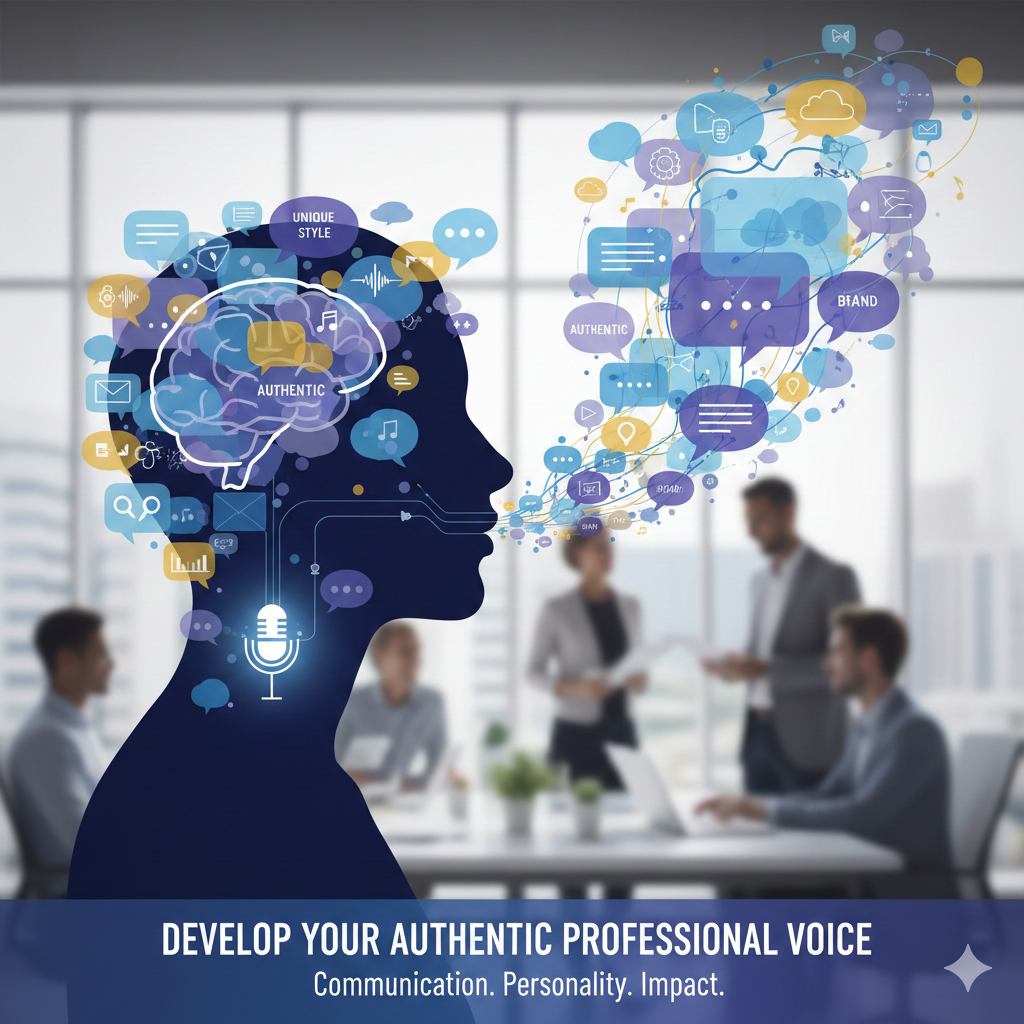
Effective personal branding requires developing distinctive professional voice—your unique communication style, perspective, and personality that makes your content and interactions recognizable and memorable. Your voice differentiates generic professional communication from branded content that people associate specifically with you. Authentic voice reflects your genuine personality while maintaining professionalism appropriate to your field.
Your professional voice encompasses your word choices, your tone (formal vs. conversational, serious vs. humorous), your perspective and opinions, the examples and stories you share, and your overall communication style. The most powerful brands have distinctive voices you’d recognize even without attribution. Developing your voice requires experimenting, getting feedback, and refining what feels authentic while resonating with your audience.
Finding Your Voice:
- Write or speak as you naturally would, then refine for clarity
- Consider what perspectives or insights you uniquely offer
- Determine appropriate tone for your brand and audience
- Identify topics you’re passionate about addressing
- Notice what content resonates when you share it
- Ask trusted colleagues how they’d describe your communication style
- Study communicators whose style resonates with you
Voice Consistency:
Your personal branding voice should be consistent across platforms—LinkedIn, Twitter, presentations, articles, conversations—while adapting appropriately to each medium. Consistency builds recognition and trust, though you can modulate formality based on context.
Balancing Professional and Personal:
Your voice should be professional without being sterile or corporate. The most engaging professional voices include appropriate personal elements—stories from your experience, acknowledgment of challenges, humor when fitting, and personality that makes you relatable. Find balance appropriate for your industry and brand.
Voice Evolution:
Your professional voice will evolve as you grow, and that’s healthy. Early career voices often differ from senior leader voices. Allow natural evolution while maintaining core elements that make your communication recognizable.
4. Create and Share Valuable Content Consistently

Content creation represents one of the most powerful personal branding strategies, demonstrating expertise while building visibility and credibility. Regular content—articles, posts, videos, podcasts, newsletters—positions you as thought leader, provides value to your professional community, improves your searchability and reach, and gives people reasons to follow and engage with you. Content doesn’t require being influencer; even modest consistent sharing builds your brand.
Focus on creating content that provides genuine value—insights from your experience, solutions to common problems in your field, perspective on industry trends, educational content helping others, or thought-provoking questions spurring discussion. Value-focused content builds reputation more effectively than self-promotional material ever could.
Content Types:
- LinkedIn posts and articles
- Blog posts on personal website or Medium
- Twitter threads sharing insights
- YouTube videos or TikToks (depending on industry)
- Podcasts or podcast guest appearances
- Newsletter to engaged audience
- Speaking at events or webinars
- Contributed articles to industry publications
Content Themes:
Develop 3-5 consistent themes aligned with your personal branding that you regularly address. This focus builds recognized expertise rather than scattered attention across too many topics. Your themes should reflect your value proposition and what you want to be known for.
Content Calendar:
Plan content in advance rather than scrambling for ideas. Batch create content when inspired, schedule posts for consistent frequency, and maintain sustainable pace (better to post weekly consistently than daily unsustainably). Quality and consistency matter more than volume.
Engagement Strategy:
Don’t just broadcast—engage. Respond to comments on your content, participate in discussions on others’ posts, ask questions inviting interaction, and build relationships through content-driven conversations. Engagement amplifies your personal branding impact.
Overcoming Content Creation Barriers:
Many professionals hesitate creating content fearing they have nothing unique to say or worrying about judgment. Remember: your perspective IS unique based on your specific experiences. Start small, improve over time, and recognize that sharing helps others while building your brand.
5. Build Thought Leadership in Your Niche
Thought leadership—being recognized as knowledgeable, innovative voice in your field—represents advanced personal branding that positions you as go-to expert rather than just competent professional. Thought leaders are invited to speak, quoted in media, sought for partnerships, recruited for opportunities, and command premium compensation. Building thought leadership requires consistently demonstrating expertise, offering unique perspectives, and contributing meaningfully to professional conversations.
Develop thought leadership by going deeper in specific areas rather than staying surface-level across many topics. Choose niche where you have genuine expertise and defensible point of view. Share insights from your work, challenge conventional thinking with well-reasoned alternatives, contribute to important discussions, and establish reputation for valuable perspective.
Thought Leadership Activities:
- Writing in-depth articles or whitepapers
- Speaking at industry conferences and events
- Participating in panels and roundtables
- Contributing to industry publications
- Appearing on relevant podcasts
- Conducting original research or surveys
- Teaching courses or workshops
- Building frameworks or methodologies
- Taking positions on industry debates
Developing Unique Perspective:
Thought leadership requires having something meaningful to say beyond restating common knowledge. Develop perspective through deep expertise in specific areas, unusual combination of experiences informing your view, contrarian positions backed by evidence and reasoning, or frameworks and approaches you’ve developed through your work.
Consistency and Depth:
Thought leadership for personal branding develops over time through consistent contribution. Regular insights build reputation more effectively than occasional viral content. Focus on depth rather than breadth—being recognized expert in specific area provides more value than surface-level knowledge across everything.
Balancing Confidence and Humility:
Effective thought leaders are confident in their expertise while remaining humble and open to learning. Share your knowledge generously, acknowledge limitations and evolution in your thinking, and engage respectfully with different perspectives.
For thought leadership development resources, visit: 👉 https://easynaukri4u.com/
6. Network Strategically and Build Relationships
Your network significantly amplifies your personal branding through connections sharing your content, referring opportunities, providing testimonials, and extending your reach beyond what you could achieve alone. Strategic networking focuses on building genuine relationships with people aligned with your professional goals and brand, providing mutual value, and maintaining connections over time.
Network intentionally with people in your industry, potential collaborators, people in roles you aspire to, complementary professionals serving similar audiences, and those whose work you genuinely admire. Focus on quality relationships over quantity of contacts. Your brand benefits more from 50 people who genuinely know and support you than 5,000 superficial connections.
Strategic Networking for Branding:
- Identify people aligned with your brand and goals
- Provide value before asking for anything
- Share others’ content and amplify their messages
- Make introductions benefiting your network
- Engage meaningfully with their content and work
- Maintain relationships consistently over time
- Look for collaboration opportunities
- Ask for introductions to relevant people
Networking Platforms:
LinkedIn remains primary professional networking platform, but also consider Twitter for thought leadership, industry-specific forums and communities, professional associations, conferences and events, and alumni networks. Build presence where your target audience engages.
Referral and Testimonial Requests:
As you build relationships, request testimonials or recommendations from colleagues, clients, and managers. These social proof elements strengthen your personal branding by validating your claims through third-party endorsement. Make requests easy by offering to draft testimonials they can edit.
Giving Before Getting:
The most effective networking for personal branding focuses on helping others, sharing their work, making valuable introductions, and being genuinely supportive. This generosity builds goodwill and reputation as valuable connector, making people naturally inclined to support your brand and refer opportunities.
7. Establish Professional Online Presence Beyond LinkedIn
While LinkedIn is essential, comprehensive personal branding in 2026 often requires presence across multiple platforms appropriate to your industry and goals. A personal website serves as your owned platform showcasing your work, perspective, and expertise without platform algorithm constraints. Twitter (X) enables real-time engagement with industry conversations. YouTube or TikTok work for visual or educational content. Medium provides publishing platform. Choose platforms strategically based on where your audience engages.
Your online presence should be consistent in branding—similar professional photos, coherent bio and messaging, and complementary content—while adapting appropriately to each platform’s norms and audiences. Consistency builds recognition while platform-specific optimization ensures effectiveness in each environment.
Personal Website Elements:
- Professional biography and background
- Clear value proposition and areas of expertise
- Portfolio or case studies showcasing your work
- Published articles or blog
- Speaking engagements and media mentions
- Testimonials and recommendations
- Contact information and social media links
- Regular updates showing active engagement
Platform Selection:
Don’t try to be everywhere—choose 2-3 platforms you’ll maintain consistently. Consider: Where does your target audience spend time? What content types do you enjoy creating? Where can you sustainably maintain presence? What platforms align with your industry norms?
Cross-Platform Strategy:
Repurpose content across platforms rather than creating unique content for each. A long-form article can become several LinkedIn posts, Twitter threads, and newsletter content. This approach maintains consistent presence efficiently.
Digital Footprint Management:
Google yourself regularly to understand what appears when people search you. Clean up or remove content inconsistent with your personal branding. Ensure top search results reflect the professional image you want to project. Consider SEO optimization making your positive content more discoverable.
8. Demonstrate Results and Social Proof
Personal branding claims require validation through demonstrated results and social proof from credible third parties. Anyone can claim expertise, but proven results, client testimonials, project outcomes, and third-party recognition provide evidence supporting your brand positioning. Building portfolio of demonstrated success stories strengthens credibility dramatically.
Document your achievements, collect testimonials and recommendations, showcase project outcomes, include metrics and measurable results, display awards or recognition, and reference notable clients or projects (when allowed). This social proof makes your brand claims believable rather than just marketing language.
Types of Social Proof:
- Client and colleague testimonials
- LinkedIn recommendations
- Case studies with measurable outcomes
- Awards and industry recognition
- Media mentions and interviews
- Speaking invitations
- Published articles in respected outlets
- Certifications and credentials
- Notable clients or projects (with permission)
Quantifying Impact:
Whenever possible, include specific, quantifiable results in your personal branding materials: revenue increased, costs saved, time reduced, customer satisfaction improved, team performance metrics, project success rates. Numbers make abstract claims concrete and believable.
Gathering Testimonials:
Proactively request testimonials from satisfied clients, colleagues, managers, and people you’ve helped. Make it easy by offering to draft something they can edit. Specific testimonials addressing particular aspects of your work are more powerful than generic praise.
Portfolio Development:
Create case studies or project examples showcasing your approach, challenges faced, solutions implemented, and results achieved. These detailed examples demonstrate your expertise more compellingly than general capability claims.
For portfolio development and case study templates, explore: 👉 https://easynaukri4u.com/
9. Align Your Personal Brand With Your Values
Authentic personal branding requires alignment between your projected brand and your actual values, work approach, and professional conduct. Inconsistency between brand messaging and actual behavior damages credibility and creates cognitive dissonance. The most powerful brands authentically reflect who you genuinely are rather than aspirational but inauthentic images.
Identify your core professional values, ensure your brand messaging reflects those values, make decisions consistent with your stated values, and be willing to turn down opportunities misaligned with your brand and values. This integrity builds trust and long-term brand strength even when it means short-term sacrifice.
Values-Based Branding:
- Identify your 3-5 core professional values
- Ensure brand messaging reflects these values
- Share stories demonstrating values in action
- Make decisions consistent with your values
- Work with clients and companies aligned with your values
- Advocate for causes consistent with your brand
- Be willing to say no to misaligned opportunities
Authenticity Versus Aspiration:
Your brand can include aspirational elements—skills you’re developing, directions you’re moving—but should fundamentally reflect current reality. Don’t claim expertise you don’t possess or values you don’t actually hold. Authenticity builds sustainable brands while fabrication eventually undermines them.
Personal and Professional Integration:
Consider how much personal life you integrate into professional brand. Some professionals maintain strict separation while others blend personal and professional sharing. Choose approach authentic to you while appropriate for your industry. Complete authenticity doesn’t require sharing everything—just ensuring what you do share is genuine.
Standing for Something:
Strong personal branding often involves taking positions on important professional issues, even when not universally popular. Thoughtful, principled stances aligned with your values build respect and attract like-minded people even if others disagree. Brands that stand for nothing often attract no one.
10. Invest in Professional Development and Credentials
Continuously developing expertise strengthens your personal branding by ensuring you remain current, deepening knowledge supporting thought leadership, providing new content and conversation topics, and demonstrating commitment to excellence. Share your learning journey, new certifications, courses completed, and evolving expertise, showing you invest in continuous improvement.
Strategic credentials—relevant certifications, advanced degrees, specialized training—can bolster your brand positioning when they genuinely enhance your expertise. However, credentials alone don’t create strong brands—applied expertise and demonstrated results matter more than credentials without practical application.
Strategic Skill Development:
- Identify skills complementing your brand positioning
- Pursue certifications recognized in your field
- Share learning journey and insights gained
- Apply new knowledge visibly in your work
- Teach others what you’ve learned
- Stay current with industry evolution
- Explore adjacent areas expanding your perspective
Credentials That Matter:
Focus on credentials actually valued in your field rather than collecting certifications for their own sake. Research what credentials respected professionals in your industry hold, what employers or clients look for, and what genuinely enhances your capabilities. Quality over quantity.
Learning in Public:
Share your learning process, insights from courses or books, and how you’re applying new knowledge. This transparency makes your personal branding more relatable while demonstrating growth mindset and commitment to improvement.
Balancing Learning and Doing:
Don’t hide behind perpetual learning instead of doing the work and building your brand. Learning supports your brand but applying knowledge creates it. Balance skill development with practical application and visibility.
11. Be Consistent Across All Touchpoints
Strong personal branding requires consistency across all professional touchpoints—your online profiles, your content, your email signature, your presentations, your networking conversations, your actual work. Consistency builds recognition and trust while inconsistency creates confusion and undermines credibility. Every interaction reinforces or weakens your brand.
Develop brand guidelines for yourself including visual elements (profile photos, color schemes if applicable, logos or marks), language and messaging (key phrases, value proposition, bio variations), content themes and topics, and overall tone and personality. Reference these guidelines ensuring consistency across platforms and over time.
Consistency Elements:
- Similar professional photos across platforms
- Coherent bio and elevator pitch
- Consistent value proposition messaging
- Aligned content themes and topics
- Cohesive visual presentation when applicable
- Similar tone and communication style
- Reliable work quality and professionalism
Brand Evolution:
While consistency matters, brands naturally evolve as you grow and your career develops. Periodic intentional updates to your personal branding reflect growth, but avoid frequent dramatic pivots that confuse your audience about who you are and what you stand for.
Online-Offline Alignment:
Ensure your in-person presence and behavior align with your online brand. Inconsistency between digital brand and real-world interactions damages credibility. Your brand should be genuine reflection of who you actually are professionally.
Quality Consistency:
Beyond messaging consistency, maintain quality consistency in your work, content, and interactions. Your brand’s strength ultimately rests on reliable delivery of the value you promise. Inconsistent quality undermines even the best branding.
For brand consistency resources and templates, visit: 👉 https://easynaukri4u.com/
12. Monitor, Measure, and Refine Your Brand
Effective personal branding requires monitoring how your brand is perceived, measuring impact through various metrics, and refining your approach based on results. Track your online visibility, engagement with your content, opportunities arising from your brand, and feedback from your network. Use this data to understand what’s working and what needs adjustment.
Set specific branding goals—building thought leadership in particular area, increasing speaking invitations, attracting specific types of opportunities, growing engaged audience—and track progress toward these goals. Regular review and adjustment ensures your branding efforts align with your career objectives.
Branding Metrics:
- LinkedIn profile views and connection growth
- Content engagement rates (likes, comments, shares)
- Inbound opportunities and inquiries
- Speaking or media invitations
- Network growth and quality
- Testimonials and recommendations received
- Search visibility (Google yourself)
- Career advancement and compensation growth
Feedback Collection:
Ask trusted colleagues and mentors how they perceive your brand, what you’re known for in your network, and where they see opportunities for strengthening your positioning. This external perspective reveals gaps between intended and perceived brand.
Regular Audits:
Quarterly or annually, audit your personal branding touchpoints: review all online profiles for consistency and currentness, assess content performance and themes, evaluate whether your brand supports current goals, identify gaps or weaknesses, and plan improvements or pivots.
A/B Testing:
Experiment with different approaches—content types, posting times, messaging variations, platforms—and measure what resonates most effectively. This testing optimizes your personal branding efforts over time.
Refinement Process:
Based on monitoring and feedback, make intentional adjustments to your brand: update positioning to reflect evolution, emphasize what’s working and de-emphasize what isn’t, address identified gaps or weaknesses, and ensure continued alignment with career goals.
Common Personal Branding Mistakes
Inconsistent or Neglected Online Presence
The most damaging personal branding mistake is inconsistent activity or neglected profiles that make you appear inactive, outdated, or unprofessional. Profiles with old information, no recent activity, or inconsistent messaging across platforms undermine your brand. Commit to maintaining consistent presence or focus on fewer platforms you’ll actually maintain.
Overly Promotional or Sales-Focused Content
Another common mistake is making your personal branding entirely self-promotional rather than value-focused. Constantly selling yourself or your services without providing genuine value alienates audiences and damages credibility. Focus primarily on helping, educating, and engaging, with self-promotion as minor element.
Inauthenticity or Trying to Be Someone You’re Not
Creating personal branding that doesn’t reflect your authentic self eventually backfires. You can’t sustain brands requiring you to be someone you’re not, and inauthenticity shows. Build brands amplifying genuine strengths and personality rather than fabricating false images.
Neglecting Engagement and Relationship Building
Broadcasting content without engaging with your audience or building relationships limits personal branding impact. Brands strengthen through conversations and connections, not just one-way communication. Engage meaningfully with your network’s content and build genuine relationships.
Focusing Only on Online Presence
While online presence is crucial, personal branding also requires offline reinforcement through your actual work quality, in-person interactions, speaking opportunities, and how you show up in meetings and projects. Your brand ultimately rests on delivered value, not just marketing.
Industry-Specific Branding Considerations
Technology and Innovation Fields
Technology personal branding often emphasizes technical expertise, innovation thinking, problem-solving capabilities, and staying current with rapidly evolving field. GitHub profiles, technical blog posts, speaking at tech conferences, and contributing to open source strengthen tech brands. Balance technical depth with communication skills making complex topics accessible.
Creative Industries
Creative fields judge personal branding heavily through portfolio quality and distinctive creative voice. Visual presentation matters more than in other fields. Showcase your best work prominently, develop recognizable style, and tell stories about creative process. Personal websites and Instagram often matter more than LinkedIn for creative professionals.
Consulting and Professional Services
Consultants benefit from personal branding emphasizing specific expertise, demonstrated results, client testimonials, and thought leadership. Case studies, methodology frameworks, published expertise, and speaking engagements build credibility. Professional certifications and credentials carry more weight in these fields.
Corporate Leadership
Executive personal branding balances visibility with appropriate gravitas, demonstrates strategic thinking, highlights organizational impact, and often addresses industry-level issues rather than tactical details. Speaking engagements, board positions, media commentary, and published perspectives build leadership brands.
Conclusion: Building Your Enduring Professional Brand
Strategic personal branding in 2026 combines authentic self-expression with intentional positioning, consistent value delivery with strategic visibility, and genuine relationship building with measurable career advancement. The twelve strategies outlined in this guide—from defining your unique value proposition and optimizing online presence to building thought leadership and monitoring brand effectiveness—provide comprehensive framework for creating powerful personal brands that open opportunities and accelerate careers.
Remember that personal branding is long-term investment rather than quick fix. Strong brands build over months and years through consistent value delivery, authentic engagement, and strategic positioning. The effort compounds—early investments in branding create assets that appreciate over time as your reputation and network grow.
Start strengthening your personal branding today by selecting 2-3 strategies from this guide to implement immediately. Whether that means clarifying your value proposition, optimizing your LinkedIn profile, beginning content creation, or strategically networking, small consistent actions create momentum toward building powerful brands.
Your professional future increasingly depends not just on what you can do but on whether the right people know what you can do and perceive you as the right choice for important opportunities. Strategic personal branding ensures your capabilities and value are visible, credible, and top-of-mind when opportunities arise.
Take action now by identifying one aspect of your personal branding needing attention and committing to meaningful improvement over the next 30 days. Whether refining your value proposition, publishing your first thought leadership piece, or systematically building your network, forward movement creates the strong brand supporting your career aspirations.
The opportunities, recognition, advancement, and career fulfillment you seek likely depend significantly on the strength and clarity of your personal branding. Invest in building authentic, strategic, and visible brand, and watch as doors open to possibilities that wouldn’t exist without intentional brand development.
For comprehensive personal branding resources, coaching, and career development support helping you build powerful professional brands that advance your success, visit: 👉 https://easynaukri4u.com/
Your career potential is limited only by how effectively you communicate and position the genuine value you offer. Strategic personal branding transforms hidden potential into recognized expertise, opening pathways to the professional success and recognition you deserve. Start building your brand today.