Networking Strategies: Build Career Connections in 2026
BlogIntroduction

Professional success increasingly depends on the strength of your network, making effective networking strategies essential for career advancement in 2026. The traditional notion of networking has evolved far beyond exchanging business cards at conferences, now encompassing digital connections, virtual relationships, and strategic alliance building across global platforms. This comprehensive guide explores proven networking strategies that help you build meaningful professional relationships, expand career opportunities, and establish thought leadership in your industry.
visit our website – EasyNaukri4U – India’s Leading Government Job Portal
visit our resume builder – Government Jobs - EasyNaukri4U
“According to LinkedIn’s Global Talent Trends Report, recruiters spend an average of six to seven seconds reviewing each resume.”
The Modern Networking Landscape
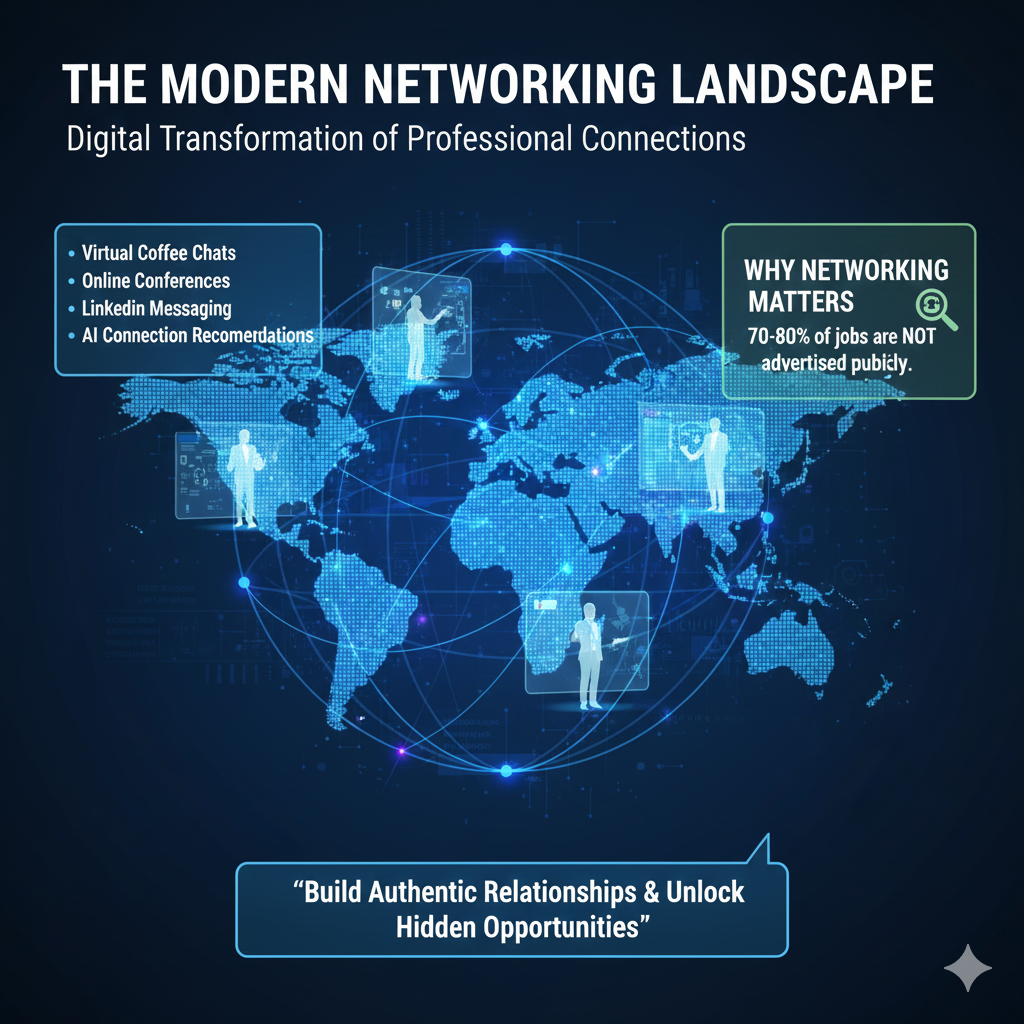
Digital Transformation of Professional Connections
The evolution of professional networking reflects broader digital transformation trends reshaping how we work and collaborate. Today’s networking strategies must account for virtual-first interactions, social media dynamics, and AI-powered connection recommendations. Understanding this new landscape helps you develop approaches that resonate with modern professionals while building authentic relationships.
The pandemic accelerated the shift toward digital networking, normalizing virtual coffee chats, online conferences, and LinkedIn messaging as primary connection methods. These changes require different networking strategies than traditional face-to-face interactions, emphasizing written communication, digital presence, and virtual relationship building skills.
Why Networking Matters More Than Ever
Research consistently shows that 70-80% of jobs aren’t publicly advertised, filled instead through professional networks and referrals. Your networking strategies directly impact access to hidden opportunities, insider information, and career advancement possibilities. Beyond job searching, strong networks provide mentorship, collaboration opportunities, and professional support throughout your career journey.
1. Building Your Networking Foundation
Defining Your Networking Goals
Effective networking strategies begin with clear objectives aligned with your career aspirations. Are you seeking job opportunities, industry knowledge, mentorship, or business partnerships? Understanding your goals helps identify target connections and appropriate engagement approaches.
Create specific, measurable networking objectives such as connecting with five industry leaders monthly or attending two virtual events weekly. Your networking strategies should balance immediate needs with long-term relationship building. Avoid purely transactional approaches that damage reputation and limit future opportunities.
Consider different network layers including close mentors, professional peers, industry contacts, and broad connections. Each layer serves different purposes and requires tailored networking strategies for optimal engagement. Diversify your network across industries, seniority levels, and geographical locations for maximum value.
Developing Your Personal Brand
Your personal brand forms the foundation of successful networking strategies by establishing what you offer and attract to professional relationships. Define your unique value proposition, expertise areas, and professional personality. Consistency across all networking touchpoints reinforces your brand and makes you memorable to connections.
Craft an elevator pitch that concisely communicates your professional identity and value. Your networking strategies should include variations for different contexts, from casual introductions to formal presentations. Practice delivering your pitch naturally without sounding rehearsed or salesy.
For networking resources and career development tools, visit:
👉 https://easynaukri4u.com/
2. Digital Networking Mastery
LinkedIn Optimization and Engagement
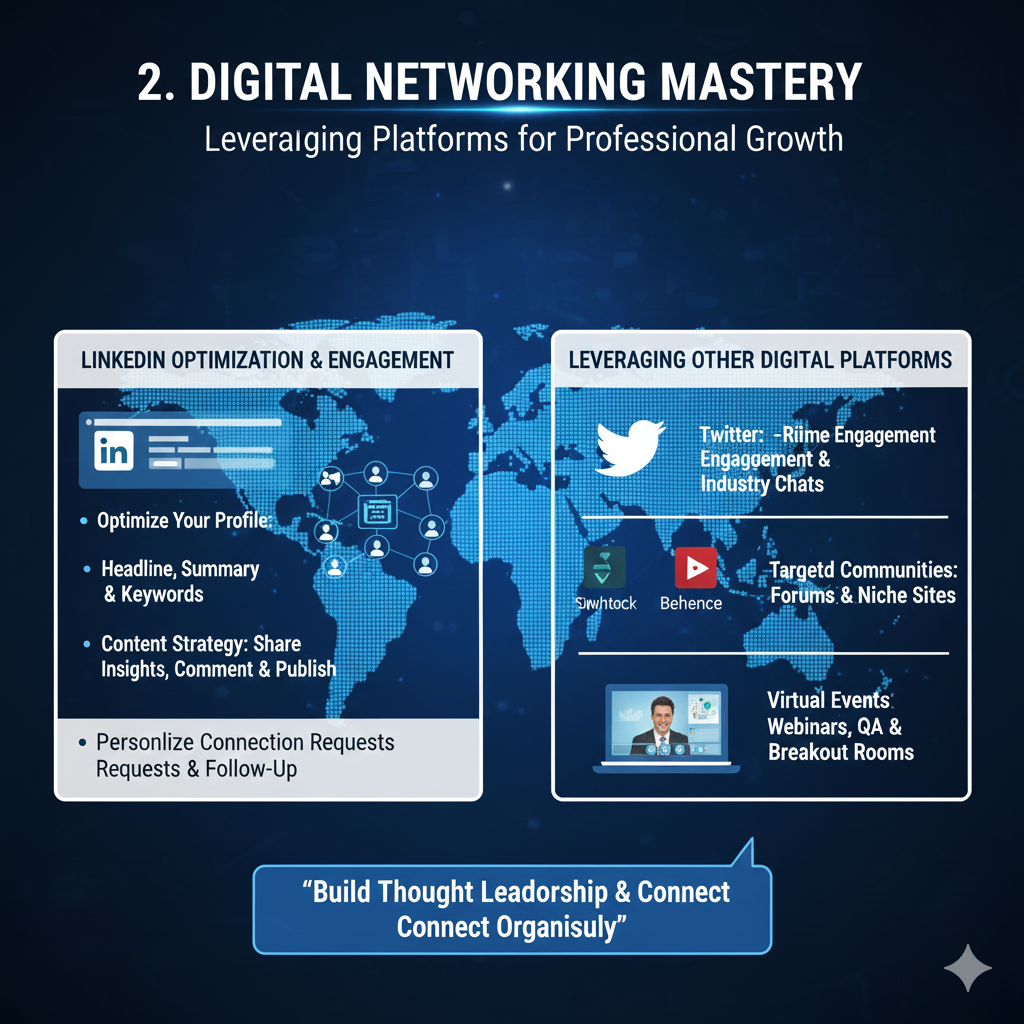
LinkedIn remains the cornerstone of professional networking strategies in 2026. Optimize your profile with keywords relevant to your industry and career goals. Use a professional headline that goes beyond job title to communicate value and expertise. Your summary should tell your professional story while incorporating searchable terms.
Develop content strategies that demonstrate expertise and provide value to your network. Share industry insights, comment thoughtfully on others’ posts, and publish articles addressing professional challenges. These networking strategies position you as a thought leader and attract meaningful connections organically.
Personalize connection requests with specific reasons for reaching out and potential mutual value. Generic invitations get ignored, while thoughtful messages demonstrating genuine interest yield higher acceptance rates. Follow up with new connections within a week to maintain momentum and begin building relationships.
Leveraging Other Digital Platforms
While LinkedIn dominates professional networking, other platforms offer unique opportunities for connection building. Twitter enables real-time engagement with industry conversations and thought leaders. Your networking strategies should include participating in relevant Twitter chats and sharing valuable content consistently.
Industry-specific platforms and forums provide targeted networking opportunities within your field. Whether Stack Overflow for developers, Behance for designers, or ResearchGate for academics, these specialized communities enable deeper professional connections. Establish presence on platforms where your target connections congregate.
Virtual networking events and webinars have become standard components of modern networking strategies. Participate actively through chat features, Q&A sessions, and breakout rooms. Follow up with interesting participants after events to convert brief interactions into lasting connections.
3. In-Person Networking Excellence
Conference and Event Strategies
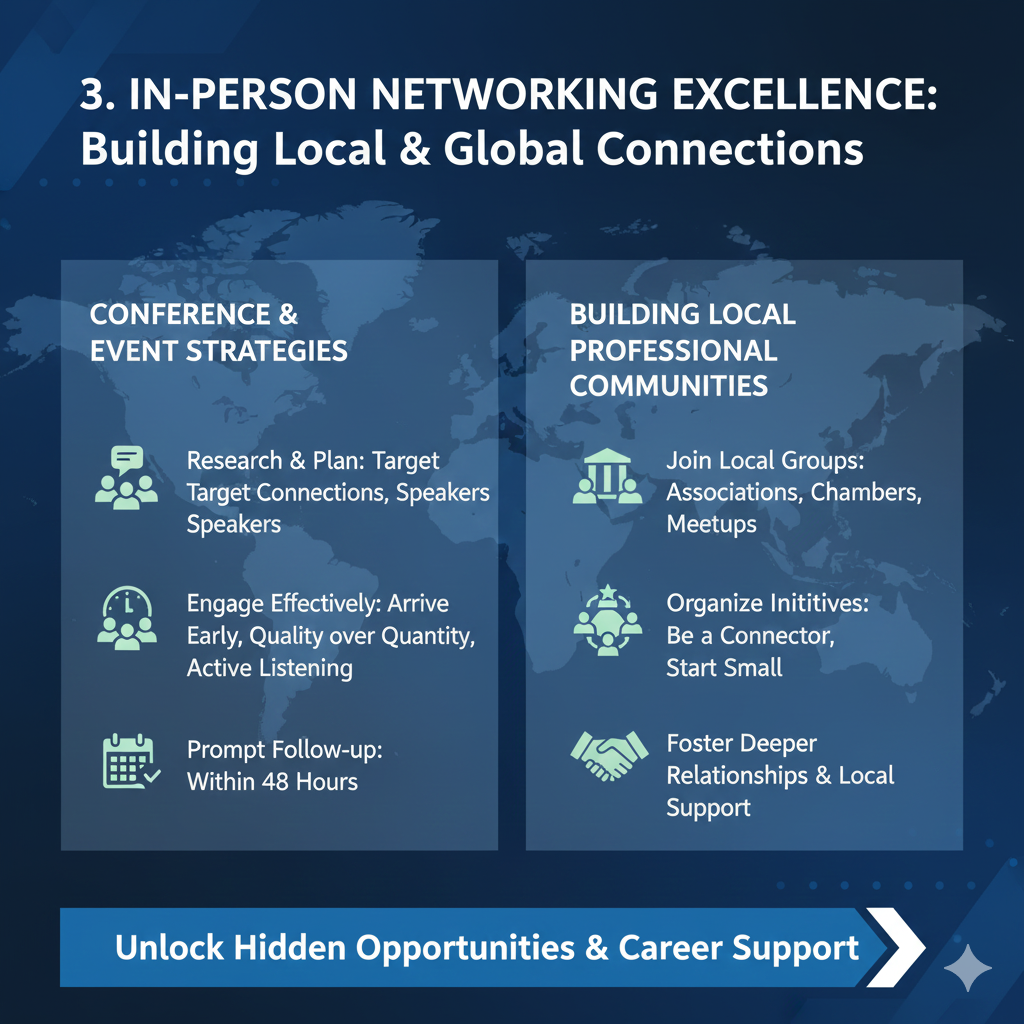
Despite digital dominance, in-person networking remains powerful for building strong professional relationships. Develop networking strategies for maximizing value from conferences, meetups, and professional gatherings. Research attendees and speakers beforehand, identifying priority connections and planning introduction approaches.
Arrive early to events when smaller crowds enable quality conversations. Position yourself near registration or refreshment areas where natural interactions occur. Your networking strategies should include techniques for joining existing conversations gracefully and exiting politely when discussions conclude.
Focus on quality over quantity when meeting new people. Having five meaningful conversations trumps collecting dozens of business cards. Ask thoughtful questions, listen actively, and look for ways to provide value to new connections. Follow up within 48 hours while memories remain fresh.
Building Local Professional Communities
Local networking often yields stronger relationships than distant connections. Your networking strategies should include engaging with local professional associations, chambers of commerce, and industry meetups. These communities provide regular interaction opportunities and potential for deeper relationship development.
Consider organizing your own networking events or professional groups around specific interests or challenges. Leading community initiatives establishes you as a connector and thought leader while building valuable relationships. Start small with informal coffee meetups before scaling to larger events.
4. Strategic Relationship Building
The Art of Following Up
Following up effectively distinguishes successful networkers from those who accumulate meaningless contacts. Your networking strategies must include systematic follow-up processes ensuring connections don’t wither after initial meetings. Create tracking systems for managing relationships and scheduling regular touchpoints.
Personalize follow-up messages referencing specific conversation points and offering promised resources or introductions. Share relevant articles, job opportunities, or event invitations that benefit your connections. These value-adding touches strengthen relationships beyond superficial interaction.
Maintain regular contact without becoming burdensome. Your networking strategies should include varied engagement methods from holiday greetings to congratulations on professional achievements. Use social media interactions to maintain visibility between direct communications.
Providing Value Before Receiving
The most effective networking strategies prioritize giving over getting. Look for opportunities to help connections through introductions, recommendations, or resource sharing. This generosity creates reciprocal relationships where others actively seek ways to support your success.
Become a connector within your network, introducing professionals who might benefit from knowing each other. These introductions position you as a valuable network hub while strengthening relationships with both parties. Document successful connections to remind contacts of value you’ve provided.
Share your expertise freely through mentoring, speaking engagements, or content creation. Your networking strategies should include teaching others without expecting immediate returns. This approach builds reputation and attracts high-quality connections seeking your knowledge.
5. Networking for Introverts
Leveraging Introvert Strengths
Introverts can excel at networking by developing networking strategies aligned with their natural strengths. Deep listening skills, preference for meaningful conversations, and thoughtful communication style advantage introverts in building strong professional relationships.
Focus on one-on-one meetings or small group interactions rather than large networking events. Your networking strategies might emphasize coffee meetings, virtual chats, or structured activities over cocktail parties. These settings enable deeper connections that introverts often prefer.
Prepare conversation topics and questions in advance to reduce social anxiety. Having frameworks for interaction makes networking less draining and more productive. Schedule recovery time after networking activities to recharge and maintain sustainable engagement levels.
Digital Networking Advantages
Online networking offers introverts significant advantages through asynchronous communication and controlled interaction environments. Your networking strategies can leverage written communication strengths through thoughtful LinkedIn messages, detailed emails, and engaging content creation.
To explore more networking resources and career guidance, visit:
👉 https://easynaukri4u.com/
6. Cross-Cultural Networking
Understanding Cultural Differences
Global connectivity requires networking strategies sensitive to cultural differences in communication styles, relationship building, and professional etiquette. Research cultural norms before engaging with international connections to avoid unintentional offense and build stronger relationships.
Adapt your communication style based on cultural context, recognizing that directness valued in some cultures appears rude in others. Your networking strategies should include flexibility in approach while maintaining authenticity. Learn basic greetings and phrases in other languages to demonstrate respect and effort.
Build cultural intelligence through diverse interactions and continuous learning. Attend international events, join global professional groups, and seek connections from various backgrounds. This diversity enriches your network while developing valuable cross-cultural competencies.
Virtual Global Networking
Time zones, language barriers, and technology differences complicate international networking. Your networking strategies must account for these challenges while leveraging opportunities for global connection. Use scheduling tools considering multiple time zones and be flexible about meeting times.
Communicate clearly and avoid idioms or cultural references that might confuse international connections. Your written communications should be concise and structured for non-native English speakers. Consider using visual aids or examples to clarify complex concepts.
7. Networking Through Content Creation
Establishing Thought Leadership
Content creation represents powerful networking strategies for attracting connections and demonstrating expertise. Publishing articles, creating videos, or hosting podcasts positions you as an industry authority while providing value to your network.
Develop content calendars addressing industry challenges, sharing insights, and showcasing expertise. Your networking strategies should include consistent publishing schedules and cross-platform promotion. Engage with comments and discussions generated by your content to build relationships with engaged audiences.
Collaborate with other professionals on content projects, leveraging their audiences while building relationships. Guest posting, podcast interviews, and co-authored articles expand your reach while strengthening professional connections.
Engaging with Others’ Content
Thoughtful engagement with others’ content builds relationships and increases your visibility. Your networking strategies should include regularly commenting on posts, sharing valuable content, and participating in professional discussions.
Add substantial value through comments rather than generic praise. Share personal experiences, ask thoughtful questions, or provide additional resources that enhance the original content. This engagement demonstrates expertise while building relationships with content creators and other engaged professionals.
8. Measuring Networking Success
Defining Success Metrics
Effective networking strategies require measurement systems tracking progress toward networking goals. Define metrics aligned with your objectives, whether job opportunities generated, mentorship relationships established, or speaking invitations received.
Track both quantitative metrics like new connections made and qualitative measures like relationship depth. Your networking strategies should balance network growth with relationship quality. A smaller network of engaged connections often provides more value than thousands of superficial contacts.
Regularly assess your network’s diversity across industries, seniority levels, and geographical locations. Identify gaps in your network and adjust strategies to build connections in underrepresented areas.
Network Audit and Optimization
Conduct periodic network audits evaluating relationship strength and value exchange. Your networking strategies should include pruning inactive connections while strengthening valuable relationships. Focus energy on connections providing mutual value rather than maintaining dormant relationships.
Analyze which networking activities yield best returns on time investment. Track where valuable connections originate and which engagement methods strengthen relationships most effectively. Use these insights to optimize your networking strategies for maximum impact.
9. Networking Ethics and Etiquette
Professional Boundaries
Maintaining professional boundaries preserves network integrity and personal reputation. Your networking strategies must balance friendliness with professionalism, avoiding oversharing or inappropriate requests.
Respect others’ time and communication preferences. Avoid excessive messaging, respect response times, and accept when connections aren’t interested in deeper engagement. Your networking reputation affects future connection opportunities.
Honor confidentiality and avoid gossiping about network connections. Professional networks thrive on trust, which destructive behavior quickly erodes. Your networking strategies should prioritize long-term reputation over short-term gains.
Inclusive Networking Practices
Develop networking strategies promoting diversity and inclusion within professional networks. Actively seek connections from underrepresented groups and use your privilege to create opportunities for others.
Challenge yourself to build connections outside your comfort zone. Attend events serving diverse communities, amplify underrepresented voices, and make introductions that promote inclusion. These practices enrich your network while contributing to professional equity.
10. Future of Networking
Emerging Technologies and Trends
Artificial intelligence and machine learning increasingly influence networking strategies through connection recommendations, automated scheduling, and conversation insights. Stay informed about emerging networking technologies while maintaining human-centered relationship building approaches.
Virtual reality and metaverse platforms promise immersive networking experiences transcending current video conference limitations. Your future networking strategies might include avatar-based professional events and virtual office spaces enabling spontaneous interactions.
Blockchain technology may revolutionize professional credentials and reputation systems, creating verified professional networks. Understanding these emerging technologies positions you advantageously for future networking evolution.
Preparing for Tomorrow’s Networking
Develop adaptability in your networking strategies to accommodate continued evolution in how professionals connect. Build foundational skills like emotional intelligence and communication that remain valuable regardless of technological changes.
Invest in continuous learning about networking best practices and emerging platforms. Your ability to adapt networking strategies to new contexts determines long-term relationship building success.
For comprehensive networking resources and tools, visit:
👉 https://easynaukri4u.com/
Conclusion
Mastering networking strategies has become essential for career success in 2026’s interconnected professional landscape. The approaches outlined in this guide provide framework for building meaningful professional relationships that advance your career while contributing value to others.
Remember that effective networking strategies prioritize authentic relationship building over transactional connection collecting. Focus on providing value, maintaining genuine interest in others, and building diverse networks that enrich your professional journey.
Start implementing these networking strategies today, regardless of your current career stage. Begin with small steps like optimizing your LinkedIn profile or attending one virtual event weekly. Consistent application of these strategies builds powerful networks supporting long-term career success.
Take action now by auditing your current network, setting networking goals, and creating implementation plans for the strategies resonating most with your style and objectives. Your investment in developing strong networking strategies creates compound returns throughout your career, opening doors to opportunities you haven’t yet imagined.