15 In-Demand Career Skills for 2026: Future-Proof Your Career
BlogIntroduction: Preparing for the Future Workplace
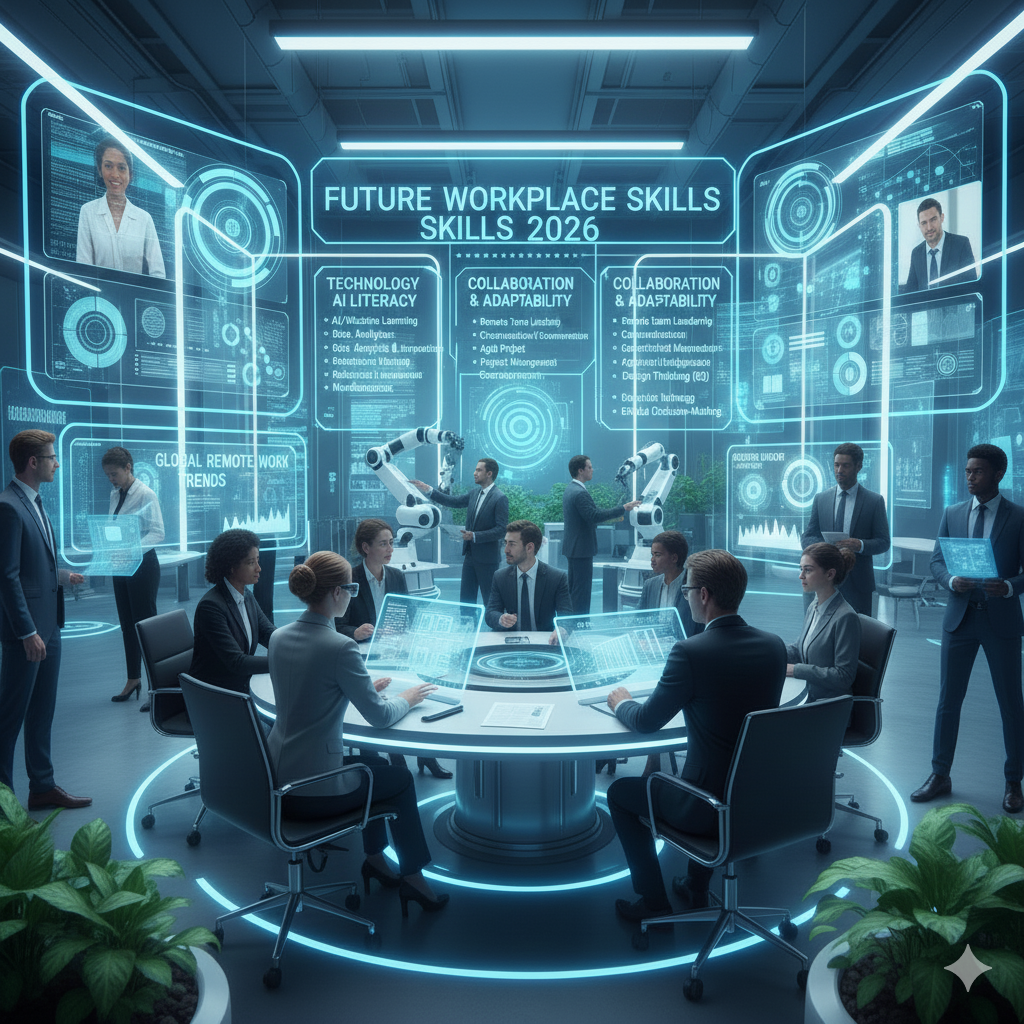
The rapidly evolving professional landscape demands that workers continuously update their capabilities to remain competitive and relevant. Understanding which career skills will be most valuable in 2026 allows you to invest your learning efforts strategically, ensuring you’re prepared for emerging opportunities rather than left behind by technological and organizational changes. The workplace of 2026 looks significantly different from today, with artificial intelligence, remote collaboration, and automation fundamentally altering how work gets done and what employers value most.
visit our website – EasyNaukri4U – India’s Leading Government Job Portal
visit our resume builder – Government Jobs - EasyNaukri4U
“According to LinkedIn’s Global Talent Trends Report, recruiters spend an average of six to seven seconds reviewing each resume.”
Developing future-focused career skills isn’t just about job security—it’s about positioning yourself for advancement, higher compensation, and fulfilling work that leverages your unique human capabilities. While technology handles increasingly sophisticated tasks, certain skills remain distinctly human and irreplaceable. Understanding which career skills to prioritize helps you differentiate yourself in competitive job markets while building capabilities that provide long-term value regardless of specific roles or industries.
This comprehensive guide explores fifteen essential career skills that will define professional success in 2026 and beyond. We’ll examine both technical competencies that leverage emerging technologies and human skills that complement rather than compete with automation. Whether you’re early in your career, seeking advancement, or navigating career transitions, these career skills represent strategic investments in your professional future that will pay dividends throughout your working life.
The most successful professionals in 2026 will be those who combine technical literacy with distinctly human capabilities—emotional intelligence, creativity, complex problem-solving, and adaptive learning. This guide helps you understand what this combination looks like in practice and how to systematically develop these career skills to ensure you’re not just surviving but thriving in tomorrow’s workplace.
For career development resources and opportunities, visit: 👉 https://easynaukri4u.com/
Understanding the 2026 Workplace Environment
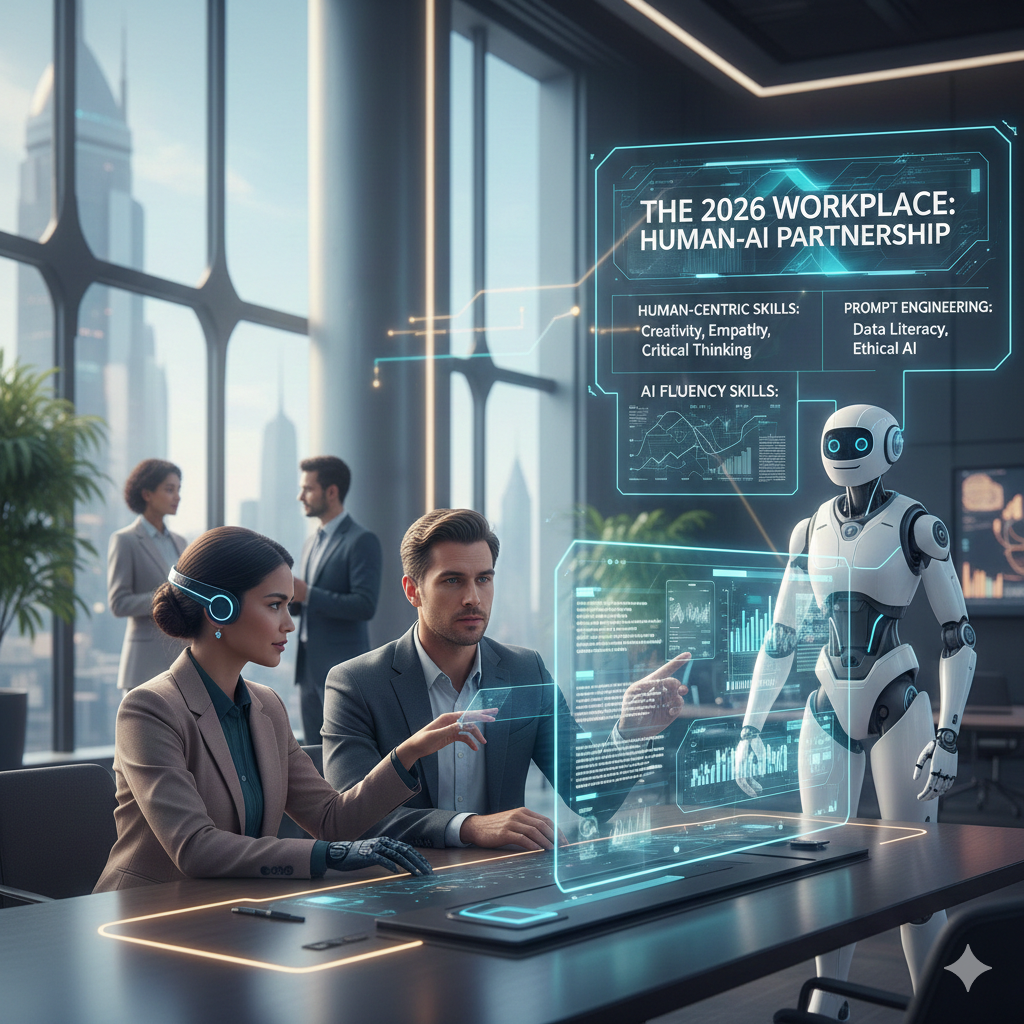
How Technology Is Reshaping Work
The integration of artificial intelligence, machine learning, and automation into virtually every industry is transforming which career skills employers value most. Routine cognitive tasks—data entry, basic analysis, scheduling, report generation—are increasingly automated, shifting human work toward areas requiring judgment, creativity, interpersonal connection, and complex problem-solving. Understanding this shift helps you focus on developing career skills that complement technology rather than compete with it.
Remote and hybrid work models have become standard rather than exceptional, requiring different career skills than traditional office environments demanded. Digital collaboration, asynchronous communication, self-direction, and virtual relationship building are now essential competencies across most professional roles. The physical workplace matters less while ability to work effectively in distributed teams matters more.
The Growing Skills Gap
Despite technological advancement making many tasks easier, a significant skills gap persists between what employers need and what workers offer. This gap creates opportunities for those who develop in-demand career skills—you can differentiate yourself and command premium compensation by possessing capabilities others lack. The fastest-growing roles often struggle to find qualified candidates, creating seller’s markets for those with the right combinations of career skills.
Organizations increasingly invest in employee development, recognizing that building career skills internally proves more viable than finding fully-prepared candidates externally. This shift creates opportunities for motivated learners willing to develop capabilities through employer-sponsored training, online courses, certifications, and hands-on experience. Your capacity to learn may matter more than current knowledge.
15 Essential Career Skills for 2026
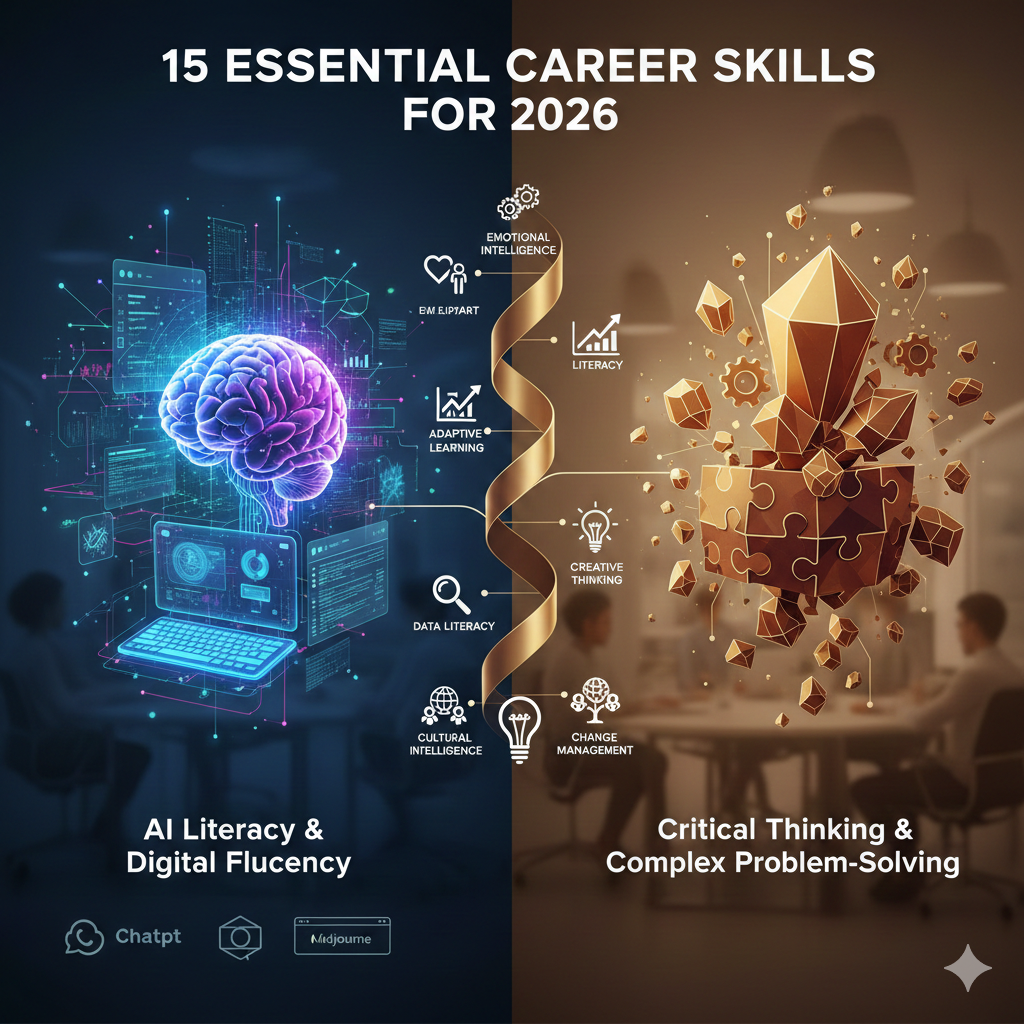
1. AI Literacy and Digital Fluency
Among the most critical career skills for 2026 is understanding how to work effectively with artificial intelligence and digital tools. You don’t need to be a programmer or data scientist, but you must understand AI capabilities and limitations, know when and how to leverage AI tools for productivity, and interpret AI-generated outputs critically. Digital fluency extends beyond basic computer skills to comfort with emerging technologies, platforms, and digital workflows.
Professionals who embrace AI as a collaborative tool rather than viewing it as a threat will significantly outperform those who resist technological integration. Learning to prompt AI systems effectively, combining AI capabilities with human judgment, and understanding which tasks benefit from automation versus human touch represent essential career skills for modern work.
Development Strategies:
- Experiment with AI tools regularly (ChatGPT, Midjourney, coding assistants)
- Take online courses on AI fundamentals and applications
- Practice using AI for routine tasks in your current role
- Stay informed about AI developments in your industry
- Learn prompt engineering and effective AI collaboration
- Understand ethical considerations and limitations
2. Critical Thinking and Complex Problem-Solving
As automation handles straightforward problems, human work increasingly focuses on complex, ambiguous challenges without clear solutions. Critical thinking—analyzing information objectively, identifying assumptions, evaluating evidence, considering multiple perspectives—ranks among the most valuable career skills for 2026. Employers need people who can tackle novel problems, think systemically, and develop innovative solutions to challenges that don’t have algorithmic answers.
Complex problem-solving extends beyond finding answers to defining problems correctly, identifying root causes rather than symptoms, and developing solutions that address underlying issues rather than surface manifestations. These career skills combine analytical rigor with creative thinking and practical judgment.
Development Strategies:
- Practice structured problem-solving frameworks (root cause analysis, design thinking)
- Seek out complex projects that challenge your thinking
- Study diverse disciplines to build mental models
- Question assumptions and consider alternative perspectives
- Learn systems thinking to understand interconnections
- Analyze case studies of successful problem-solving
3. Emotional Intelligence and Interpersonal Skills
As technology handles transactional interactions, human work shifts toward relationships, collaboration, and situations requiring empathy and emotional awareness. Emotional intelligence—understanding and managing your emotions and recognizing and influencing others’ emotions—represents crucial career skills for leadership, teamwork, client relationships, and change management. The ability to build trust, navigate interpersonal dynamics, and create psychological safety enables team effectiveness.
High emotional intelligence differentiates successful leaders and collaborators from those with comparable technical abilities but weaker interpersonal career skills. As organizations flatten hierarchies and emphasize cross-functional collaboration, the ability to work effectively with diverse personalities and perspectives becomes increasingly valuable.
Development Strategies:
- Practice active listening without planning your response
- Seek feedback about your interpersonal impact
- Develop self-awareness through reflection and assessment tools
- Study conflict resolution and difficult conversation techniques
- Practice empathy by considering others’ perspectives deliberately
- Observe and learn from emotionally intelligent leaders
For emotional intelligence resources, explore: 👉 https://easynaukri4u.com/
4. Adaptive Learning and Continuous Skill Development
Perhaps the most important meta-skill among all career skills is learning agility—the ability to quickly acquire new capabilities as circumstances demand. Technology, business models, and job requirements evolve so rapidly that specific knowledge becomes outdated quickly. The capacity to learn continuously, adapt to change, and develop new competencies throughout your career ensures long-term relevance regardless of how specific roles transform.
Adaptive learners view challenges as development opportunities, embrace unfamiliar situations as chances to expand capabilities, and maintain curiosity about emerging trends and technologies. These career skills enable career resilience across decades as the nature of work continues evolving.
Development Strategies:
- Adopt growth mindset viewing abilities as developable
- Set regular learning goals and track progress
- Experiment with different learning modalities (courses, books, practice, mentoring)
- Step outside comfort zones regularly to build adaptability
- Reflect on experiences to extract lessons and insights
- Stay current with industry trends and emerging technologies
5. Data Literacy and Analytical Thinking
Data-driven decision-making has become standard across industries, making data literacy essential career skills even for non-technical roles. Understanding how to interpret data visualizations, draw appropriate conclusions from evidence, recognize patterns and trends, and question data quality and methodology enables participation in modern business discussions. You don’t need advanced statistics knowledge, but you must be comfortable working with data rather than intimidated by it.
Analytical thinking—breaking complex situations into components, identifying relationships, testing hypotheses, and drawing logical conclusions—complements data literacy as core career skills for knowledge work. The combination enables evidence-based reasoning that improves decision quality.
Development Strategies:
- Learn basic statistics and data visualization interpretation
- Practice working with data in spreadsheet tools
- Take introductory data analysis courses
- Question data sources and methodology habitually
- Use data to support arguments and decisions
- Develop comfort with quantitative reasoning
6. Digital Communication and Virtual Collaboration
Remote and hybrid work models require different communication career skills than office environments where quick hallway conversations clarify misunderstandings. Writing clear, concise emails and messages, communicating effectively on video calls, collaborating asynchronously across time zones, and building relationships through digital channels represent essential capabilities for distributed work environments.
Virtual collaboration extends beyond video conferencing to effective use of project management platforms, shared documents, communication tools, and digital workflows that keep teams aligned despite physical separation. These career skills enable productivity and cohesion in increasingly distributed organizations.
Development Strategies:
- Practice writing clearly and concisely for digital communication
- Master video conferencing etiquette and presence
- Learn collaboration platform features thoroughly (Slack, Teams, Asana)
- Develop skills in asynchronous communication and documentation
- Build virtual relationships through intentional connection
- Create communication norms that work for distributed teams
7. Creative Thinking and Innovation
Creativity—generating novel ideas, seeing connections others miss, imagining alternatives to current approaches—represents valuable career skills as routine work becomes automated. Organizations need innovation to compete, differentiate, and solve emerging challenges. Creative thinking isn’t limited to artistic endeavors but applies to business model innovation, process improvement, product development, and problem-solving across all functions.
The ability to think divergently (generating many possibilities) before converging (selecting best options) enables both ideation and practical implementation. These career skills combine imagination with judgment to create value through innovation.
Development Strategies:
- Practice brainstorming without immediate evaluation
- Expose yourself to diverse experiences and disciplines
- Study creative problem-solving techniques (SCAMPER, lateral thinking)
- Challenge assumptions about how things must be done
- Experiment with novel approaches to routine tasks
- Learn from creative leaders and innovators
8. Leadership and Influence Without Authority
Modern organizations increasingly operate through networks and cross-functional teams rather than strict hierarchies, making the ability to lead and influence without formal authority crucial career skills. Project leadership, change championing, and collaborative initiative often happen outside reporting relationships. The capacity to inspire others, build coalitions, navigate organizational politics, and drive outcomes through persuasion rather than position enables impact regardless of title.
These career skills involve understanding human motivation, building credibility through expertise and relationships, communicating compellingly about shared goals, and creating conditions for others’ success.
Development Strategies:
- Volunteer for cross-functional projects and initiatives
- Practice persuasion through logic, emotion, and credibility
- Build broad organizational networks and relationships
- Study influence techniques and organizational dynamics
- Seek opportunities to lead without formal authority
- Develop strong personal brand and reputation
For leadership development resources, visit: 👉 https://easynaukri4u.com/
9. Cultural Intelligence and Inclusive Collaboration
Global business operations and diverse workforces make cultural intelligence—the ability to work effectively across cultural differences—increasingly important career skills. Understanding how cultural backgrounds shape communication styles, decision-making approaches, conflict resolution preferences, and leadership expectations enables effective collaboration with colleagues, clients, and partners from diverse backgrounds.
Inclusive collaboration extends beyond avoiding offense to actively creating environments where diverse perspectives are welcomed, psychological safety enables honest input, and different working styles are accommodated. These career skills improve team performance and innovation through better utilization of diverse talents and viewpoints.
Development Strategies:
- Learn about different cultural values and communication norms
- Seek opportunities to work with diverse teams
- Practice perspective-taking and checking cultural assumptions
- Study inclusive leadership and collaboration practices
- Develop awareness of your own cultural conditioning
- Create space for diverse voices and approaches
10. Change Management and Resilience
Organizational change has accelerated to the point where managing transitions represents ongoing career skills rather than occasional needs. The ability to navigate change personally—maintaining effectiveness during uncertainty, adapting to new circumstances, managing stress constructively—and help others through transitions enables leadership during the constant evolution characterizing modern business.
Resilience—bouncing back from setbacks, maintaining perspective during challenges, learning from failures—supports sustained performance despite inevitable difficulties. These career skills prevent burnout while enabling growth through adversity.
Development Strategies:
- Practice reframing challenges as opportunities
- Develop stress management and coping strategies
- Study change management models and approaches
- Build support networks for difficult periods
- Reflect on past changes to identify effective strategies
- Maintain growth mindset viewing setbacks as learning
11. Strategic Thinking and Business Acumen
Understanding business fundamentals—how organizations create value, generate revenue, manage costs, and compete effectively—represents important career skills even for individual contributors. Strategic thinking involves seeing beyond immediate tasks to understand broader organizational goals, industry dynamics, and competitive positioning. This perspective enables better decisions, stronger contributions to discussions, and positioning for advancement.
Business acumen allows translating specialized expertise into business impact, communicating in terms executives understand, and identifying opportunities that serve organizational objectives. These career skills distinguish strategic contributors from tactical executors.
Development Strategies:
- Learn business fundamentals (finance, strategy, operations)
- Understand your organization’s business model and strategy
- Follow industry news and competitive dynamics
- Ask questions connecting your work to business outcomes
- Seek exposure to strategic planning and decision-making
- Think like an owner about challenges and opportunities
12. Project Management and Execution Excellence
The ability to plan, organize, and execute initiatives effectively represents fundamental career skills across roles and industries. Project management—defining objectives, planning approaches, allocating resources, tracking progress, managing risks, and delivering results—enables reliable completion of complex work. Even without formal project manager titles, most professionals manage projects regularly.
Execution excellence extends beyond planning to disciplined implementation, problem-solving when obstacles arise, communication with stakeholders, and learning from outcomes. These career skills build reputation for reliability and results that advance careers.
Development Strategies:
- Learn project management frameworks and methodologies
- Practice breaking large goals into actionable steps
- Develop planning and organizational systems
- Use project management tools effectively
- Track commitments and follow through consistently
- Conduct retrospectives to improve execution
13. Cybersecurity Awareness and Digital Safety
As work becomes increasingly digital and cyber threats proliferate, basic cybersecurity awareness represents essential career skills for all professionals, not just IT specialists. Understanding common threats (phishing, social engineering, malware), practicing good digital hygiene (strong passwords, cautious clicking, data protection), and recognizing security implications of work activities protect both personal and organizational assets.
Security breaches often result from human error rather than technical vulnerabilities, making security-conscious employees crucial defense layers. These career skills protect careers from damaging incidents while demonstrating professionalism and responsibility.
Development Strategies:
- Complete cybersecurity awareness training
- Practice password hygiene and use password managers
- Develop skepticism about unexpected communications
- Learn to recognize phishing and social engineering
- Understand data privacy and protection principles
- Stay informed about emerging security threats
For cybersecurity training resources, explore: 👉 https://easynaukri4u.com/
14. Sustainability and ESG Knowledge
Environmental, social, and governance (ESG) considerations increasingly influence business decisions, making sustainability knowledge valuable career skills across functions. Understanding climate impacts, circular economy principles, social responsibility, and ethical governance helps professionals contribute to organizational sustainability initiatives while preparing for regulatory requirements and stakeholder expectations that will only intensify.
Sustainability expertise positions you for emerging roles while adding value to traditional positions as organizations integrate ESG throughout operations. These career skills align professional development with addressing critical global challenges.
Development Strategies:
- Learn sustainability fundamentals and frameworks
- Understand ESG reporting and standards
- Follow sustainability trends in your industry
- Identify sustainability opportunities in your current role
- Take courses on circular economy, climate action, social impact
- Consider sustainability certifications relevant to your field
15. Personal Branding and Professional Networking
In increasingly dynamic career environments, the ability to build and maintain professional reputation and relationships represents crucial career skills for opportunity access. Personal branding—strategically managing your professional identity, communicating your value proposition, and building visibility—helps you stand out in competitive markets while attracting opportunities aligned with your strengths and goals.
Professional networking extends beyond collecting contacts to building genuine relationships based on mutual value, maintaining connections over time, and leveraging networks ethically for career advancement. These career skills provide access to opportunities, information, and support throughout your career.
Development Strategies:
- Develop clear professional value proposition
- Build strong LinkedIn presence and engage regularly
- Share expertise through content creation
- Attend industry events and join professional associations
- Maintain relationships proactively, not just when needed
- Offer value to your network consistently
Building Your Career Skills Development Plan
Conducting a Skills Assessment
Developing career skills strategically begins with honest assessment of current capabilities and gaps. Evaluate yourself against the fifteen skills outlined here, considering both current proficiency and importance for your career goals. Seek feedback from managers, colleagues, and mentors about strengths and development areas. Many assessment tools exist—personality inventories, skills assessments, 360-degree feedback—that provide structured evaluation.
This assessment identifies priority career skills to develop based on gaps between current state and career aspirations. Focus on high-impact areas—skills critical for your goals where you currently have significant gaps—rather than trying to address everything simultaneously.
Assessment Steps:
- Rate yourself on each skill area honestly
- Gather feedback from multiple sources
- Identify skills most critical for your goals
- Determine which gaps create biggest obstacles
- Prioritize based on importance and feasibility
- Create development roadmap with specific targets
Creating Structured Learning Plans
Once you’ve identified priority career skills, create structured development plans rather than approaching learning haphazardly. For each target skill, identify specific learning objectives, appropriate development methods (courses, books, practice, mentoring), timelines, and success metrics. This structured approach ensures consistent progress toward capability building.
Different career skills require different development approaches. Technical skills often benefit from courses and practice projects. Interpersonal skills develop through feedback, observation, and conscious practice in real situations. Strategic thinking grows through exposure to business decisions and reflection on experiences.
Development Plan Elements:
- Specific, measurable learning objectives
- Timeline with milestones and deadlines
- Mix of learning methods (courses, practice, mentoring)
- Practice opportunities to apply developing skills
- Feedback mechanisms to assess progress
- Regular review and adjustment of plans
Leveraging Multiple Learning Modalities
Effective career skills development combines multiple learning approaches rather than relying on single methods. Formal learning through courses and certifications provides structured knowledge. Reading builds conceptual understanding. Practice and application cement capabilities through experience. Mentoring and coaching offer personalized guidance. Reflection consolidates lessons from experience.
The most effective learning often combines approaches—taking a course on a skill, practicing it in safe environments, applying it in work situations, reflecting on results, seeking coaching, and adjusting based on feedback. This multi-modal approach accelerates development and deepens retention.
Learning Methods:
- Online courses and certifications
- Books, articles, and research
- Hands-on practice and projects
- Mentoring and coaching relationships
- Peer learning and study groups
- Reflection and experimentation
For learning resources and courses, visit: 👉 https://easynaukri4u.com/
Applying Skills in Real Contexts
Knowledge alone doesn’t constitute developed career skills—you must apply capabilities in real situations to build genuine competence. Seek opportunities to practice developing skills in your current role, volunteer for projects requiring capabilities you’re building, or create practice opportunities outside work. Application reveals gaps between theoretical understanding and practical ability while building confidence through experience.
Real-world application of developing career skills also demonstrates growing capabilities to managers and colleagues, supporting career advancement. Visible application of new skills signals your development and commitment to growth, often leading to expanded responsibilities and opportunities.
Application Strategies:
- Volunteer for stretch assignments
- Apply new skills to current responsibilities
- Seek projects requiring developing capabilities
- Create practice opportunities outside work
- Document skill application and results
- Share learning with others to reinforce knowledge
Overcoming Common Development Challenges
Managing Time for Skill Development
The most common obstacle to building career skills is finding time amid work and personal commitments. Effective development doesn’t require massive time blocks—consistent small investments compound significantly. Dedicate 30 minutes daily or a few hours weekly to learning, protecting this time as you would important meetings. Early mornings, lunch breaks, or evenings can become productive learning time.
Also leverage dead time—commutes, waiting periods, exercise time—for audio learning through podcasts or audiobooks. Make learning habitual rather than requiring constant motivation. Small, consistent efforts build career skills more effectively than sporadic intensive bursts.
Time Management Strategies:
- Schedule specific learning time and protect it
- Start with small, sustainable commitments
- Use micro-learning during transitions and breaks
- Leverage audio content for multitasking opportunities
- Make learning habitual through routines
- Track time to ensure consistent investment
Maintaining Motivation Through Plateaus
Career skills development involves plateaus where progress feels slow despite continued effort. Maintaining motivation through these periods requires connecting learning to compelling reasons—career goals, personal values, or interesting challenges. Celebrate small wins and milestones rather than focusing only on distant end goals.
Also vary learning approaches when motivation flags. If courses feel tedious, switch to practice projects. If reading becomes boring, try mentoring conversations. Variety maintains engagement while addressing the same development objectives.
Motivation Strategies:
- Connect learning to compelling personal goals
- Celebrate small progress and milestones
- Vary learning methods to maintain interest
- Find learning partners for accountability
- Visualize career benefits of developed skills
- Reflect on progress already made
Measuring Progress Effectively
Unlike academic learning with clear tests and grades, career skills development often lacks obvious progress markers. Create mechanisms to track growth—self-assessments over time, feedback from others, successful application in increasingly complex situations, or formal assessments and certifications. Visible progress reinforces motivation and validates effort invested.
Document your development journey through learning logs, project portfolios, or skill inventories that show evolution over time. This documentation serves both personal motivation and professional purposes when discussing growth with managers or during job searches.
Progress Tracking Methods:
- Regular self-assessments using consistent criteria
- Solicited feedback from managers and colleagues
- Documentation of skill application and results
- Certifications and formal credentials earned
- Portfolio of work demonstrating capabilities
- Reflection journals tracking insights and growth
Industry-Specific Career Skills Priorities
Technology Sector
While technical abilities remain crucial in technology, the most valued career skills increasingly include those complementing technical expertise. Product thinking, user empathy, cross-functional collaboration, and business acumen differentiate senior technical professionals from junior ones. Communication skills—explaining complex technical concepts accessibly, writing clear documentation, presenting effectively—become increasingly important as you advance.
Technology professionals should balance technical depth with broadening business and interpersonal career skills as careers progress. Individual contributor paths require sustained technical excellence, while leadership paths demand greater emphasis on strategic thinking, people development, and organizational influence.
Healthcare Industry
Healthcare career skills priorities include clinical expertise complemented by technological literacy as healthcare digitizes rapidly. Understanding health informatics, telemedicine technologies, and data analytics enables providing better care and participating in practice modernization. Cultural competence and patient communication skills grow more important as healthcare emphasizes patient-centered approaches.
Healthcare professionals should develop both clinical specialization and broader capabilities in healthcare technology, quality improvement, and interdisciplinary collaboration as career skills supporting advancement and improved patient outcomes.
Business and Finance
Business and finance professionals need career skills combining analytical rigor with strategic thinking and communication effectiveness. Financial analysis, data interpretation, and quantitative reasoning remain foundational, but must be complemented by ability to communicate insights compellingly, understand broader business context, and influence decision-making. Technology literacy, particularly in AI and automation, becomes essential as finance functions digitize.
Successful business careers require balancing technical financial career skills with leadership abilities, strategic thinking, and change management capabilities as you progress toward senior roles.
Creative Industries
Creative professionals must balance artistic capabilities with business acumen and technological proficiency as career skills. Understanding digital tools, emerging platforms, and technological trends enables creating relevant work and collaborating effectively with technical teams. Business skills—project management, client relations, negotiation, marketing—support sustainable creative careers.
Creative career skills development should include both artistic growth and professional capabilities that enable monetizing creativity effectively while navigating business realities.
The Future Beyond 2026
Emerging Skills on the Horizon
While the fifteen career skills outlined here will remain valuable beyond 2026, emerging capabilities will continue appearing. Quantum computing literacy, synthetic biology understanding, extended reality design, and other frontier technologies may require new skill sets. Staying informed about emerging fields and maintaining learning agility ensures you can develop new career skills as they become relevant.
The specific career skills valued in 2030 or 2035 will differ from today’s, but the meta-skill of continuous learning and adaptation will ensure relevance regardless of specific changes. Building strong fundamentals in the skills outlined here creates foundations supporting development of whatever comes next.
The Permanent Importance of Human Skills
Regardless of technological advancement, certain career skills will remain distinctly human and valuable. Creativity, emotional intelligence, ethical judgment, complex problem-solving, and interpersonal connection represent capabilities where humans maintain advantages over technology. Investing in these enduring skills provides career insurance against automation while enabling work that leverages your humanity rather than competing with machines.
The future belongs to professionals who combine technological literacy with strong human career skills, creating value through capabilities that complement rather than compete with automation and AI.
Conclusion: Taking Action on Your Career Skills Development
The fifteen career skills explored in this guide represent strategic investments in your professional future, positioning you for success in 2026’s workplace and beyond. While the specific mix of capabilities you need varies based on industry, role, and career aspirations, the fundamental importance of continuous skill development remains universal. Professionals who prioritize learning, embrace change, and systematically build relevant capabilities will thrive while those who resist development risk obsolescence.
Your career skills development journey begins with honest self-assessment, strategic priority-setting, and commitment to consistent learning efforts. You don’t need to master everything simultaneously—focused development of high-priority skills creates momentum and confidence supporting continued growth. Start with one or two critical career skills where development would significantly impact your career, then expand as you build learning habits and capabilities.
Remember that career skills development isn’t a destination but an ongoing journey. The most successful professionals view learning as a career-long commitment rather than something that ends with formal education. This growth mindset, combined with strategic focus on high-value capabilities, ensures you remain competitive, valuable, and fulfilled throughout your professional life.
The workplace of 2026 rewards those who combine technical literacy, distinctly human capabilities, and continuous learning. By investing in the career skills outlined here, you position yourself not just to survive but to thrive in evolving professional environments. The gap between those who develop proactively and those who wait for external pressure to force change will only widen, making your development choices increasingly consequential.
Take action today by selecting one high-priority career skill from this guide and committing to meaningful development over the next three months. Whether through formal courses, deliberate practice, mentoring relationships, or hands-on projects, consistent effort compounds into significant capability growth. Your future professional success depends on decisions and investments you make today in building relevant, valuable career skills.
For comprehensive career development resources, learning opportunities, and professional growth support, visit: 👉 https://easynaukri4u.com/
Your career trajectory is largely within your control through strategic career skills development. The professionals who will lead in 2026 and beyond are those who recognize the importance of continuous learning and take consistent action to build capabilities that create value in evolving workplaces. Start your development journey today, and watch as new opportunities emerge from your growing expertise and capabilities.