Smart Job Search Strategies: Land Your Dream Job in 2026
BlogIntroduction
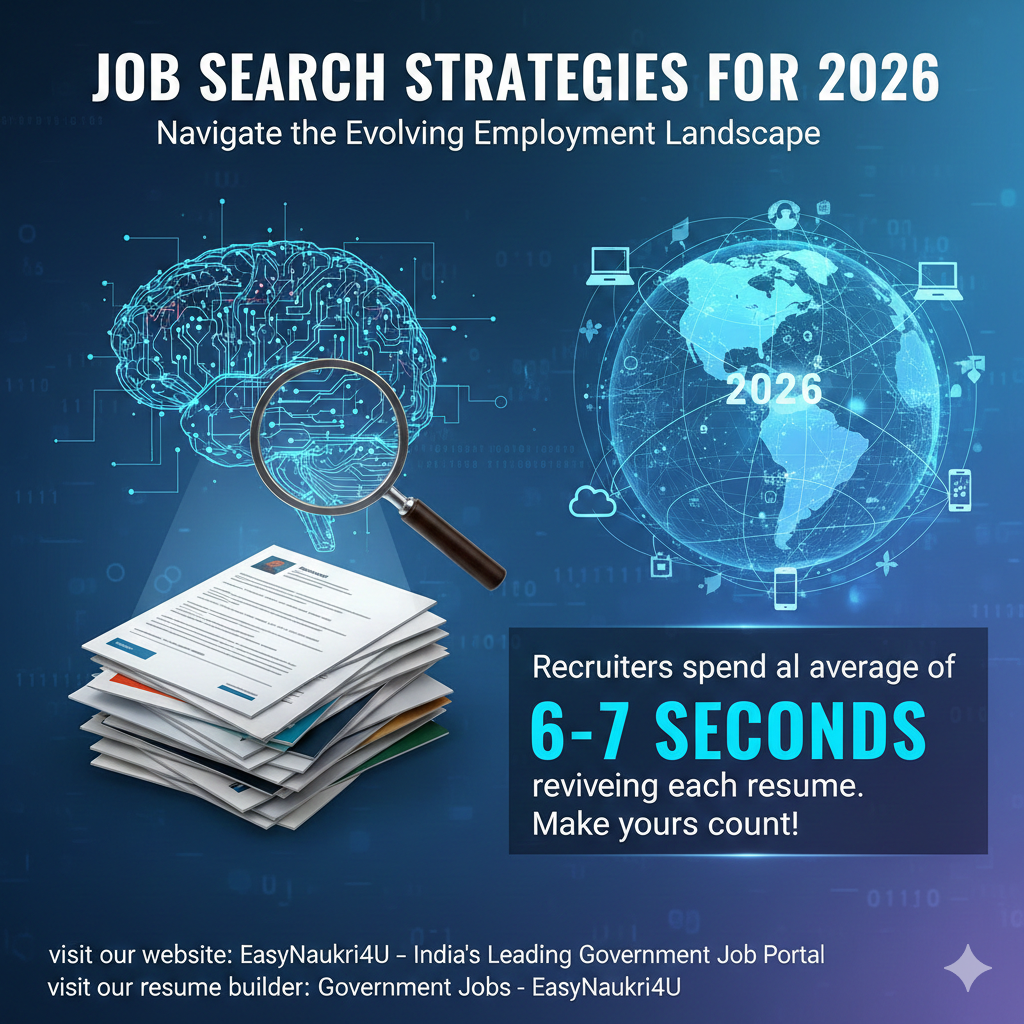
Finding the right employment opportunity requires more than simply submitting applications and hoping for responses. Effective job search strategies combine systematic approaches, digital savvy, and personal networking to uncover and secure ideal positions. As we approach 2026, the employment landscape continues evolving with new technologies, changing employer expectations, and innovative hiring practices. This comprehensive guide provides proven job search strategies that help you navigate today’s competitive market successfully.
visit our website – EasyNaukri4U – India’s Leading Government Job Portal
visit our resume builder – Government Jobs - EasyNaukri4U
“According to LinkedIn’s Global Talent Trends Report, recruiters spend an average of six to seven seconds reviewing each resume.”
The Modern Job Search Landscape

How Hiring Has Evolved
The hiring process has transformed dramatically from traditional newspaper advertisements and walk-in applications. Today’s job search strategies must account for applicant tracking systems, social media screening, and multi-stage interview processes. Understanding these modern realities helps you position yourself effectively for success.
Technology has created both opportunities and challenges for job seekers. While online platforms provide access to countless openings, competition has intensified as candidates worldwide apply for the same positions. Your job search strategies must differentiate you from hundreds of other applicants competing for attention.
Why Traditional Approaches Fall Short
Simply applying to posted positions yields disappointing results for most job seekers. Studies consistently show that the majority of positions are filled through networking and referrals rather than public postings. Effective job search strategies recognize this reality and incorporate relationship-based approaches alongside application efforts.
Passive job searching rarely produces optimal outcomes. Waiting for perfect opportunities to appear limits options and extends search timelines unnecessarily. Proactive job search strategies create opportunities rather than merely responding to existing openings.
1. Clarifying Your Career Objectives
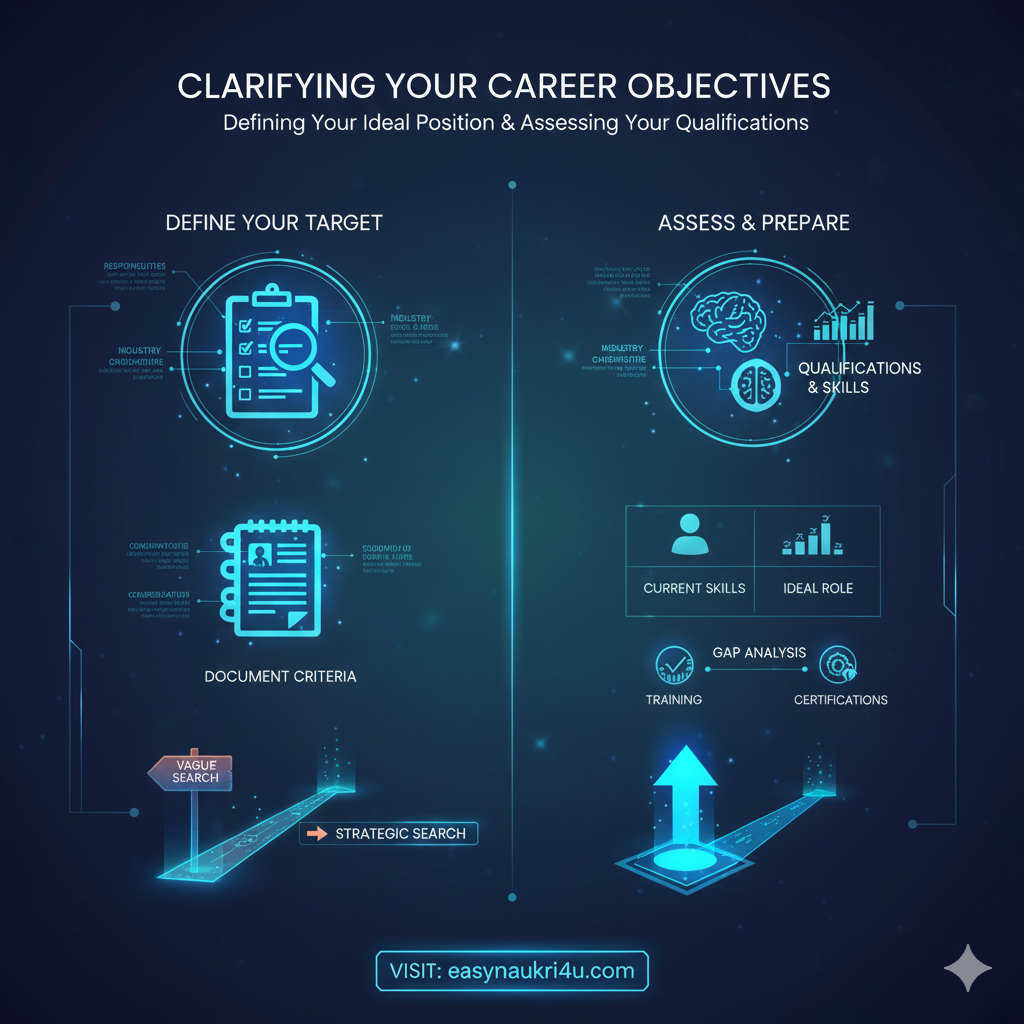
Defining Your Ideal Position
Successful job search strategies begin with clarity about what you actually want. Vague objectives like wanting a good job produce unfocused efforts yielding mediocre results. Specific targets enable strategic, efficient searching that produces better outcomes faster.
Consider multiple dimensions of your ideal role including responsibilities, industry, company size, culture, compensation, and growth potential. Your job search strategies should target positions matching most of these criteria rather than accepting any available opportunity.
Document your requirements and preferences to maintain focus during extended searches. Job searching can become discouraging, leading some candidates to lower standards inappropriately. Written criteria help maintain strategic discipline through challenging periods.
Assessing Your Qualifications
Honest evaluation of your qualifications helps target appropriate opportunities. Your job search strategies should focus on positions where your experience and skills create competitive candidacy. Pursuing roles significantly beyond current qualifications wastes time and creates discouragement.
Identify gaps between current qualifications and ideal role requirements. Addressing these gaps through training, certifications, or skill development strengthens future candidacy. Strategic preparation often proves more valuable than immediate applications.
For job search resources and career guidance, visit:
👉 https://easynaukri4u.com/
2. Optimizing Your Application Materials
Resume Excellence
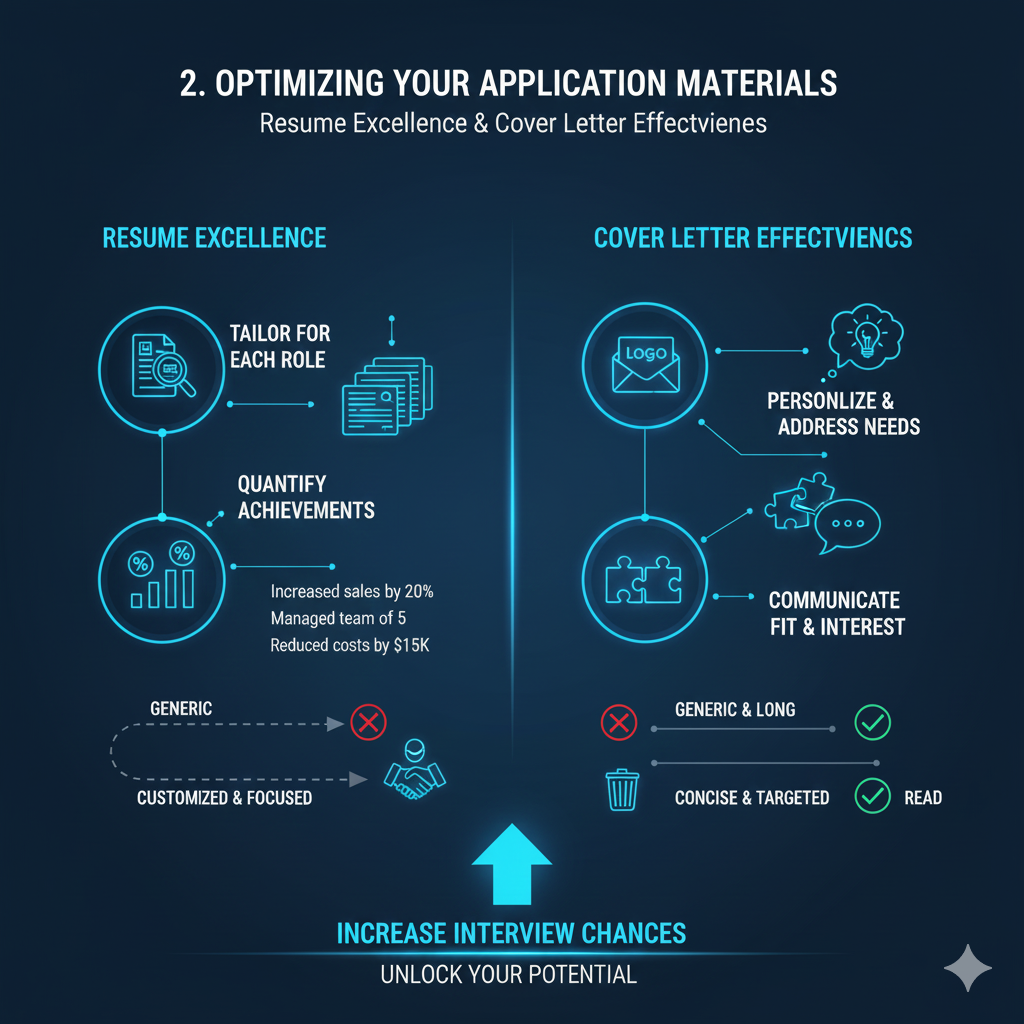
Your resume serves as primary marketing document in most job search strategies. This single page determines whether you receive interview invitations or rejection notices. Investment in resume quality pays significant dividends throughout your search.
Tailor resumes for specific positions rather than using generic versions for all applications. Customization demonstrates genuine interest while ensuring relevant qualifications receive appropriate emphasis. Your job search strategies should include time for meaningful customization.
Quantify achievements wherever possible using numbers, percentages, and concrete outcomes. Measurable results prove capabilities more convincingly than vague responsibility descriptions. This evidence-based approach strengthens applications significantly.
Cover Letter Effectiveness
Cover letters provide opportunities to demonstrate communication skills while explaining your interest and fit for specific positions. Many job search strategies undervalue these documents despite their importance for many employers.
Address specific company needs and explain how your background provides solutions. Generic cover letters signal laziness while tailored versions demonstrate genuine engagement. This personalization significantly impacts application success rates.
Keep cover letters concise while covering essential information including your interest, relevant qualifications, and requested next steps. Lengthy letters often go unread regardless of content quality. Respect reader time while communicating key messages effectively.
3. Leveraging Online Job Platforms
Major Job Board Strategy
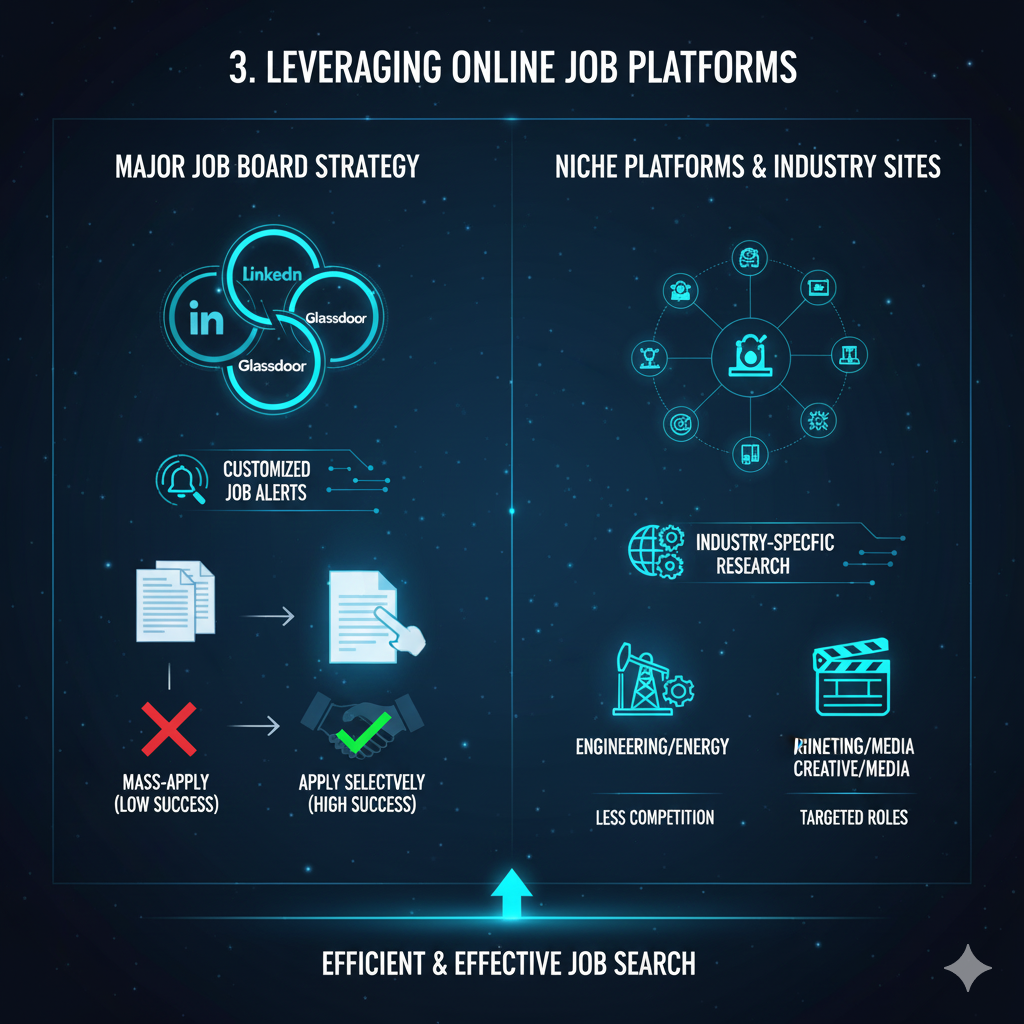
Platforms like LinkedIn, Indeed, and Glassdoor provide access to millions of job postings worldwide. Your job search strategies should include systematic engagement with these resources while avoiding common pitfalls that waste time.
Set up customized job alerts matching your criteria rather than manually searching repeatedly. Automated alerts ensure you see relevant opportunities promptly while saving time for higher-value activities. This efficiency improves overall search productivity.
Apply selectively rather than mass-applying to every remotely relevant posting. Quality applications to well-matched positions outperform high-volume approaches targeting marginal opportunities. Strategic selectivity produces better results with less effort.
Niche Platforms and Industry Sites
Beyond major job boards, specialized platforms serve specific industries and professions. Your job search strategies should include relevant niche sites where targeted opportunities appear. These platforms often have less competition than general job boards.
Research which platforms employers in your target industry prefer for posting positions. Different sectors utilize different recruiting channels based on industry culture and candidate expectations. Understanding these preferences improves search targeting.
4. The Hidden Job Market
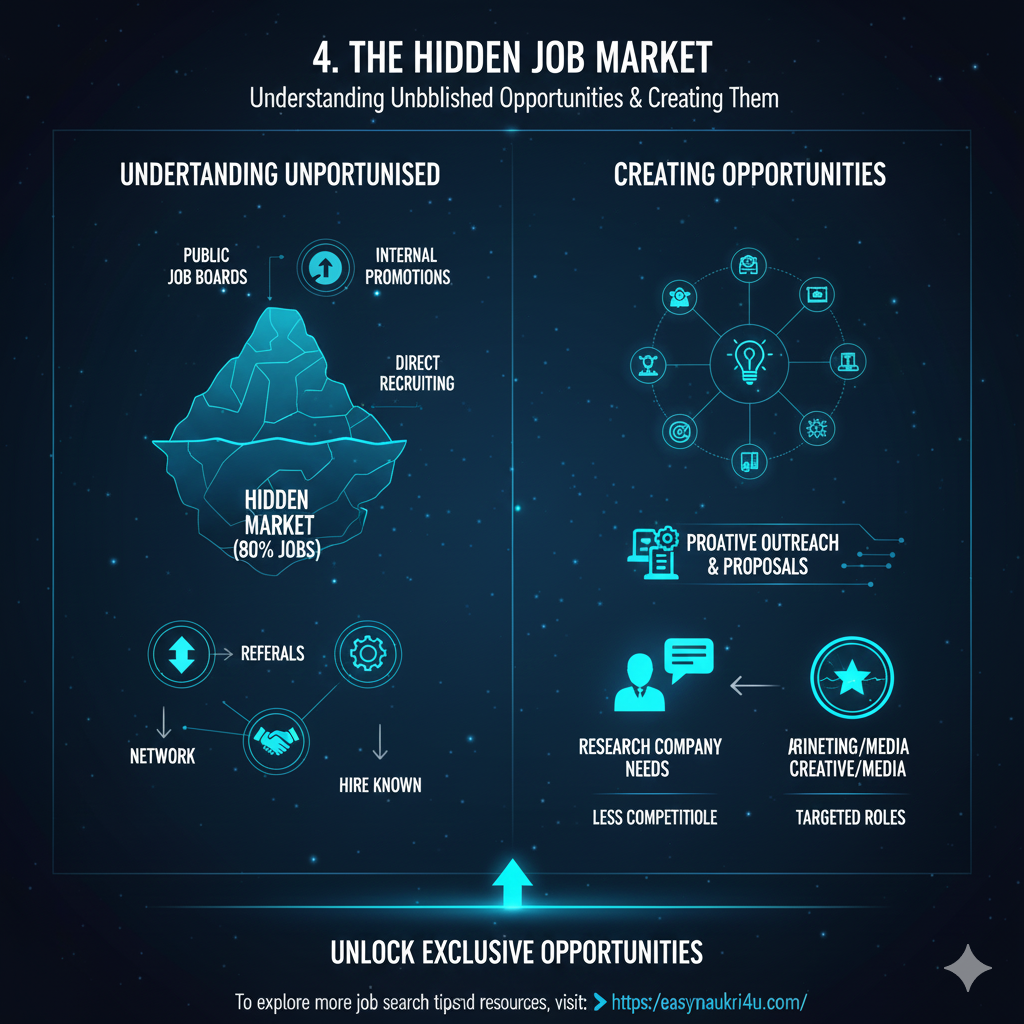
Understanding Unpublished Opportunities
Many positions never get posted publicly, filled instead through internal promotions, referrals, or direct recruiting. Successful job search strategies access this hidden market through networking and proactive outreach. Ignoring these opportunities limits your options significantly.
Companies prefer hiring known quantities to reduce risk and expedite onboarding. Employees who recommend candidates stake personal credibility on those recommendations. Your job search strategies should leverage these dynamics through strategic relationship building.
Creating Opportunities
Rather than waiting for openings, proactive candidates sometimes create their own opportunities. Approaching companies with proposals addressing their challenges can generate positions that never existed formally. This entrepreneurial approach differentiates aggressive searchers.
Research target companies to identify potential needs your skills could address. Your job search strategies might include reaching out to companies without posted openings when you identify genuine value you could provide. This initiative impresses employers while creating unique opportunities.
To explore more job search tips and resources, visit:
👉 https://easynaukri4u.com/
5. Networking for Job Search Success
Building Strategic Relationships
Professional relationships provide access to opportunities, information, and referrals unavailable through other channels. Your job search strategies must include deliberate networking efforts building connections that support your search.
Reconnect with existing contacts who might assist your search through information, introductions, or referrals. Many job seekers underutilize existing networks containing valuable resources. Reaching out to dormant connections often yields surprising assistance.
Expand networks strategically by connecting with professionals in target companies and industries. New relationships require more cultivation before yielding search assistance. Building these connections early prepares foundation for future opportunities.
Informational Interviews
Requesting informational conversations with professionals in target roles provides valuable intelligence while building relationships. These meetings help you understand opportunities, refine job search strategies, and develop advocates who may recommend you for future openings.
Approach informational interviews with genuine curiosity rather than hidden agendas for immediate job requests. Authentic interest in learning creates better impressions than transparent attempts to backdoor into positions. Relationship quality determines long-term value.
Follow up appropriately after informational conversations with gratitude and updates on your progress. Maintaining these relationships keeps you visible when opportunities arise. Consistent touchpoints sustain connections that sporadic contact allows to fade.
6. Social Media Optimization
LinkedIn Mastery
LinkedIn has become essential infrastructure for professional job search strategies. Your profile serves as digital resume while platform features enable networking, research, and direct application. Maximizing LinkedIn effectiveness accelerates search success.
Optimize your profile for searchability using keywords matching your target positions. Recruiters search LinkedIn for candidates matching specific criteria. Profile optimization ensures you appear in relevant searches increasing visibility to potential employers.
Engage actively through posting, commenting, and sharing valuable content. Activity increases profile visibility while demonstrating expertise and communication abilities. Passive profiles receive less attention than engaged ones despite equivalent qualifications.
Managing Your Digital Presence
Employers routinely research candidates online before making hiring decisions. Your job search strategies must include cleaning up digital presence across all platforms. Inappropriate content can disqualify otherwise strong candidates.
Google yourself to see what employers discover when researching you. Address problematic content through deletion, privacy settings, or creation of positive content that pushes negative material down in search results. This housekeeping protects against preventable rejections.
7. Working with Recruiters
Understanding Recruiter Relationships
Recruiters can accelerate your search by connecting you with opportunities and advocating for your candidacy. However, understanding how recruiters operate helps you leverage these relationships effectively within your job search strategies.
Recognize that recruiters work for employers, not candidates. Their incentive is filling positions rather than serving your interests specifically. This reality doesn’t make recruiters adversaries, but understanding their perspective helps manage expectations appropriately.
Build relationships with recruiters specializing in your target industry or function. Specialists have deeper networks and opportunity knowledge within focused domains. These connections prove more valuable than relationships with generalist recruiters.
Maximizing Recruiter Value
Communicate clearly about your requirements, qualifications, and search status. Recruiters can only help when they understand your situation accurately. Vague or changing requirements frustrate recruiters and reduce their engagement with your search.
Respond promptly and professionally to recruiter communications even when declining opportunities. Your reputation with recruiters affects future opportunity flow. Professional behavior keeps you on preferred candidate lists for future openings.
8. Application Tracking and Organization
Systematic Search Management
Organized job search strategies track applications, follow-ups, and outcomes systematically. Disorganized searching leads to missed opportunities, forgotten applications, and embarrassing duplicate submissions. Systems maintain efficiency and professionalism.
Create tracking spreadsheets or use dedicated applications to monitor search activities. Record positions applied for, dates, contacts, and outcomes for reference. This documentation supports follow-up while revealing patterns in your search effectiveness.
Follow-Up Excellence
Appropriate follow-up demonstrates interest and persistence without becoming annoying. Your job search strategies should include timelines and approaches for checking application status professionally. Many positions go to candidates who follow up while others wait passively.
Personalize follow-up communications referencing specific positions and conversations. Generic follow-ups fail to create meaningful impressions. Thoughtful, personalized messages demonstrate continued interest while keeping your candidacy visible.
9. Interview Preparation
Research and Preparation
Thorough preparation distinguishes candidates who receive offers from those who miss opportunities. Your job search strategies must include comprehensive interview preparation for every opportunity. Underprepared candidates rarely recover from poor first impressions.
Research companies thoroughly including recent news, products, culture, and competitive position. Demonstrating knowledge impresses interviewers while informing your own evaluation of opportunities. This preparation serves both parties in the interview process.
Prepare specific examples demonstrating relevant competencies using structured storytelling approaches. Vague claims about capabilities fail to convince compared to concrete evidence from past experiences. Your stories prove what your resume claims.
Practice and Refinement
Practice responses to common questions until delivery becomes natural without sounding rehearsed. Mock interviews with friends or coaches identify weaknesses before real interviews reveal them damagingly. This practice investment improves outcomes significantly.
Prepare thoughtful questions demonstrating genuine interest and strategic thinking. Your questions reveal as much about you as your answers do. Strong questions impress interviewers while providing information supporting your decision-making.
For interview preparation resources and tips, visit:
👉 https://easynaukri4u.com/
10. Salary Negotiation
Research and Preparation
Understanding market compensation for target positions enables effective negotiation. Your job search strategies should include salary research before discussions begin. Uninformed negotiators either leave money on the table or price themselves out of opportunities.
Use multiple sources including salary websites, professional networks, and recruiter insights to understand compensation ranges. Different sources may provide varying data, so triangulating improves accuracy. This research creates confidence for negotiation conversations.
Negotiation Approach
Defer salary discussions until offers are extended whenever possible. Premature compensation conversations can screen you out before demonstrating value. Your job search strategies should include techniques for delaying salary discussions appropriately.
Negotiate professionally and positively rather than adversarially. Most employers expect negotiation and respect candidates who advocate for themselves appropriately. However, aggressive tactics can damage relationships before employment begins.
Consider total compensation including benefits, flexibility, professional development, and growth potential beyond base salary. Sometimes non-salary elements provide greater value than additional cash compensation. Comprehensive evaluation ensures optimal outcomes.
11. Handling Rejection Effectively
Maintaining Perspective
Rejection inevitably accompanies any sustained job search. Your job search strategies must include psychological approaches for handling rejection without losing momentum. Taking rejection personally creates discouragement that undermines ongoing efforts.
Recognize that rejection often reflects factors beyond your control including internal candidates, budget changes, or organizational politics. Quality candidates face rejection regularly before landing appropriate positions. Persistence eventually produces success.
Learning from Rejection
Request feedback when possible to identify improvement opportunities for future applications. Not all employers provide feedback, but those who do offer valuable insights. Your job search strategies should incorporate lessons learned from unsuccessful attempts.
Analyze patterns in rejections to identify systematic issues requiring attention. Consistent rejections at particular stages suggest specific problems worth addressing. This analysis enables targeted improvements enhancing future success.
12. Managing Extended Job Searches
Maintaining Momentum
Extended searches test patience and resilience. Your job search strategies should include approaches for sustaining effort and optimism during lengthy searches. Allowing discouragement to derail activity creates self-fulfilling prophecies of failure.
Establish routines treating job searching as your current job with regular hours and activities. Structure maintains productivity while preventing the drift that extends searches unnecessarily. Professional approach to searching produces professional results.
Skill Development During Search
Use search periods productively through learning, certification, or volunteer work enhancing future candidacy. Your job search strategies should include professional development activities that strengthen qualifications while demonstrating initiative.
Document development activities for discussion in future interviews. Explaining how you used search time productively impresses employers while addressing potential concerns about extended gaps.
13. Industry-Specific Strategies
Technology Sector
Tech industry job search strategies emphasize demonstrable skills through portfolios, GitHub contributions, and technical assessments. Building visible evidence of capabilities often matters more than traditional credentials.
Engage with tech communities through meetups, open-source contributions, and online forums. These connections provide referrals while demonstrating community engagement valued in tech culture.
Healthcare Industry
Healthcare positions often require specific certifications and credentials. Your job search strategies should ensure all required qualifications are current and documented properly. Administrative requirements can delay otherwise successful candidates.
Network through professional associations and industry conferences where healthcare employers actively recruit. Relationship building proves particularly valuable in healthcare’s relationship-oriented culture.
Business and Finance
Corporate positions emphasize polished presentation and professional networks. Your job search strategies should include attention to personal branding and relationship cultivation within business communities.
Leverage alumni networks from educational institutions which remain powerful in business sectors. These connections provide access and referrals that cold applications cannot achieve.
14. Remote Work Job Search
Finding Remote Opportunities
Remote work has expanded dramatically, creating new job search strategies for location-independent positions. Platforms specializing in remote work aggregate opportunities from companies embracing distributed teams.
Emphasize remote work readiness in applications including home office setup, communication skills, and self-management capabilities. Companies hiring remotely seek candidates who thrive without traditional office structures.
Demonstrating Remote Competency
Highlight previous remote work experience or independent project management demonstrating ability to perform without direct supervision. Your job search strategies should address potential employer concerns about remote worker productivity and communication.
15. Final Considerations
Maintaining Professional Reputation
Your behavior during job searching affects professional reputation regardless of outcomes. Unprofessional behavior with one employer can spread through industry networks damaging future opportunities. Maintain professionalism throughout every interaction.
Accepting Offers
When accepting positions, confirm details in writing and complete any required documentation promptly. Professional closure demonstrates the same qualities that earned you the offer initially.
Notify other employers professionally when accepting positions elsewhere. These organizations may have future opportunities, and maintaining positive relationships preserves future options.
For comprehensive job search resources, visit:
👉 https://easynaukri4u.com/
Conclusion
Implementing effective job search strategies requires systematic effort, patience, and strategic thinking. The approaches outlined in this guide provide comprehensive framework for navigating today’s competitive employment market successfully.
Remember that job search strategies work best when customized to your specific circumstances, industry, and objectives. Use this guide as starting point while adapting techniques to your unique situation.
Start your search today by clarifying objectives, optimizing materials, and activating your network. Each action moves you closer to landing your ideal position. Your commitment to strategic, persistent searching determines your ultimate success.
Take action now by choosing one improvement area and implementing changes immediately. Whether refining your resume, expanding your network, or improving interview skills, each enhancement increases your competitiveness. Your investment in effective job search strategies creates the foundation for career success in 2026 and beyond.