15 Powerful Career Growth Strategies to Accelerate Success
BlogIntroduction: Taking Control of Your Professional Trajectory

In an era of rapid technological change, evolving workplace dynamics, and shifting organizational structures, taking intentional control of your career growth has become more critical than ever. Gone are the days when simply showing up, doing good work, and waiting for promotion was sufficient strategy for career advancement. In 2026, professionals who thrive are those who proactively manage their development, strategically position themselves for opportunities, continuously expand their capabilities, and navigate their careers with the same intentionality they bring to major life decisions.
Effective career growth requires more than just working hard or accumulating years of experience. It demands strategic thinking about where you want to go, honest assessment of where you are, deliberate skill development closing gaps between current state and aspirations, strategic relationship building, and consistent actions aligned with your goals. The professionals experiencing meaningful advancement are those who treat their careers as long-term projects requiring planning, execution, and continuous refinement.
visit our website – EasyNaukri4U – India’s Leading Government Job Portal
visit our resume builder – Government Jobs - EasyNaukri4U
“According to LinkedIn’s Global Talent Trends Report, recruiters spend an average of six to seven seconds reviewing each resume.”
This comprehensive guide presents fifteen powerful career growth strategies that work across industries, career stages, and professional contexts. Whether you’re early in your career building foundations, mid-career seeking advancement, or senior-level pursuing executive roles, these approaches will help you accelerate your trajectory while building satisfying, sustainable careers aligned with your values and aspirations. These aren’t quick tricks or shortcuts but rather proven strategies requiring commitment and consistent application.
The most successful career growth journeys combine clarity about destination with flexibility about path, ambition with authenticity, skill development with strategic positioning, and patience with persistence. By implementing these strategies systematically, you transform from passive participant in your career to active architect of your professional future.
For career development resources and opportunities, visit: 👉 https://easynaukri4u.com/
Understanding Career Growth in Modern Context

The Changing Nature of Career Advancement
Career growth in 2026 looks dramatically different from previous generations’ experiences. Linear progression up single corporate ladders has largely disappeared, replaced by diverse paths including lateral moves building capabilities, industry transitions leveraging transferable skills, entrepreneurial ventures, portfolio careers combining multiple roles, and non-traditional advancement through personal branding and thought leadership. Understanding these options expands possibilities for career growth beyond traditional promotion paths.
Technology has simultaneously created new opportunities for advancement while disrupting traditional career trajectories. Remote work has eliminated geographic constraints on opportunities while intensifying global competition. Automation threatens some roles while creating others. The half-life of skills has shortened, requiring continuous learning. These dynamics mean career growth requires adaptability and strategic positioning rather than assuming stable career paths.
Why Intentional Career Management Matters
Leaving career growth to chance or assuming employers will manage your development creates vulnerability to stagnation, obsolescence, and missed opportunities. Organizations focus on their needs, which may or may not align with your aspirations. Market changes can render entire roles or industries less viable. Without intentional management, you may wake up mid-career realizing you’ve drifted rather than progressed toward meaningful goals.
Proactive career growth management provides direction guiding daily decisions, motivation during challenging periods, criteria for evaluating opportunities, and confidence that you’re building toward something meaningful rather than simply reacting to circumstances. It transforms your career from something that happens to you into something you actively create.
Common Career Growth Obstacles
Understanding common obstacles enables addressing them strategically. Many professionals struggle with unclear goals providing no direction for career growth efforts. Comfort zone attachment prevents taking risks necessary for advancement. Skill gaps limit opportunities without deliberate development. Poor networking leaves you unknown to decision-makers. Lack of visibility keeps accomplishments unrecognized. Fear of failure prevents pursuing stretch opportunities. And work-life balance concerns make ambitious growth feel incompatible with personal priorities.
However, these obstacles are surmountable with appropriate strategies. The career growth approaches in this guide directly address these common challenges, providing frameworks for overcoming barriers that prevent many talented professionals from reaching their potential.
15 Powerful Career Growth Strategies
1. Define Clear Career Vision and Goals

The foundation of effective career growth is clarity about where you want to go. Without clear destination, you can’t develop coherent strategy or evaluate whether opportunities advance your goals. Define your career vision—where you want to be in 5-10 years—and work backward identifying milestones and capabilities needed to reach that vision. This clarity guides daily decisions, skill development priorities, and opportunity evaluation.
Your vision should reflect both professional aspirations and personal values, ensuring career growth supports overall life satisfaction rather than requiring sacrifice of everything else. Consider what success looks like on your own terms, not just external markers like titles or compensation.
Vision Development Process:
Self-Assessment:
Evaluate current skills, strengths, interests, and values. Understand what energizes versus drains you. Identify what you’re genuinely good at and passionate about. Consider what work feels meaningful and satisfying.
Future Visualization:
Imagine your ideal professional life 5-10 years ahead. What are you doing? What impact are you having? What lifestyle does your work support? What recognition or achievement matters to you? Be specific about desired role, industry, company type, and work environment.
Goal Setting:
Translate vision into concrete goals. Where do you need to be in 1, 3, and 5 years to reach your vision? What milestones indicate progress? What specific achievements or capabilities do you need? Ensure goals are challenging but realistic.
Gap Analysis:
Identify gaps between current state and goals. What skills need development? What experiences are missing? What relationships need building? What credentials might be required? This analysis reveals development priorities.
Action Planning:
Create specific action steps closing identified gaps. What will you do this quarter, this year? How will you develop needed skills? What opportunities will you pursue? How will you measure progress? Build accountability for following through.
Regular Review:
Revisit vision and goals quarterly or annually. Are they still meaningful? Have circumstances changed? Are you making progress? What adjustments are needed? Career visions can evolve—regular review ensures continued alignment.
2. Build Strategic Relationships and Network Intentionally
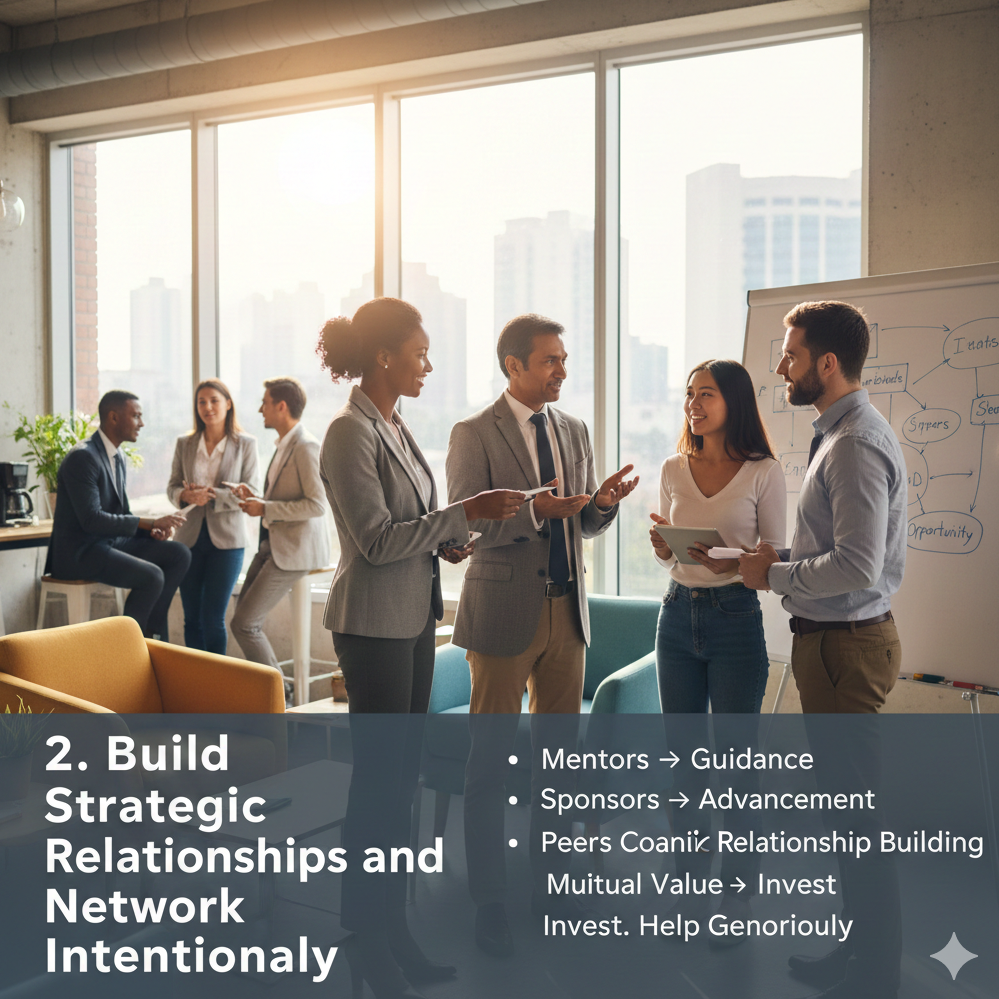
Career growth rarely happens in isolation—opportunities typically come through relationships and networks. Strategic networking involves building genuine relationships with people who can support your growth—mentors providing guidance, sponsors advocating for your advancement, peers offering support and information, and broader professional connections creating opportunity awareness and access.
Effective networking isn’t transactional favor-seeking but authentic relationship building providing mutual value. Invest in relationships before needing anything, help others generously, maintain connections over time, and create reputation as valuable connector yourself.
Strategic Networking:
Identify Key Relationships:
Determine who can support your career growth—senior leaders in your organization, professionals in target roles or companies, industry influencers, complementary professionals serving similar audiences, alumni from your schools, and peers pursuing similar paths.
Mentors and Sponsors:
Seek mentors who provide guidance, feedback, and wisdom from experience. Cultivate sponsors—senior leaders who actively advocate for your advancement, recommend you for opportunities, and provide visibility to decision-makers. These relationships accelerate career growth significantly.
Internal Networking:
Build relationships across your organization, not just within your department. Connect with senior leaders, peers in other functions, cross-functional team members, and rising stars. Internal networks provide visibility and opportunity access.
External Networking:
Develop industry connections through conferences, professional associations, online communities, and social media. External networks provide market intelligence, opportunity awareness, and options beyond current employer.
Relationship Maintenance:
Stay in touch with your network consistently through occasional check-ins, sharing relevant information, celebrating their successes, and helping when possible. Relationships require nurturing to remain warm and mutually beneficial.
Provide Value First:
Approach networking by helping others—share useful information, make valuable introductions, offer your expertise, and support others’ goals. This generosity builds goodwill making people naturally inclined to support your career growth.
For networking and relationship building resources, explore: 👉 https://easynaukri4u.com/
3. Develop High-Demand Skills Continuously
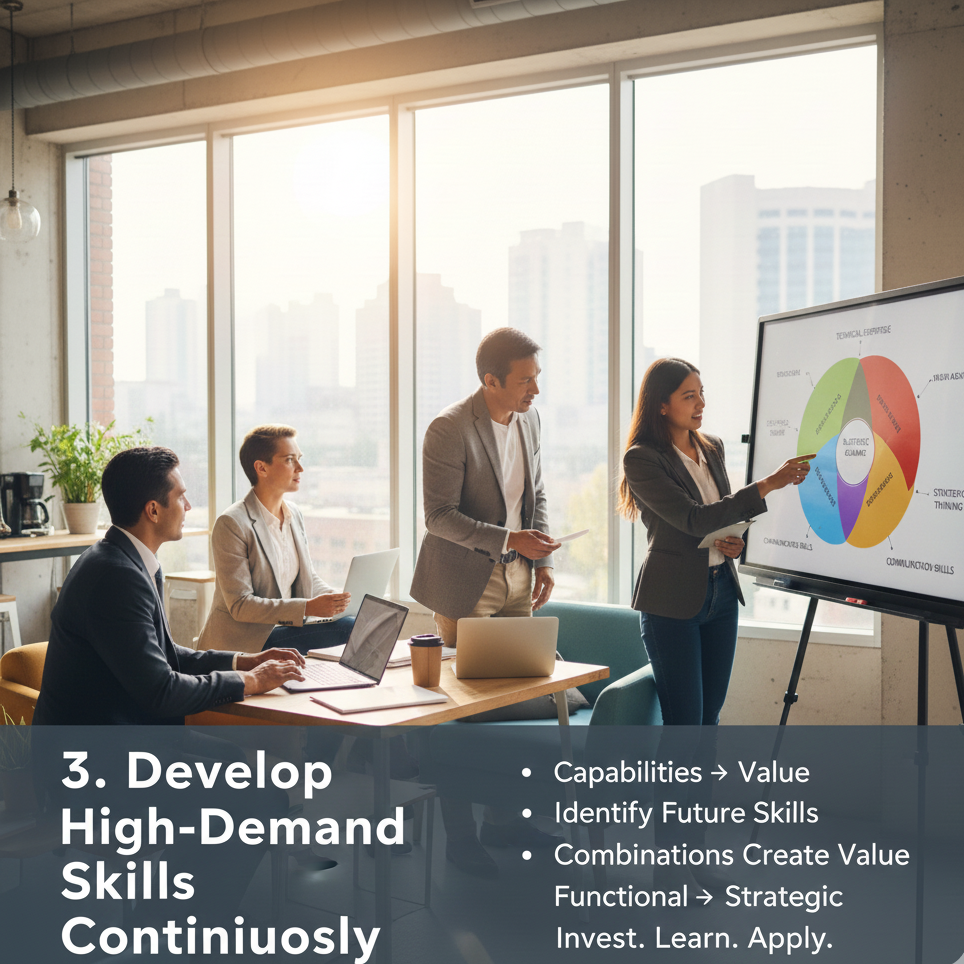
Continuous skill development represents non-negotiable career growth strategy since your value in the marketplace depends on capabilities you offer. Identify skills increasingly demanded in your field and adjacent areas, particularly those combining with your existing expertise creating unique value. Invest consistently in learning through formal education, online courses, certifications, practical application, and hands-on experience.
The most valuable career growth skills often sit at intersections—technical expertise combined with business acumen, specialized knowledge paired with communication abilities, or deep functional expertise supplemented by strategic thinking. These combinations differentiate you from purely specialized or generalist competitors.
Skill Development Strategy:
Market Research:
Study job descriptions for target roles identifying commonly required skills. Follow industry trends spotting emerging capabilities. Talk to people in desired positions understanding what skills actually matter. Research salary premiums associated with specific competencies.
Strategic Selection:
Choose skills offering high return on learning investment—those in demand, aligned with your interests, building on existing strengths, and positioning you uniquely. Don’t chase every trend but focus on capabilities supporting your specific career growth vision.
Learning Methods:
Combine formal education (degrees, certifications) with online courses (Coursera, LinkedIn Learning), books and publications, conferences and workshops, practical projects applying new skills, and learning from experts through mentorship or observation.
Application Focus:
Don’t just accumulate knowledge—apply new skills in your work. Volunteer for projects using developing capabilities. Take on stretch assignments. Create portfolio demonstrating competencies. Application solidifies learning while building evidence of your capabilities.
Skill Stacking:
Develop complementary skill combinations creating unique value. Technical skills plus communication abilities. Industry expertise combined with data analytics. Creative capabilities supplemented by business strategy. These combinations enhance your career growth potential.
Continuous Investment:
Allocate consistent time and budget to skill development—reading regularly, taking courses, attending events, and practicing new capabilities. Make learning habit rather than occasional burst.
4. Seek Stretch Assignments and New Challenges
Career growth accelerates through challenging experiences pushing you beyond current capabilities. Actively seek stretch assignments—projects slightly beyond your proven abilities, cross-functional initiatives, high-visibility work, problem-solving for complex challenges, or leadership of important efforts. These experiences build skills, demonstrate capabilities, increase visibility, and position you for advancement.
Staying within comfort zone prevents growth, while calculated risk-taking through stretch assignments develops capabilities impossible to build through routine work. Many professionals limit their career growth by avoiding challenges from fear of failure rather than viewing them as development opportunities.
Stretch Opportunities:
Volunteer for Challenges:
Raise your hand for difficult projects others avoid. Offer solutions to organizational problems. Propose new initiatives addressing unmet needs. Demonstrate initiative and willingness to tackle hard problems.
Request Expanded Responsibility:
Ask your manager for additional responsibilities preparing you for next level. Express interest in specific projects or initiatives. Discuss your development goals and ask for opportunities supporting them.
Cross-Functional Projects:
Join initiatives involving multiple departments, exposing you to different functions, building broad organizational understanding, and expanding your network while demonstrating collaborative abilities.
Lead Without Authority:
Volunteer to lead projects or initiatives even without formal authority. This develops leadership skills while demonstrating readiness for formal leadership roles supporting your career growth.
Temporary Assignments:
Pursue rotational programs, temporary assignments in different departments, international assignments, or special projects providing exposure to various aspects of business.
Learn from Challenges:
View difficult assignments as learning opportunities rather than pure performance tests. Extract lessons from both successes and failures. Reflect on what you learned and how you’ve grown.
Manage Risk:
Take calculated risks rather than reckless ones. Ensure you have support and resources for success. Don’t take on so many challenges simultaneously that you’re set up for failure. Choose stretch assignments strategically.
5. Build Personal Brand and Professional Visibility
Career growth increasingly depends on professional reputation and visibility beyond your immediate team. Build personal brand—consistent professional identity communicating your expertise, value, and unique perspective. Increase visibility through thought leadership, speaking opportunities, published content, strategic networking, and reputation for excellence in specific areas.
Professionals with strong brands attract opportunities rather than constantly pursuing them. They’re known for particular expertise, recommended for relevant opportunities, and command premium compensation reflecting their recognized value.
Brand Building:
Define Your Brand:
Identify what you want to be known for—specific expertise, unique approach, particular results you deliver, or values you embody. Ensure brand authentically reflects your strengths and aspirations supporting career growth goals.
Demonstrate Expertise:
Share knowledge through articles, blog posts, social media content, speaking at events, contributing to industry publications, or teaching workshops. Consistent content establishes you as knowledgeable resource.
LinkedIn Optimization:
Create compelling LinkedIn profile clearly communicating your value proposition. Share valuable content regularly. Engage with others’ posts. Build visible professional presence on primary platform for professional networking.
Internal Visibility:
Ensure leaders in your organization know your work. Present at meetings, share successes appropriately, volunteer for high-visibility projects, and build reputation for excellence. Don’t assume good work speaks for itself—strategic visibility accelerates career growth.
Strategic Volunteering:
Serve on committees, join professional associations, participate in industry events, or volunteer for causes demonstrating your values while building visibility and connections.
Collect Testimonials:
Request recommendations from managers, clients, and colleagues. Display these endorsements on LinkedIn and portfolios. Social proof validates your brand claims.
Consistency:
Maintain consistent brand across all professional touchpoints—online profiles, communications, networking interactions, and actual work. Consistency builds recognition and trust.
For personal branding and visibility strategies, visit: 👉 https://easynaukri4u.com/
6. Demonstrate Results and Document Achievements
Organizations promote people who deliver results, making outcome focus critical for career growth. Ensure your work produces measurable impact, then document and communicate achievements effectively. Many talented professionals limit their advancement by failing to quantify and share their contributions, allowing accomplishments to go unrecognized.
Demonstrating results doesn’t mean self-aggrandizement but rather professional communication of value you create. This visibility ensures decision-makers recognize your capabilities when opportunities arise.
Results Demonstration:
Quantify Impact:
Measure outcomes of your work—revenue generated, costs saved, efficiency improved, quality enhanced, customer satisfaction increased. Specific metrics make abstract accomplishments concrete and believable.
Before-and-After Comparisons:
Show the difference your contributions made. Document baseline before your involvement and results afterward. This contrast highlights your specific impact.
Achievement Documentation:
Maintain ongoing record of accomplishments, projects completed, problems solved, and recognition received. Don’t rely on memory during performance reviews or job searches—document as you go.
Success Stories:
Develop 5-7 detailed stories about significant accomplishments using STAR format (Situation, Task, Action, Result). These narratives powerfully communicate your capabilities in interviews and conversations.
Strategic Communication:
Share achievements appropriately through progress reports, team meetings, email updates, or casual conversations. Find balance between visibility and bragging. Focus on team success while clarifying your role.
Performance Reviews:
Come prepared to reviews with documented achievements. Don’t assume managers remember everything you’ve accomplished. Provide specific examples and metrics supporting advancement discussions.
Portfolio Development:
Create portfolio showcasing your best work—projects, presentations, writing samples, or other evidence of capabilities. This tangible demonstration supplements verbal descriptions during career growth conversations.
7. Master Strategic Communication Skills
Exceptional communication represents foundational career growth skill since advancing professionally requires influencing others, building relationships, presenting ideas compellingly, writing clearly, and navigating difficult conversations. Strong communicators advance faster than equally talented but less articulate peers because they can share ideas, build support, inspire teams, and represent organizations effectively.
Communication mastery includes verbal and written communication, active listening, presentation skills, persuasion, and adaptability across audiences and contexts. These capabilities enable influence regardless of formal authority.
Communication Development:
Clear Articulation:
Express ideas simply and logically. Structure communications with clear beginnings, middles, and ends. Avoid jargon when unnecessary. Make complex topics accessible.
Active Listening:
Focus completely when others speak. Ask clarifying questions. Reflect back understanding. Notice non-verbal communication. Resist planning responses while others talk. Listening builds relationships and understanding supporting career growth.
Presentation Skills:
Develop comfort presenting to groups. Practice structuring compelling presentations. Use visuals effectively. Engage audiences. Handle questions confidently. Presentation opportunities increase with seniority, making this skill increasingly important.
Written Communication:
Write clearly and concisely. Structure emails and documents logically. Proofread carefully. Adapt formality to context. Strong writing creates professional impressions and communicates thinking clearly.
Persuasion:
Influence others through logic, emotion, and credibility. Frame proposals addressing others’ interests. Anticipate objections. Build coalitions. Demonstrate value. Persuasion enables driving initiatives without formal authority.
Difficult Conversations:
Develop skills for addressing conflicts, delivering critical feedback, or discussing sensitive topics. These conversations become more frequent in leadership roles—practicing them accelerates career growth into such positions.
Executive Communication:
Learn to communicate concisely with senior leaders. Lead with conclusions. Provide executive summaries. Respect their time. Adapt style to senior audience.
8. Seek and Act on Feedback Consistently
Feedback provides essential information for career growth, revealing blind spots, identifying development areas, validating strengths, and guiding improvement efforts. Professionals who actively seek feedback, receive it gracefully, and act on insights develop faster than those who avoid feedback from defensiveness or insecurity.
Creating feedback loops—through formal performance reviews, informal check-ins, 360-degree assessments, or mentor conversations—accelerates learning and development. The key is viewing feedback as gift providing growth information rather than criticism to defend against.
Feedback Seeking:
Regular Requests:
Don’t wait for formal reviews. Ask managers, peers, and colleagues for input regularly: “What could I do more effectively?” “What should I keep doing?” “What should I stop or change?” Frequent small feedback conversations provide more useful information than annual formal reviews.
Specific Questions:
Ask about particular situations, presentations, projects, or skills rather than vague “How am I doing?” Specific questions yield actionable insights.
Multiple Perspectives:
Seek feedback from various sources—managers, peers, direct reports, clients, cross-functional partners. Different perspectives reveal different aspects of your performance and impact.
Graceful Reception:
Listen without defending or explaining. Thank people for input. Ask clarifying questions to understand fully. Avoid becoming defensive, which stops future feedback flow.
Reflection and Action:
Consider feedback thoughtfully. Identify patterns across multiple sources. Decide what to act on. Create specific improvement plans. Follow up with feedback providers showing how you’ve applied their input.
Formal Assessments:
Pursue formal tools like 360-degree feedback or personality assessments providing structured, comprehensive insight. These assessments often reveal patterns you might miss from informal feedback alone.
Growth Mindset:
View feedback as information supporting growth rather than judgment of worth. Believe capabilities can improve through effort. This mindset makes feedback valuable rather than threatening to your career growth.
For feedback and performance improvement resources, explore: 👉 https://easynaukri4u.com/
9. Develop Business Acumen and Strategic Thinking
Understanding how businesses operate, generate value, compete, and make decisions represents crucial career growth skills, particularly for advancing to senior levels. Business acumen enables seeing beyond functional expertise to strategic implications, connecting your work to organizational goals, speaking the language of executives, and making decisions considering broader business context.
Strategic thinking—anticipating trends, identifying opportunities and threats, planning long-term, and positioning advantageously—distinguishes senior leaders from tactical executors. Developing these capabilities early accelerates career growth trajectory.
Business Acumen Development:
Financial Literacy:
Understand basic financial concepts—revenue, profit, margins, cash flow, return on investment. Learn how your organization makes money, where costs arise, and what drives profitability. Financial understanding enables business conversations and decision-making.
Strategic Awareness:
Understand your organization’s strategy, competitive positioning, and market dynamics. Know who competitors are, what differentiates your company, what challenges and opportunities exist, and how your function contributes to strategy.
Customer Understanding:
Know who your customers are, what they value, what problems they face, and how your organization serves them. Customer focus grounds decision-making in market reality.
Cross-Functional Knowledge:
Learn how different parts of your organization work and interrelate. Understand functions beyond your own—how marketing, operations, finance, product development, and sales work together creating value.
Industry Expertise:
Follow industry trends, competitive dynamics, regulatory changes, and technological disruptions. Become knowledgeable about your industry’s evolution and implications for your organization.
Strategic Thinking:
Practice thinking beyond immediate tasks to long-term implications. Consider multiple scenarios and contingencies. Identify patterns and trends. Connect seemingly unrelated dots. Think about positioning for future success.
Executive Exposure:
Seek opportunities to work with or observe senior leaders. Notice how they think, make decisions, and communicate. Learn from their strategic perspective and business judgment.
10. Build Leadership Capabilities Regardless of Role
Leadership skills accelerate career growth even before formal leadership positions. Individual contributors who demonstrate leadership through influence, initiative, mentoring others, driving projects, or solving organizational problems position themselves for advancement while adding immediate value.
Leadership development should begin early in careers rather than waiting for management positions. By the time you’re promoted, you should already demonstrate many leadership capabilities, making the transition smoother while signaling readiness for such roles.
Leadership Development:
Take Initiative:
Identify problems and propose solutions. Drive improvements without being asked. Take ownership of outcomes. Demonstrate proactive rather than reactive approach.
Influence Without Authority:
Lead projects involving peers. Build consensus around ideas. Persuade others through credibility and compelling arguments rather than positional power. Cross-functional leadership demonstrates readiness for formal leadership.
Mentor Others:
Share knowledge generously with junior colleagues. Provide guidance and support. Help others develop. Mentoring demonstrates leadership while building your coaching capabilities.
Problem-Solving:
Tackle complex challenges requiring analytical thinking, creativity, collaboration, and persistence. Demonstrate problem-solving abilities essential for leadership roles.
Team Building:
Foster collaboration and positive team dynamics. Help resolve conflicts. Build relationships across differences. Create environments where people work well together.
Decision-Making:
Practice making sound decisions with incomplete information. Explain rationale clearly. Take responsibility for outcomes. Decisiveness and judgment are core leadership competencies.
Emotional Intelligence:
Develop self-awareness, self-regulation, empathy, and relationship management. These capabilities differentiate exceptional leaders from mediocre ones, profoundly affecting career growth potential.
11. Cultivate Executive Presence and Professional Maturity
Executive presence—the gravitas, confidence, and polish suggesting leadership capability—significantly influences career growth, particularly advancement to senior levels. It encompasses how you carry yourself, communicate, handle pressure, make decisions, and inspire confidence in others. While some elements are innate, executive presence can be developed through deliberate practice and self-awareness.
Professional maturity involves emotional regulation, sound judgment, appropriate responses to challenges, and focus on outcomes over ego. It’s demonstrated through how you handle conflict, receive feedback, manage setbacks, and interact with all levels of organization.
Executive Presence Development:
Confident Communication:
Speak clearly and assertively without arrogance. Make direct eye contact. Use appropriate body language. Project confidence in your expertise while remaining open to input.
Composure Under Pressure:
Maintain calm during crises or challenges. Think before reacting. Demonstrate emotional stability. Model confidence that inspires others during difficulties.
Professional Polish:
Dress appropriately for your environment and aspirations. Maintain good grooming and presentation. Pay attention to details suggesting professionalism and care.
Strategic Perspective:
Demonstrate ability to see big picture beyond immediate concerns. Discuss strategic implications. Connect tactical work to broader objectives. Think and communicate like leaders do.
Gravitas:
Develop substantive expertise people respect. Speak with authority on your domain. Back assertions with evidence and experience. Build reputation for sound judgment.
Authenticity:
Be genuine rather than creating false personas. Executive presence doesn’t mean being someone you’re not but rather being your best professional self. Authenticity builds trust.
Grace and Diplomacy:
Handle disagreements professionally. Disagree without being disagreeable. Navigate politics thoughtfully. Build relationships across differences. Treat everyone with respect regardless of position.
For executive presence coaching and development, visit: 👉 https://easynaukri4u.com/
12. Manage Your Career Transitions Strategically
Career growth often involves transitions—promotions, lateral moves, company changes, or industry shifts. Managing transitions strategically maximizes learning, minimizes risks, and positions for continued growth. Poor transitions can derail careers while well-managed moves accelerate advancement.
Strategic transition management involves thorough evaluation of opportunities, negotiation of optimal terms, effective onboarding, and rapid value demonstration in new roles.
Transition Strategy:
Opportunity Evaluation:
Assess potential moves against career vision and goals. Will this advance your trajectory? Develop needed skills? Provide valuable experience? Build important relationships? Consider fit with values and lifestyle as well as advancement potential.
Due Diligence:
Research thoroughly before accepting roles. Understand company culture, leadership quality, growth prospects, and what success looks like. Talk to current and former employees. Ensure opportunity aligns with representations.
Negotiation:
Negotiate compensation, title, responsibilities, resources, and support. Everything is negotiable at offer stage. Ensure terms support your success and fairly value your contributions.
Onboarding:
Invest heavily in first 90 days understanding culture, building relationships, learning priorities, and demonstrating value. Successful onboarding predicts long-term success and sets foundation for continued career growth.
Quick Wins:
Identify early opportunities to deliver visible value. Quick wins build credibility and momentum while buying trust for longer-term initiatives.
Relationship Building:
Prioritize building key relationships with managers, peers, stakeholders, and team members. Strong relationships enable navigation of new environments while creating support network.
Learning Posture:
Ask questions, seek feedback, observe cultural norms, and learn organizational dynamics. Avoid rushing to judgment or implementing changes before understanding context.
13. Balance Ambition with Sustainability
Healthy career growth balances ambition with sustainability, avoiding burnout that derails promising careers. Many professionals sacrifice health, relationships, and wellbeing pursuing advancement only to discover success feels hollow or unsustainable. Strategic career management integrates professional growth with personal priorities.
Sustainable career advancement involves setting boundaries, maintaining physical and mental health, nurturing relationships, pursuing interests beyond work, and regularly reassessing whether your path serves overall life satisfaction.
Sustainable Growth:
Define Success Holistically:
Consider what success means beyond titles and compensation. Include relationships, health, personal growth, contributions to others, and life satisfaction. Ensure career growth pursuits support rather than undermine these broader success measures.
Set Boundaries:
Protect time for health, relationships, and renewal. Communicate boundaries professionally. Recognize that sustainable careers require rest and recovery, not constant grinding.
Energy Management:
Protect and restore energy through adequate sleep, exercise, nutrition, stress management, and renewal activities. Career longevity requires managing energy as carefully as time.
Regular Reassessment:
Periodically evaluate whether your career growth path aligns with your values and supports desired lifestyle. Be willing to adjust course when paths diverge from what truly matters to you.
Long-Term Perspective:
Make career decisions considering 10-20 year implications rather than just immediate advancement. Sustainable paths may advance more slowly initially but lead to more satisfying, longer-lasting success.
Integrated Life:
Seek roles and organizations supporting integration of work with personal priorities rather than requiring constant sacrifice. Many successful professionals find paths allowing both ambition and life balance.
Self-Care Investment:
View health maintenance, relationship nurturing, and personal development as investments in career sustainability rather than distractions from work. Your capacity for sustained high performance depends on overall wellbeing.
14. Leverage Mentors and Sponsors Effectively
Mentorship and sponsorship relationships dramatically accelerate career growth through guidance, advocacy, opportunity access, and political navigation support. Mentors provide wisdom from experience, feedback, perspective, and advice. Sponsors actively advocate for your advancement, recommend you for opportunities, and provide visibility to decision-makers.
Most successful professionals attribute significant portion of their success to mentors and sponsors who supported their development. Actively cultivating these relationships represents high-leverage career growth investment.
Mentorship Strategy:
Identify Potential Mentors:
Look for people 5-15 years ahead in careers you admire, working in functions or roles you aspire to, demonstrating values you respect, or possessing expertise you want to develop. Consider both internal and external mentors.
Make the Ask:
Request mentorship directly but respectfully. Explain what you hope to learn and why you value their perspective. Propose specific frequency and format (monthly coffee, quarterly calls, etc.). Make commitment easy by suggesting structure.
Come Prepared:
Bring specific questions or topics to discussions. Do your homework before meetings. Value their time by being prepared and focused. Share what you’ve learned or accomplished since last meeting.
Implement Advice:
Act on mentor guidance and report back on results. Nothing frustrates mentors more than people seeking advice then ignoring it. Show you value their input through action.
Maintain Relationships:
Stay in touch even when not actively seeking advice. Share updates on your progress. Express appreciation for their support. Strong mentor relationships often last entire careers.
Multiple Mentors:
Develop multiple mentoring relationships addressing different aspects of your development—technical expertise, political navigation, work-life integration, or industry knowledge. No single mentor can address all your needs.
Sponsorship Development:
Sponsors differ from mentors—they actively advocate for your advancement. Build sponsor relationships through excellent work, strategic visibility, and demonstrating potential. Sponsors need confidence you’ll reflect well on them when they advocate for you.
For mentorship connection and career guidance resources, explore: 👉 https://easynaukri4u.com/
15. Track Progress and Adjust Strategy Regularly
Effective career growth requires monitoring progress toward goals, celebrating milestones, identifying obstacles, and adjusting strategies based on results and changing circumstances. Many professionals set career goals then never review them, allowing years to pass without conscious progress assessment or course correction.
Regular career reviews—quarterly and annually—keep you focused on goals, accountable for progress, and responsive to opportunities or challenges affecting your trajectory.
Progress Tracking:
Quarterly Reviews:
Every three months, assess progress toward annual goals. What have you accomplished? What challenges arose? Are you on track? What needs adjustment? Use these reviews maintaining momentum and addressing issues promptly.
Annual Assessment:
Conduct thorough annual career review evaluating progress toward long-term vision, skill development, relationship building, and overall satisfaction. Celebrate accomplishments. Identify lessons learned. Set goals for coming year.
Success Metrics:
Define specific metrics for career growth—skills developed, projects completed, promotions or raises received, network expansion, visibility gained, or advancement toward long-term goals. Metrics make progress concrete and measurable.
Obstacle Identification:
Notice what’s hindering your advancement. Lack of specific skills? Limited visibility? Need for particular experiences? Insufficient network? Clear obstacle identification enables strategic problem-solving.
Strategy Adjustment:
Based on progress and obstacles, refine your approach. Double down on strategies working well. Adjust or abandon approaches not yielding results. Add new tactics addressing identified gaps.
Flexibility:
Recognize that career goals and paths can evolve. Life circumstances change. New opportunities emerge. Values shift. Allow your career growth strategy to evolve while maintaining general direction and intentionality.
Documentation:
Keep record of accomplishments, skills developed, projects completed, and recognition received. This documentation supports performance reviews, job applications, and promotion discussions while providing motivation through visible progress.
Common Career Growth Mistakes
Waiting for Growth to Happen Passively
The most damaging career mistake is assuming good work alone ensures advancement. Without proactive career growth management—setting goals, developing skills, building relationships, seeking opportunities—you risk stagnation regardless of work quality.
Neglecting Relationships and Networking
Technical excellence without relationships limits advancement significantly. Many opportunities come through networks. Visibility requires relationships. Advancement often depends on who knows and supports you. Neglecting relationship building severely constrains career growth potential.
Avoiding Stretch Opportunities
Staying comfortable prevents growth. Declining challenging assignments from fear of failure limits skill development and advancement opportunities. Calculated risk-taking through stretch experiences accelerates career growth.
Failing to Document and Communicate Achievements
Assuming your work speaks for itself means accomplishments often go unrecognized. Without documentation and appropriate communication, decision-makers may not know your contributions during advancement discussions.
Pursuing Money or Titles Over Learning and Growth
Choosing opportunities solely for compensation or titles without considering skill development, experience quality, or cultural fit can lead to positions that advance you into roles you’re unprepared for or that don’t align with your strengths and interests.
Industry-Specific Career Growth Considerations
Technology Sector
Tech career growth often involves choosing between management track and individual contributor track. Both offer advancement but require different skills and provide different satisfaction. Build technical depth early while developing communication and business skills that differentiate as you advance.
Professional Services and Consulting
Consulting career growth typically follows structured progression with clear expectations at each level. Focus on developing client relationships, specialized expertise, business development capabilities, and thought leadership. Building portable personal brand matters since careers often involve firm moves.
Corporate Environments
Large organization career growth requires understanding politics, building broad networks, demonstrating leadership readiness, and sometimes being willing to relocate or change functions. Visibility and sponsorship become increasingly important for advancement.
Entrepreneurial Paths
Entrepreneurial career growth differs from traditional employment advancement. Focus on building businesses, developing leadership capabilities, learning from failures, and creating value. Success metrics differ—equity value, impact created, or freedom achieved rather than titles or salaries.
Conclusion: Your Career Growth Action Plan
Accelerating your career growth in 2026 requires combining strategic clarity about destination with deliberate action developing capabilities, building relationships, demonstrating results, and positioning yourself for opportunities. The fifteen strategies explored in this guide—from defining clear vision and building skills to developing executive presence and managing transitions—provide comprehensive framework for taking control of your professional trajectory.
Remember that career growth is marathon, not sprint. Meaningful advancement typically takes years of consistent effort, learning, and relationship building. Success comes from sustained commitment to development rather than expecting overnight transformation or shortcuts.
Start accelerating your career growth today by selecting 2-3 strategies from this guide most critical for your current situation. Whether that means clarifying your career vision, seeking mentor relationships, pursuing challenging assignments, or developing specific skills, focused action in key areas creates momentum toward your goals.
Your career growth is primarily within your control through choices you make daily about skill development, relationship building, opportunity pursuit, and strategic positioning. While external factors affect available opportunities, your response to circumstances and investment in your development determine long-term trajectory.
Take action now by scheduling time this week for career planning, identifying one development opportunity to pursue, or reaching out to build one strategic relationship. Small consistent actions compound into significant career growth over time.
The satisfying, successful career you envision is achievable through intentional strategy, consistent effort, continuous learning, and strategic relationship building. By implementing these proven career growth strategies systematically, you transform from passive participant in your career to active architect of your professional future.
For comprehensive career development resources, coaching, learning opportunities, and ongoing support helping you accelerate your career growth and achieve your professional aspirations, visit: 👉 https://easynaukri4u.com/
Your professional potential is far greater than where you are today. The question isn’t whether you’re capable of significant career growth but rather whether you’ll commit to strategic action creating that growth. Start building your career acceleration plan today—your future self will thank you for the investment in your professional development and advancement.