15 Powerful Professional Networking Tips for Career Success in 2026
BlogIntroduction: The Power of Strategic Relationships in Your Career

In today’s interconnected professional world, professional networking has evolved from optional nice-to-have skill to essential career competency that often determines success more than technical abilities or credentials alone. The reality is that most job opportunities, business partnerships, mentorship relationships, and career advancements happen through connections rather than formal applications or public postings. Understanding how to build and maintain meaningful professional relationships strategically can accelerate your career trajectory in ways that working harder or gaining more qualifications simply cannot achieve.
visit our website – EasyNaukri4U – India’s Leading Government Job Portal
visit our resume builder – Government Jobs - EasyNaukri4U
“According to LinkedIn’s Global Talent Trends Report, recruiters spend an average of six to seven seconds reviewing each resume.”
By 2026, professional networking has become increasingly sophisticated, blending traditional in-person relationship building with digital connections, virtual events, online communities, and social media engagement. The most successful professionals understand how to navigate both physical and digital networking environments authentically, building genuine relationships that provide mutual value rather than transactional connections focused solely on personal gain. This evolution means that effective networkers must master diverse platforms and approaches while maintaining the timeless principles of authentic relationship building.
This comprehensive guide presents fifteen powerful professional networking strategies that work across industries, career stages, and personality types. Whether you’re naturally extroverted or find networking uncomfortable, early in your career or well-established, seeking new opportunities or content in current roles, these techniques will help you build professional relationships that open doors, provide support, create opportunities, and enrich your career journey in meaningful ways.professional networking
The most successful professional networking approaches combine strategic intention with genuine authenticity—knowing what you want from your network while approaching relationships with sincere interest in others rather than purely self-serving motives. This guide will help you understand this balance, providing tactical strategies alongside mindset shifts that transform networking from uncomfortable obligation into rewarding aspect of professional development.
For networking opportunities and career resources, visit: 👉 https://easynaukri4u.com/
Understanding Professional Networking in 2026

Why Professional Networking Matters More Than Ever
The importance of professional networking has intensified as the nature of work has evolved. Remote and hybrid work arrangements mean you can’t rely on casual office interactions to build relationships. Job security has decreased while career mobility has increased, making professional networks essential safety nets providing information about opportunities and support during transitions. The hidden job market—positions filled through referrals before public posting—has grown, with estimates suggesting 70-85% of jobs are never advertised publicly.professional networking
Beyond job opportunities, professional networking provides access to industry knowledge, professional development opportunities, mentorship and guidance, collaborative partnerships, emotional support during challenges, and diverse perspectives that enhance your thinking and decision-making. Your network essentially becomes your extended professional team, multiplying your capabilities and opportunities far beyond what you could achieve alone.
The Evolution of Networking Practices
Traditional professional networking centered on in-person events, conferences, and formal business gatherings where professionals exchanged business cards and engaged in somewhat forced small talk. While these elements still exist, modern networking has expanded dramatically. LinkedIn and other professional platforms enable connecting with people globally without geographic constraints. Virtual events and webinars create networking opportunities without travel requirements. Online communities and forums facilitate relationship building around shared interests.
This evolution means effective professional networking now requires comfort with multiple modalities—maintaining in-person relationship skills while developing digital networking competencies. The principles remain constant (provide value, be authentic, follow up consistently) but the venues and methods have diversified significantly.
Common Networking Misconceptions
Many professionals avoid professional networking based on misconceptions that limit their career potential. The belief that networking is manipulative or inauthentic reflects transactional approaches rather than genuine relationship building. Networking done well feels natural and mutually beneficial rather than forced or exploitative. The assumption that networking is only for extroverts ignores that introverts often excel at deep one-on-one conversations that create strong professional bonds.professional networking
The idea that you should only network when you need something misses that the best time to build relationships is before you need them, when you can focus purely on connection rather than immediate asks. Finally, the belief that networking is separate from “real work” fails to recognize that relationship building is actually core professional competency driving career success.
15 Powerful Professional Networking Tips
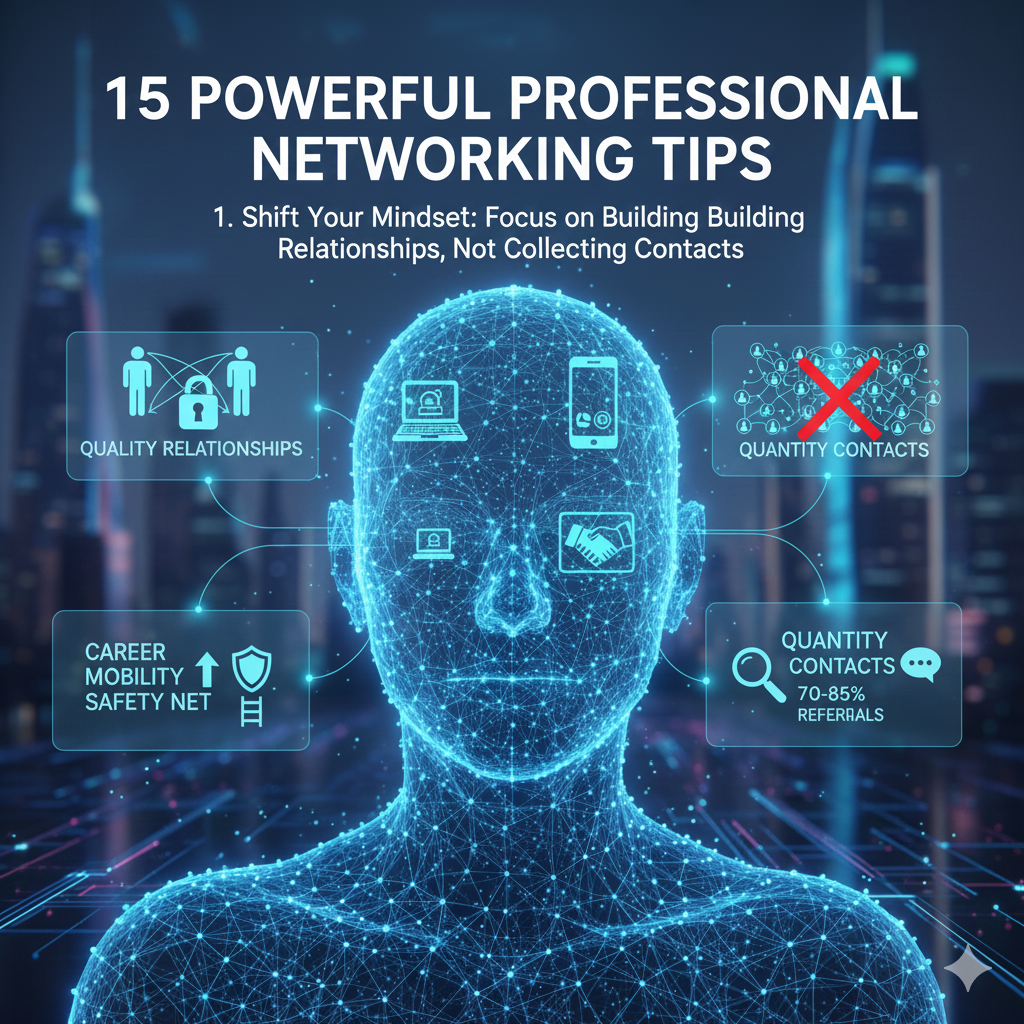
1. Shift Your Mindset: Focus on Building Relationships, Not Collecting Contacts
The foundation of effective professional networking is mindset shift from collecting contacts to building genuine relationships. Quality matters far more than quantity—ten meaningful connections who know you well and would actively help you provide more value than hundreds of superficial contacts who barely remember meeting you. Approach networking as relationship building focused on finding interesting people, learning from others, and creating mutually beneficial connections.
This mindset shift transforms networking from uncomfortable, self-serving activity into genuinely enjoyable exploration of connecting with people who share your interests, challenges, or industries. When you’re genuinely curious about others and looking for ways to be helpful rather than just advancing your agenda, networking becomes rewarding rather than draining. professional networking
Mindset Shifts:
- From “What can I get?” to “How can I help?”
- From collecting contacts to building relationships
- From one-time meetings to ongoing connections
- From networking as separate activity to relationship building as continuous practice
- From obligation to opportunity
- From transactional to transformational
Practical Application:
Before networking events or when reaching out to new connections, ask yourself: “What can I offer this person?” or “What might I learn from this conversation?” rather than “What can they do for me?” This reorientation makes your approach more authentic and actually more effective since people respond positively to genuine interest.
2. Optimize Your LinkedIn Profile Comprehensively
LinkedIn has become the central platform for professional networking, making a complete, optimized profile essential for modern career success. Your profile serves as your digital first impression and professional brand, influencing whether people accept connection requests, respond to messages, or consider you for opportunities. Invest time creating compelling profiles that clearly communicate your professional identity, expertise, and value proposition.
Beyond basic completion, strategic optimization involves using keywords relevant to your industry and role, showcasing achievements rather than just responsibilities, gathering recommendations from colleagues and managers, sharing valuable content regularly, and engaging authentically with your network’s posts and updates. Your LinkedIn presence should position you as active, engaged professional rather than static profile that only updates during job searches.
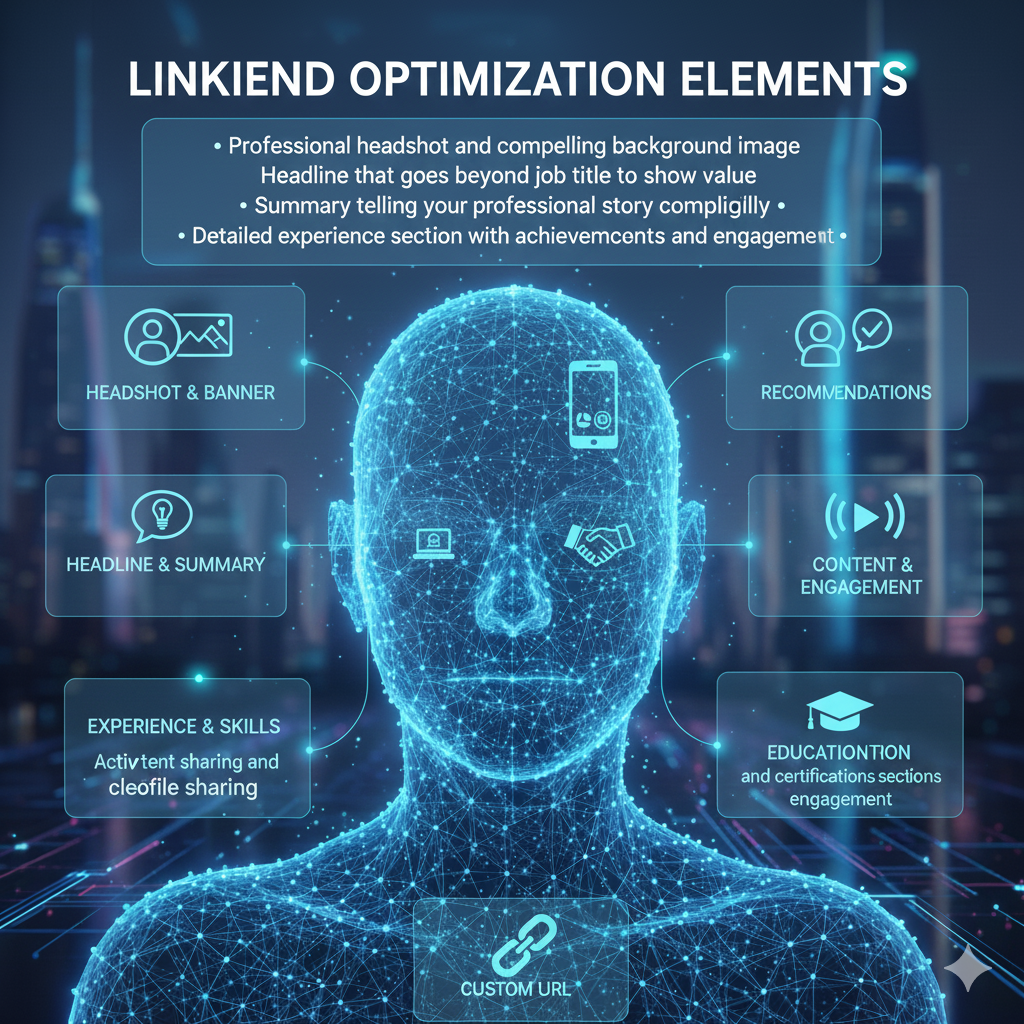
LinkedIn Optimization Elements:
- Professional headshot and compelling background image
- Headline that goes beyond job title to show value
- Summary telling your professional story compellingly
- Detailed experience section with achievement-focused bullets
- Skills section with relevant endorsements
- Recommendations from colleagues and managers
- Active content sharing and engagement
- Complete education and certification sections
- Custom URL for cleaner profile sharing
Engagement Strategies:
Post or share content 2-3 times weekly, comment thoughtfully on others’ posts, congratulate connections on achievements, send personalized connection requests, and participate in relevant LinkedIn groups. This visibility keeps you top-of-mind with your network while demonstrating expertise and engagement.
Content Sharing:
Share a mix of industry news with your commentary, your own insights and experiences, helpful resources for your network, and personal professional milestones. Authentic, valuable content builds your reputation while providing reasons for your network to engage with you regularly.
For LinkedIn optimization resources, explore: 👉 https://easynaukri4u.com/
3. Master the Art of Informational Interviews
Informational interviews represent one of the most effective professional networking tactics, yet many professionals underutilize them. These conversations—reaching out to people whose careers, companies, or expertise interest you to learn rather than ask for jobs—provide invaluable insights while building meaningful relationships. Most professionals feel flattered by requests for their advice and perspective, making informational interviews relatively easy to secure. professional networking
Approach these conversations with genuine curiosity, prepared questions, and clear time boundaries respecting the other person’s schedule. Take notes, listen actively, and ask thoughtful follow-up questions based on what they share. These conversations often lead to job referrals, mentorship relationships, or valuable introductions, but approach them purely as learning opportunities rather than thinly veiled job requests.
Requesting Informational Interviews:
- Reach out via LinkedIn, email, or mutual connections
- Clearly state you’re seeking advice and perspective, not jobs
- Suggest specific, limited time frame (20-30 minutes)
- Explain why you’re interested in their insights
- Make scheduling easy by offering multiple options
- Express appreciation for their time
Sample Request:
“Hi [Name], I’m exploring careers in [field] and came across your profile. Your path from [previous role] to [current role] particularly intrigues me. Would you be willing to share 20 minutes over coffee or video call to discuss your experience and offer advice? I’d greatly appreciate your perspective.” professional networking
Preparation and Execution:
- Research the person thoroughly before meeting
- Prepare 5-8 thoughtful, specific questions
- Arrive on time and respect time boundaries
- Take notes showing you value their insights
- Listen more than you talk
- Ask about their career journey and lessons learned
- Request introductions to others only if appropriate
- Express sincere appreciation
Follow-Up:
Send thank-you notes within 24 hours, mentioning specific insights you gained. Share relevant articles or information when you come across things that might interest them. Update them on how you applied their advice. These follow-ups transform single conversations into ongoing relationships.
4. Provide Value Before Asking for Favors
The most powerful principle in professional networking is providing value before requesting help. When you’ve been helpful to people—sharing useful information, making introductions, offering your expertise, or supporting their work—they naturally want to reciprocate. This approach builds goodwill that makes eventual asks more likely to receive positive responses while making the entire networking process feel less transactional.
Look for ways to help your network without keeping score or expecting immediate returns. Share job postings that might interest connections, introduce people who should know each other, forward relevant articles, celebrate others’ achievements publicly, offer your skills or knowledge to help with their challenges, or simply engage supportively with their content and initiatives.
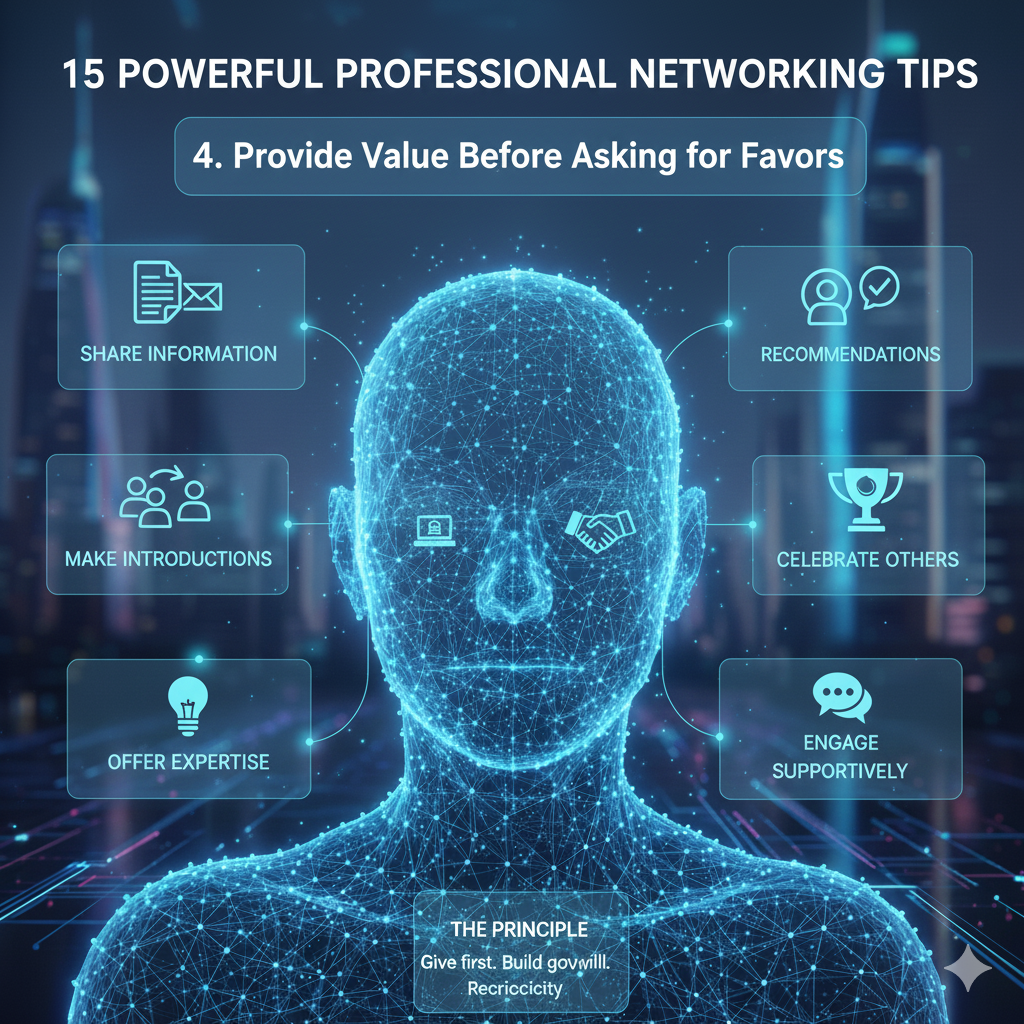
Ways to Provide Value:
- Share job opportunities relevant to your connections
- Make introductions between people who should know each other
- Forward articles, resources, or information relevant to their interests
- Offer your expertise or assistance with their projects
- Provide feedback when they request it
- Promote their work or achievements to your network
- Write recommendations for colleagues
- Engage meaningfully with their content
- Support their causes or initiatives
Reciprocity Principle:
When you consistently provide value, people naturally want to help you when you eventually need something. This creates virtuous cycle where mutual support flows naturally rather than feeling like obligation or transaction.
Strategic Helpfulness:
You can’t help everyone with everything, so be strategic. Focus particularly on providing value to people in positions to help you (though not exclusively), in industries or roles you’re interested in, who are also helpful to others (building reputation as valuable networker), or where you have unique capability to help.
5. Attend Industry Events and Conferences Strategically
In-person events remain valuable for professional networking despite digital alternatives, providing face-to-face interactions that build stronger connections than virtual meetings typically allow. However, effective event networking requires strategy beyond just showing up. Research attendees and speakers beforehand, set specific goals for connections you want to make, prepare your introduction and talking points, and plan follow-up before events even begin.
Choose events strategically based on attendance (will people you want to meet be there?), topics (relevant to your interests and goals?), and format (conducive to actual networking versus just listening to speakers?). Smaller, more focused events often provide better networking opportunities than massive conferences where meaningful conversations are difficult. professional networking
Pre-Event Preparation:
- Review attendee and speaker lists
- Identify specific people you want to meet
- Research those people so you can have informed conversations
- Prepare your introduction (who you are, what you do, what you’re interested in)
- Set specific networking goals (number of meaningful conversations)
- Prepare business cards or digital contact sharing method
- Plan your schedule including specific sessions and networking times
During Events:
- Arrive early when crowds are smaller and people more approachable
- Attend networking sessions and social events, not just main programming
- Approach people standing alone or small groups (easier than interrupting large conversations)
- Ask open-ended questions and listen genuinely
- Exchange contact information with people you want to stay connected with
- Take notes on business cards or phone about conversations to aid follow-up
- Don’t monopolize anyone’s time; have several shorter conversations
- Follow up on specific action items or introductions you discussed
Post-Event Follow-Up:
Connect on LinkedIn within 48 hours with personalized messages referencing your conversations. Send follow-up emails to particularly valuable connections. Share relevant resources or information you discussed. Schedule follow-up meetings with people you want to build deeper relationships with. This follow-up transforms brief event encounters into ongoing professional relationships. professional networking
For networking events and professional gatherings, visit: 👉 https://easynaukri4u.com/
6. Build and Nurture Your “Inner Circle”
While broad networks provide access and opportunity, your professional networking strategy should prioritize developing inner circle of closer relationships with people who know you well, understand your goals and capabilities, and actively support your career. These deeper connections—mentors, close colleagues, trusted advisors—provide more substantial career support than hundreds of superficial contacts.
Identify 10-20 people you want in this inner circle based on shared values, mutual respect, complementary expertise, genuine connection, and ability to help each other. Invest significantly more time and effort in these relationships through regular contact, meaningful conversations, strategic mutual support, and genuine friendship rather than purely professional connection. professional networking
Inner Circle Criteria:
- People you genuinely like and respect
- Shared values and professional standards
- Complementary skills or knowledge
- Mutual willingness to invest in the relationship
- Positioned to provide meaningful support (and you to them)
- Diverse perspectives and backgrounds
- Track record of being helpful and supportive
Nurturing Deep Relationships:
- Schedule regular check-ins (monthly or quarterly)
- Have deeper conversations beyond surface professional updates
- Offer significant help when they need it
- Share vulnerabilities and challenges, not just successes
- Celebrate their achievements genuinely
- Introduce them to valuable connections
- Invest time even when you don’t need anything
- Build personal connections beyond professional topics
Mutual Benefit:
The strongest relationships in your professional networking inner circle are truly mutual—both parties genuinely support each other rather than one-sided relationships. Ensure you’re providing as much value as you’re receiving, and be willing to invest significantly when your inner circle members need support.
7. Leverage Alumni Networks Effectively
Alumni networks represent often-underutilized professional networking resources providing immediate connection points with fellow graduates. Shared educational experiences create bonds that make alumni generally willing to help each other, even when you didn’t attend simultaneously. Most universities maintain alumni databases, host networking events, and facilitate connections through regional chapters or affinity groups.
Actively participate in alumni activities, join relevant alumni groups on LinkedIn or other platforms, attend alumni events, and reach out to fellow alumni working in companies or roles that interest you. Mentioning shared alma mater in connection requests significantly increases acceptance rates and response to outreach. professional networking
Alumni Networking Strategies:
- Join alumni association and relevant subgroups
- Attend alumni networking events and reunions
- Connect with alumni in your industry or target companies
- Use alumni directories to identify valuable connections
- Participate in alumni mentorship programs
- Volunteer for alumni events or committees
- Reference shared school in outreach to fellow alumni
- Join alumni groups on LinkedIn and other platforms
Reaching Out to Alumni:
“Hi [Name], I’m a fellow [University] alum (Class of [Year]) currently working in [field]. I noticed you’re at [Company] and would love to learn about your experience there. Would you be open to a brief conversation?”
Cross-Generational Connections:
Alumni networks span generations, providing access to both recent graduates and experienced professionals. Build relationships across this spectrum—recent alumni may know about entry-level opportunities while senior alumni can offer mentorship and strategic guidance.
8. Master Virtual Networking Skills
Virtual networking has become essential component of professional networking in 2026, requiring different skills than in-person interactions. Mastering video call etiquette, engaging meaningfully in online communities, building relationships through social media, and participating effectively in virtual events ensures you can network successfully regardless of geographic constraints or in-person event availability.
Virtual networking offers advantages including access to global connections without travel, flexibility for people with mobility constraints or family obligations, and ability to connect more frequently through lower-commitment interactions. However, it requires intentional effort to build the rapport that happens more naturally in person. professional networking
Virtual Event Participation:
- Test technology before events
- Use professional background and good lighting
- Engage actively in chat and Q&A
- Arrive early to virtual “rooms” for casual conversation
- Use breakout rooms for smaller group discussions
- Follow up with interesting people you “meet” virtually
- Participate fully rather than multitasking
- Use reaction features to show engagement
Online Community Engagement:
Join and actively participate in industry-specific forums, Slack communities, Discord servers, or Facebook groups. Provide helpful answers to questions, share valuable resources, ask thoughtful questions, and build reputation as engaged community member. These communities often lead to professional connections and opportunities.
Building Virtual Relationships:
- Schedule video coffee chats with new connections
- Send personalized messages rather than generic templates
- Share relevant content with specific people in mind
- Congratulate connections on milestones and achievements
- Engage consistently with connections’ content
- Create genuine touchpoints beyond transactional asks
Virtual Communication Best Practices:
Keep messages concise and focused, use video when possible for richer communication, be responsive to messages in reasonable timeframes, and use appropriate platforms for different communication types (LinkedIn for professional introductions, email for detailed communication, messaging for quick questions).
9. Develop Your Unique Personal Brand
Strong personal brands amplify professional networking effectiveness by making you memorable and positioning you as expert or leader in specific areas. Your personal brand is the professional reputation and identity you cultivate through your work, communications, online presence, and interactions. Clear, consistent personal branding helps people understand what you stand for, what expertise you offer, and why connecting with you provides value.
Identify what makes you unique—intersection of your skills, experiences, values, and perspectives that differentiate you from others in your field. Communicate this brand consistently across your LinkedIn profile, personal website, social media, networking conversations, and professional work. Strong personal brands attract opportunities and connections to you rather than requiring constant outbound networking effort.
Personal Brand Development:
- Identify your unique value proposition
- Clarify your professional expertise and interests
- Determine what you want to be known for
- Develop consistent messaging across platforms
- Create and share content demonstrating expertise
- Build reputation through quality work and helpful engagement
- Align your communications with your brand
- Be authentic rather than creating artificial persona
Brand Communication:
Your personal brand should be evident in your LinkedIn headline and summary, the content you share and create, how you introduce yourself at networking events, your email signature, your personal website or portfolio, and the reputation you build through your work and interactions. professional networking
Thought Leadership:
Establish expertise through writing articles, speaking at events, participating in podcasts or interviews, sharing insights on social media, contributing to industry publications, or creating educational content. These activities build your reputation while providing networking conversation starters. professional networking
For personal branding resources and guidance, explore: 👉 https://easynaukri4u.com/
10. Practice Consistent Follow-Up and Relationship Maintenance
The difference between networking and professional networking success often comes down to follow-up and ongoing relationship maintenance. Most people are reasonably good at initial interactions but fail to maintain connections over time, allowing potentially valuable relationships to fade. Systematic follow-up and consistent relationship maintenance transform brief encounters into meaningful, enduring professional relationships.
Develop systems ensuring you follow up after meetings, stay in touch with your network regularly, remember important details about people’s lives and careers, and maintain connections even during periods when you don’t need anything. This consistency keeps you top-of-mind with your network while building genuine relationships that provide mutual support over years and decades.
Follow-Up Systems:
- Send thank-you notes or connection requests within 24-48 hours
- Create reminders to reach out to important connections quarterly
- Use CRM tools or spreadsheets to track relationship status
- Set calendar reminders for following up on commitments
- Note important details about conversations for future reference
- Track when you last connected with key relationships
- Schedule regular networking time in your calendar
Relationship Maintenance Activities:
- Share relevant articles or opportunities with specific connections
- Congratulate connections on achievements or milestones
- Send occasional check-in messages without specific asks
- Remember and acknowledge birthdays or work anniversaries
- Invite connections to relevant events or introductions
- Provide updates on how their advice or help impacted you
- Engage with their content and initiatives
The 5-3-1 Rule:
For your inner circle, connect at least quarterly (every 3 months). For important broader network connections, reach out 2-3 times yearly. For general network, engage at least annually. This framework ensures relationships don’t completely lapse while remaining sustainable given time constraints.
Systematic Relationship Management:
Consider using CRM tools designed for relationship management (like Dex, Clay, or even simple spreadsheets) to track your network, note important details, schedule follow-ups, and ensure consistent engagement with important connections.
11. Embrace Strategic Generosity and Paying It Forward
Professional networking rooted in generosity—helping others without expectation of immediate return—creates powerful long-term benefits. Adopt abundance mentality recognizing that helping others doesn’t diminish you but actually enhances your reputation, builds goodwill, expands your network through their networks, and creates culture of mutual support. Strategic generosity means being thoughtfully helpful in ways that create real value. professional networking
Look for opportunities to open doors for others, particularly those earlier in careers or from underrepresented groups who may lack the networks more privileged professionals take for granted. Make introductions, share opportunities, offer mentorship, provide feedback, champion others’ work, and generally be person known for helping rather than only asking for help. professional networking
Forms of Strategic Generosity:
- Make introductions between people who should know each other
- Share job opportunities with your network
- Offer to mentor people earlier in their careers
- Provide honest feedback when requested
- Publicly acknowledge and celebrate others’ achievements
- Share your knowledge and expertise freely
- Open doors and create opportunities for others
- Advocate for people in rooms where they’re not present
Mentoring and Sponsorship:
Formal or informal mentoring represents significant way to practice professional networking generosity. Share your experience, provide guidance, make introductions, and champion mentees’ careers. The relationships you build through mentoring often become most meaningful in your network.
Reciprocity Ripple Effect:
While you shouldn’t help others expecting direct returns, generosity creates ripple effects. People you’ve helped often help others, building your reputation as generous professional. They remember your help and reciprocate when possible. And your generosity often returns in unexpected ways from unexpected sources.
Boundaries on Generosity:
Strategic generosity doesn’t mean being available to anyone at any time or saying yes to every request. Set appropriate boundaries protecting your time and energy while still being genuinely helpful. Focus your generosity where you can provide unique value and where recipients will actually benefit and potentially pay it forward.
12. Join and Participate in Professional Associations
Professional associations provide structured professional networking environments centered around shared professional interests or industries. These organizations offer networking events, conferences, training programs, publications, online communities, and volunteer opportunities that facilitate relationship building while supporting professional development. Active participation in relevant associations significantly expands your network while building industry knowledge and reputation.
Research associations relevant to your industry, role, or interests, and join those offering the most value. Don’t just pay dues—actively participate by attending events, joining committees, volunteering for projects, contributing content, or taking leadership roles. This active involvement helps you build deeper relationships while demonstrating expertise and commitment. professional networking
Choosing Associations:
- Industry-specific organizations (marketing, engineering, HR, etc.)
- Role-based groups (project managers, executives, analysts)
- Identity-based professional groups (women in tech, minority professionals)
- Local business organizations (chamber of commerce, business councils)
- Alumni associations
- Cause-aligned professional groups
Maximizing Association Value:
- Attend regular events and meetings consistently
- Join committees or volunteer for projects
- Contribute articles or present at events
- Participate in online forums and discussions
- Mentor newer members
- Take leadership roles when appropriate
- Connect with other active members
- Leverage member directories for targeted networking
Association Networking Benefits:
Professional associations provide repeated interactions with same people, building familiarity and deeper relationships over time. They offer credibility through association membership. They create natural conversation starters around shared professional interests. And they provide structured networking opportunities for people who find unstructured networking uncomfortable.
For professional association directories and resources, visit: 👉 https://easynaukri4u.com/
13. Overcome Networking Anxiety and Discomfort
Many professionals avoid professional networking due to anxiety, introversion, or discomfort with what they perceive as forced or inauthentic interactions. However, effective networking doesn’t require being extroverted or sales-focused. It simply requires genuine interest in people and commitment to building mutually beneficial relationships. Understanding that networking discomfort is common and learning strategies to manage it enables even introverts or anxious people to network successfully.
Reframe networking as making friends professionally rather than forcing uncomfortable sales interactions. Focus on quality conversations over quantity of contacts. Play to your strengths—if you’re better in one-on-one settings than large groups, focus on coffee meetings rather than big events. If you’re knowledgeable, share that knowledge generously. If you’re a good listener, use that skill in networking conversations.
Managing Networking Anxiety:
- Prepare thoroughly before events (research attendees, prepare questions)
- Arrive early when crowds are smaller
- Bring a colleague or friend to events
- Set small, achievable goals (have three good conversations)
- Focus on asking questions rather than talking about yourself
- Remember that most people feel some networking discomfort
- Practice self-compassion rather than harsh self-judgment
- Celebrate small successes
Introvert Networking Strategies:
- Prioritize one-on-one meetings over large events
- Prepare conversation topics beforehand to reduce spontaneity pressure
- Take breaks during events to recharge
- Follow up in writing where you may be more comfortable
- Leverage online networking requiring less real-time interaction
- Focus on depth of relationships rather than breadth
- Use your listening skills as networking strength
Authenticity Over Performance:
You don’t need to be someone you’re not to network effectively. Bring your genuine self, share your real interests and experiences, and look for authentic connections. This authenticity actually makes networking more effective because people respond to realness rather than polished performance.
14. Diversify Your Network Intentionally
Strong professional networking includes diverse connections spanning industries, roles, career stages, backgrounds, and perspectives. Homogeneous networks create echo chambers limiting your access to information, opportunities, and viewpoints. Intentionally diversifying your network—across industries, functions, seniority levels, geographic locations, and demographic backgrounds—enriches your thinking while expanding opportunities.
Connect with people in adjacent industries who might have transferable insights. Build relationships with people both more and less senior than you. Include connections from different cultural, ethnic, and socioeconomic backgrounds. Seek out diverse perspectives that challenge your assumptions and broaden your thinking. This diversity makes your network more valuable while making you more valuable to your network.
Dimensions of Network Diversity:
- Industry and sector variety
- Functional areas (marketing, finance, operations, etc.)
- Career stages (peers, junior professionals, senior leaders)
- Geographic locations and markets
- Company types (corporate, startup, nonprofit, government)
- Demographic backgrounds and identities
- Perspectives and viewpoints
- Areas of expertise
Benefits of Diverse Networks:
Diverse networks expose you to different industries’ best practices, provide access to opportunities you wouldn’t hear about in homogeneous networks, offer fresh perspectives on challenges, connect you to broader range of resources and expertise, and make you more valuable connector since you bridge different worlds.
Intentional Diversification:
Audit your current network identifying gaps or homogeneity. Intentionally seek connections filling those gaps. Attend events outside your immediate industry. Join groups focused on perspectives different from your own. Make efforts to include people from backgrounds underrepresented in your network.
Value Exchange Across Differences:
Diverse networking works when all parties provide mutual value despite differences. Consider what you uniquely offer to connections from different industries or backgrounds. Often your “outsider” perspective provides fresh thinking they don’t get from their immediate circles.
15. Turn Online Connections Into Real Relationships
Professional networking increasingly begins online through LinkedIn connections, Twitter follows, or meeting in virtual events, but lasting relationships typically require moving beyond purely digital interaction. Develop strategies for converting online connections into deeper relationships through video calls, phone conversations, in-person meetings when possible, or simply more substantive ongoing interaction.
When you’ve made valuable online connections, suggest video coffee chats to get to know them better, propose meeting in person if you’re ever in same locations, have deeper conversations through direct messages or email, collaborate on projects or content, or simply maintain consistent, meaningful engagement over time. These efforts transform superficial online connections into genuine professional relationships.
Deepening Online Connections:
- Schedule video calls with interesting online connections
- Suggest in-person meetings when in same cities
- Collaborate on content, projects, or initiatives
- Have substantive conversations beyond surface pleasantries
- Share personal (appropriate) information building rapport
- Support their work and initiatives actively
- Introduce them to valuable people in your network
- Move from public interactions to private conversations
From Digital to In-Person:
When traveling or when online connections visit your area, proactively suggest meeting for coffee, meals, or drinks. These in-person interactions significantly deepen relationships that began digitally. Many successful professional networking relationships begin online but are cemented through in-person interaction.
Maintaining Hybrid Relationships:
Modern professional relationships often blend online and offline interaction—meeting at conference, staying connected through LinkedIn, having periodic video calls, and meeting again in person months later. This hybrid approach works well, combining the convenience of digital connection with the depth of in-person interaction.
For comprehensive networking strategies and opportunities, visit: 👉 https://easynaukri4u.com/
Measuring Networking Success
Quality Metrics Over Quantity
Effective professional networking measures success through quality of relationships rather than number of connections. Better metrics include depth of relationships with key connections, number of mutually supportive relationships, opportunities that came through your network, people you successfully helped, regular communication frequency with important connections, and how well your inner circle knows and supports your goals.
Avoid vanity metrics like total LinkedIn connections or business cards collected. Instead, track meaningful conversations had, follow-ups completed, ongoing relationships maintained, value provided to your network, and opportunities created through connections.
Long-Term Network ROI
Professional networking returns compound over years and decades rather than providing immediate results. Your network’s value becomes apparent when you need new opportunities, face career challenges, require expertise or resources, want to learn about new fields, or need support during transitions. Strong networks built over time provide these benefits when needed.
Think of networking as long-term investment rather than short-term transaction. The connections you make early in your career may become crucial relationships decades later. People you help today may reciprocate years from now in unexpected ways. Consistent relationship building creates compounding value over time.
Common Professional Networking Mistakes
Transactional Networking
The biggest professional networking mistake is approaching relationships transactionally—only reaching out when you need something, connecting purely for personal benefit, keeping score of who owes whom, or failing to provide value before making asks. This approach damages your reputation while limiting network effectiveness.
Instead, build relationships when you don’t need anything, help people without tracking returns, invest consistently in your network, and provide value freely. This approach builds genuine relationships that naturally provide mutual support.
Inconsistent Engagement
Another common mistake is networking in bursts—very active when job searching then disappearing once employed, attending events sporadically, or neglecting relationships for long periods. Effective professional networking requires consistent engagement maintaining relationships over time rather than activating your network only during crisis.
Maintain regular, low-level engagement with your network even during periods when you’re content professionally. This consistency means your network is warm and available when you eventually need support.
Neglecting Follow-Up
Many professionals attend events, meet interesting people, and then fail to follow up, wasting networking opportunities. Without follow-up, initial interactions rarely develop into meaningful relationships. Systematic follow-up transforms brief encounters into ongoing connections.
Failing to Give Before Asking
Asking for favors from people you haven’t helped or barely know strains professional networking effectiveness. Always look for ways to provide value before requesting help. If you must ask someone you haven’t previously helped, acknowledge this and frame requests accordingly while committing to reciprocating.
Conclusion: Building Your Professional Network Strategically
Effective professional networking in 2026 combines timeless relationship-building principles with modern digital capabilities, creating diverse, mutually supportive professional communities that enrich careers and lives. The fifteen strategies outlined in this guide—from mindset shifts and LinkedIn optimization to generosity practices and relationship deepening—provide comprehensive framework for building networks that open opportunities, provide support, enable learning, and make work more fulfilling.
Remember that professional networking is long-term investment rather than quick fix. The relationships you build today may provide their greatest value years from now in ways you cannot currently predict. Consistency, authenticity, generosity, and strategic intention create networks that compound in value over decades.
Start strengthening your professional networking today by choosing 2-3 strategies from this guide to implement immediately. Whether that means optimizing your LinkedIn profile, scheduling informational interviews, attending an industry event, or simply reaching out to maintain important relationships, small actions create momentum toward building stronger professional networks.
The career opportunities, business partnerships, mentorship relationships, and support systems that will define your professional future likely exist within networks you build starting today. Invest in these relationships consistently and authentically, and watch as doors open, opportunities emerge, and your career trajectory accelerates through the power of genuine professional connections.
Your network is your net worth—not financially, but in terms of professional opportunities, career resilience, knowledge access, and meaningful work relationships. Build it intentionally, maintain it consistently, and leverage it strategically throughout your career.
Take action now by identifying one relationship you want to strengthen or one new connection you want to make. Reach out today, and begin building the professional networking foundation that will support your career for years to come. Your future professional success depends significantly on the relationships you build and maintain—start investing in them today.